
Updated March 10, 2026
In plastics manufacturing, efficiency and product quality are critical. One common challenge faced by manufacturers is the presence of “angel hair”: fine, string-like polymer strands that can form during the conveying process. If not properly managed, angel hair can clog systems, contaminate materials, and reduce overall efficiency. This is where an Angel Hair Trap, becomes an invaluable tool.
For manufacturers designing new material handling systems, a properly engineered resin conveying and blending solution can significantly reduce conveying problems such as angel hair formation and pellet degradation.
What Is Angel Hair in Plastic Resin Conveying?
Angel hair refers to thin plastic filaments that form when pellets rub together at high velocity inside conveying lines. These fine strands can accumulate inside piping, filters, and loaders.
In severe cases, angel hair can:
- Block conveying lines
- Contaminate virgin resin
- Cause hopper bridging
- Create inconsistent material feed rates
- Increase downtime for cleaning
Angel hair formation is most common in high-speed pneumatic conveying systems used in plastics extrusion and injection molding plants.
Angel hair traps are designed to capture plastic pellet stringing before it reaches critical equipment such as dryers, blenders, or extruders.
What is an Angel Hair Trap and How Does it Work?
Angel hair traps are installed in the conveying line between the vacuum pump and the material destination.
Their function is simple but extremely effective.
Inside the trap housing, airflow is redirected through screens or specially designed chambers that allow plastic pellets to pass while capturing lightweight filament strands.
Captured angel hair can then be removed during routine maintenance.
Benefits include:
- Cleaner resin delivery
- Reduced hopper contamination
- Improved conveying reliability
- Lower maintenance frequency
- Better product quality
In high-throughput plastics plants, angel hair traps are often installed at multiple locations throughout the conveying system.

An Angel Hair Trap from Advanced Blending Solutions. Resin is transported into the top inlet and angel hair “stringers” are caught by the top grate. Good resin pellets fall through and exit the bottom outlet. Note the Plexiglas clear window at the top, allowing for easy spot checks.
Key Benefits of Using an Angel Hair Trap
- Prevents Contamination – Angel hair can mix with raw materials, leading to product defects. By capturing these stringers before they reach production, manufacturers ensure a higher-quality final product.
- Reduces Equipment Downtime – Clogged hoppers and feed systems require frequent maintenance and cleaning. An Angel Hair Trap prevents buildup (bridging), minimizing unplanned downtime and improving operational efficiency.
- Enhances Process Efficiency – By keeping material flow uninterrupted, manufacturers can maintain optimal production speeds, reducing waste and increasing throughput.
- Pinpoints Problem Areas – The trap can be moved around the resin system to help identify where angel hair is forming, allowing for targeted adjustments and improved process control.
- Easy Maintenance – Angel Hair Traps feature a clear view window for easy level detection and simple clean-out mechanisms, making them convenient to spot-check.
Manufacturers evaluating upgrades can estimate the financial impact of improved material handling using the Resin Conveying & Blending ROI Calculator.
Installation Options
Angel Hair Traps can accommodate pipe sizes from 1.5 inch up to 6 inches. They attach to the pipe with either a male or female Camlock. A 10-inch and 18-inch trap diameter is available. They can be floor-mounted or line-mounted, depending on specific plant requirements.
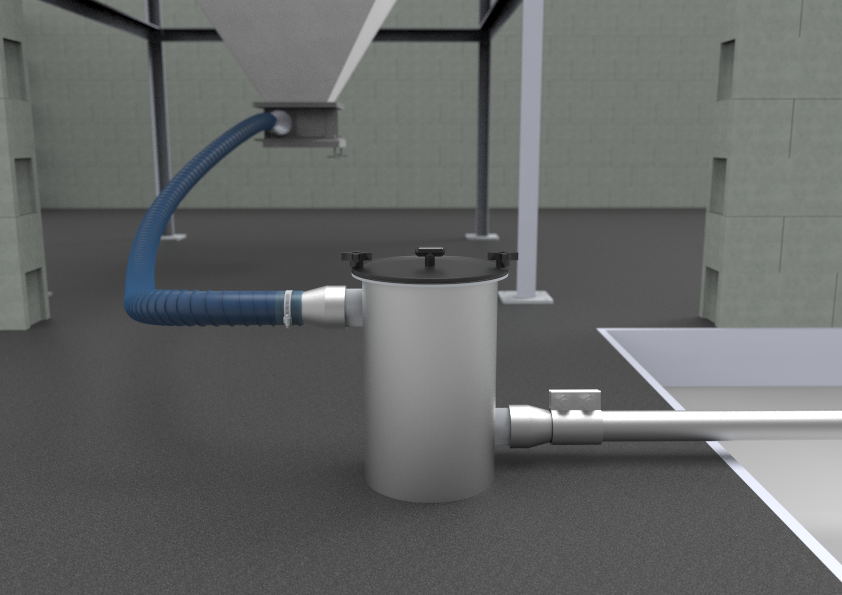
An Angel Hair Trap can be easily integrated into any process piping as shown in this rendering.
Conclusion
For plastics manufacturers looking to improve material handling, reduce downtime, and ensure high-quality production, investing in an Angel Hair Trap is a smart move. By effectively removing stringers from the resin system, these traps help create a smoother, more efficient production process with fewer disruptions. Keep in mind, angel hair traps only capture the angel hair, but do not eliminate the source.
The performance of the conveying system also depends heavily on the pump technology being used. As discussed in Why Tranquility Industrial Vacuum Pumps Outperform Traditional Vacuum Pumps, pump efficiency directly impacts airflow stability and conveying reliability.
Engineers can estimate airflow requirements and system capacity using the vacuum pump sizing calculator.
Take Action Today!
Addressing angel hair buildup can significantly enhance your manufacturing efficiency and product quality. Consider implementing an Angel Hair Trap to keep operations running smoothly.
Gauge Advisor is the authorized sales and support partner for Advanced Blending Solutions (ABS), supporting manufacturers with equipment selection, process optimization, and system integration.

 By: Matthew Baker
Founder, Gauge Advisor LLC