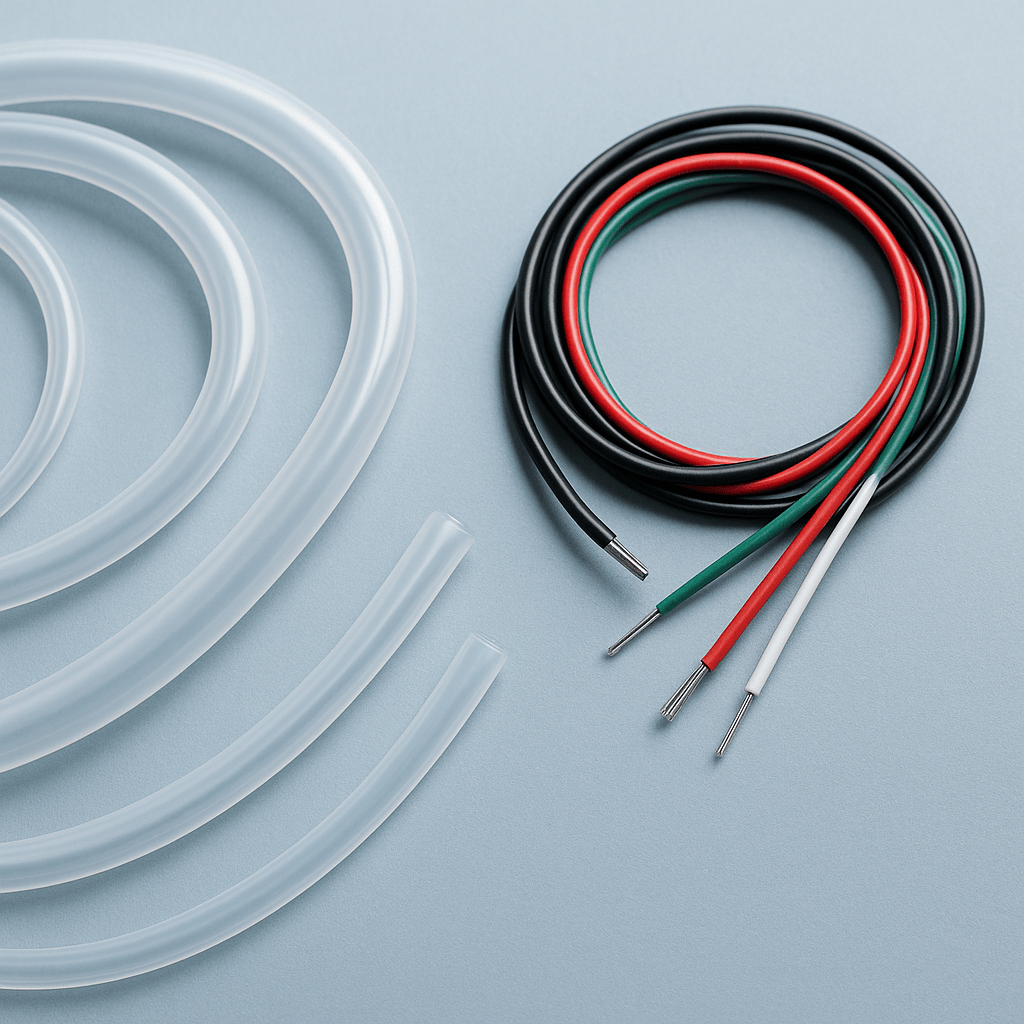
In medical tubing, diameter is often called out in French size. In wire and cable, it is often specified in inches or thousandths. This calculator helps bridge those standards quickly so your team can compare prints, customer requirements, and process targets with less risk of conversion error.
For related process improvement resources, explore our medical device measurement & inspection solutions, wire & cable measurement solutions, medical device ROI calculator, and wire & cable ROI calculator.
Gauge Advisor Tool
(Metric Base Unit)
(Imperial Base Unit)
(1 thou = 0.001 inch)
(1 Fr = 1/3 mm)
Tip for Wire & Tubing:
Wall Thickness Formula:
The relationship between Outside Diameter (OD), Inside Diameter (ID), and Wall Thickness (WT) is simple algebra:
For wire and tubing, diameter is often measured in Outer Diameter (OD). Ensure your measurement systems are **aligned such that the product is held within the center field of view of the micrometer's beam paths.**
Understanding Ovality:
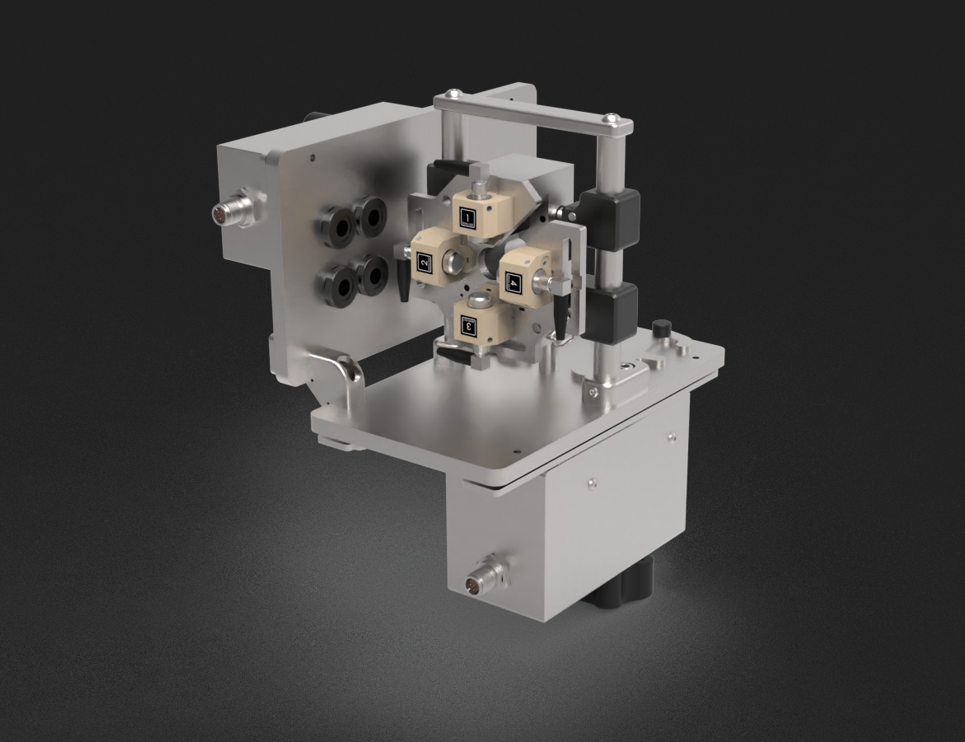
If a part is not perfectly round (ovality), a single diameter measurement is insufficient. High-precision gauging systems measure the diameter at multiple points around the circumference to ensure the product meets minimum and maximum tolerance limits. Learn more about multi-axis laser micrometers for complete ovality control.
© 2026 Gauge Advisor LLC. All rights reserved.
This tool is for informational and theoretical purposes only. Consult your material safety data sheets (MSDS) and quality control department for official production specifications.
In medical tubing and catheter applications, diameter is often specified in French (Fr), where 1 Fr = 0.333 mm.
Common sizes range from 1 Fr to 20 Fr, covering microcatheters through larger drainage and specialty tubing applications. Use the calculator above for exact conversions.
| French (Fr) | Diameter (mm) | Diameter (inches) |
|---|---|---|
| 1 Fr | 0.33 mm | 0.013 in |
| 2 Fr | 0.67 mm | 0.026 in |
| 3 Fr | 1.00 mm | 0.039 in |
| 4 Fr | 1.33 mm | 0.052 in |
| 5 Fr | 1.67 mm | 0.066 in |
| 6 Fr | 2.00 mm | 0.079 in |
| 7 Fr | 2.33 mm | 0.092 in |
| 8 Fr | 2.67 mm | 0.105 in |
| 9 Fr | 3.00 mm | 0.118 in |
| 10 Fr | 3.33 mm | 0.131 in |
| 12 Fr | 4.00 mm | 0.157 in |
| 14 Fr | 4.67 mm | 0.184 in |
| 16 Fr | 5.33 mm | 0.210 in |
| 18 Fr | 6.00 mm | 0.236 in |
| 20 Fr | 6.67 mm | 0.262 in |
Note: Values are calculated using 1 Fr = 0.333 mm and converted to inches. Always verify against product specifications for critical tolerances.
In wire, cable, and tubing manufacturing, outer diameter (OD) is one of the most important quality characteristics. It affects fit, performance, downstream processing, insulation coverage, connector compatibility, and customer acceptance. This is especially true in medical tubing, where extremely small dimensional changes can affect function, assembly, and process capability.
A simple diameter conversion tool is helpful because the same product may be specified in multiple unit systems. A print may call out millimeters, a customer may reference inches or mils, and a catheter size may be given in French (Fr). This calculator helps translate those values instantly so engineering, production, and QC teams stay aligned.
Common for global engineering drawings, supplier communication, and precision manufacturing specifications.
Still widely used in North American wire, cable, tubing, and extrusion environments.
Standard for many catheter and vascular tubing applications, where 1 Fr = 1/3 mm.
Converting OD units is only the first step. The real challenge is controlling diameter consistently during production. Manual tools like calipers, pin gauges, or ring gauges are useful for spot checks, but they do not provide continuous feedback and can introduce operator variation. That is why many manufacturers move toward non-contact, inline diameter measurement.
For Medical Tubing and Catheter Production
Tight OD tolerances are often tied directly to product fit, downstream assembly, and regulatory expectations. For more on inline dimensional inspection and process improvement, visit our medical device measurement & inspection solutions page.
For Wire and Cable Manufacturing
Diameter control influences insulation thickness, jacket consistency, concentricity, and material usage. Learn more about inline gauging, defect detection, and process control on our wire & cable measurement solutions page.
From Conversion to Process Control
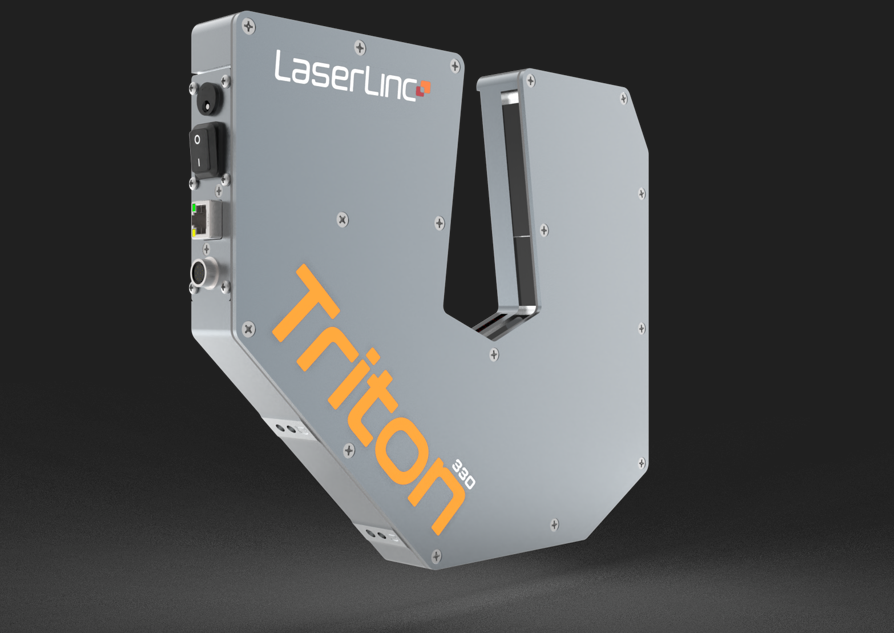
Inline laser micrometers measure diameter continuously at high speed, helping manufacturers reduce material giveaway, improve consistency, and catch process drift before it becomes scrap. For many extrusion lines, the goal is not just converting OD values correctly. It is maintaining the correct OD in real time.
Single-Axis vs Dual-Axis vs Triple-Axis Gauging
The right laser micrometer configuration depends on product shape, tolerance requirements, ovality risk, and process goals. For a detailed breakdown, read How to Choose Between Single, Dual, and Triple-Axis Laser Micrometers.
Diameter Measurement and Process Capability
If your team is working to reduce variation or understand whether a process is truly capable, diameter data should also be tied to process capability analysis. Use our Cpk / Ppk process capability calculator to evaluate how well your extrusion process is holding specification.
Ready for the Next Step?
Whether you manufacture medical tubing, catheter products, wire, or cable, the next step is understanding which inline measurement solution can help reduce variation, cut scrap, improve process capability, and control OD more consistently.