Resin Handling System Selector

Find the right resin handling equipment for your application in less than 60 seconds.

1

Choose Your System Needs

Select one or more areas such as blending, drying, conveying, storage, railcar unloading, or controls.

2

Describe the Material

Tell us whether you are handling pellets, powders, regrind, flakes, film scrap, or a moisture-sensitive resin.

3

Enter the Key Requirements

Add your throughput, ingredient count, convey distance, storage needs, and other known operating details.

Resin handling equipment works best when the blender, dryer, pump, receivers, storage, routing, and controls are selected as one connected system. This selector helps narrow the right equipment families and identifies the application details that should be confirmed before a quote.

Advanced Blending Solutions resin handling equipment

Authorized ABS sales & applications partner

Find the Right System for Your Process

Resin Handling Equipment Overview

Advanced Blending Solutions Equipment at a Glance

The selector above recommends the best starting equipment and system approach for your application. Below is a visual overview of the primary Advanced Blending Solutions technologies used to blend, dry, convey, store, route, and recover plastic materials.

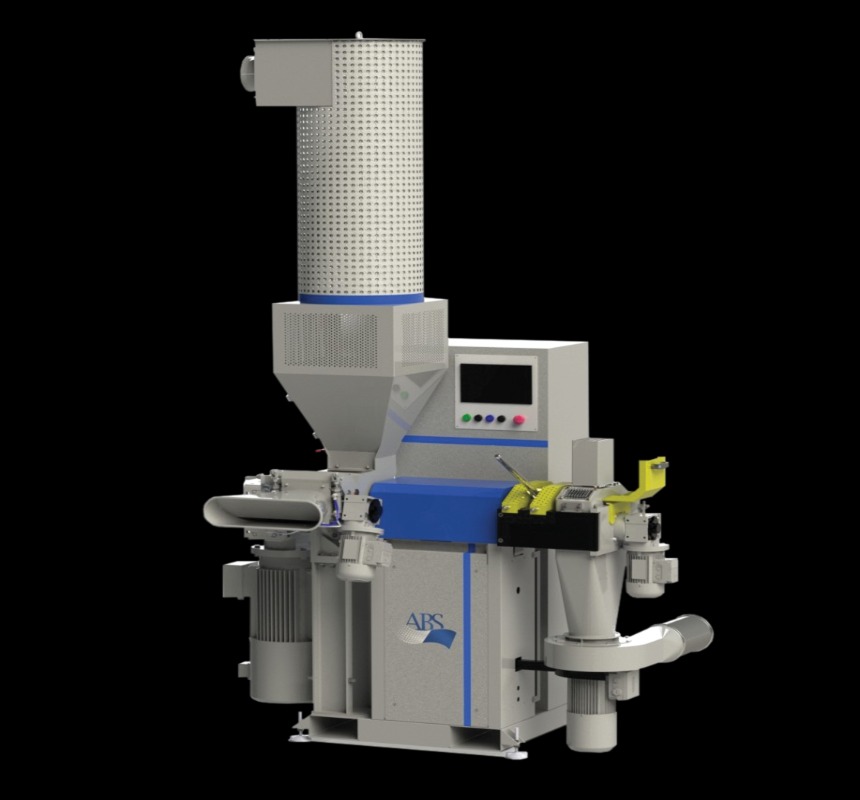
Advanced Blending Solutions SIMPLICITY continuous gravimetric blender

Accurate Ingredient Control

Gravimetric Blending

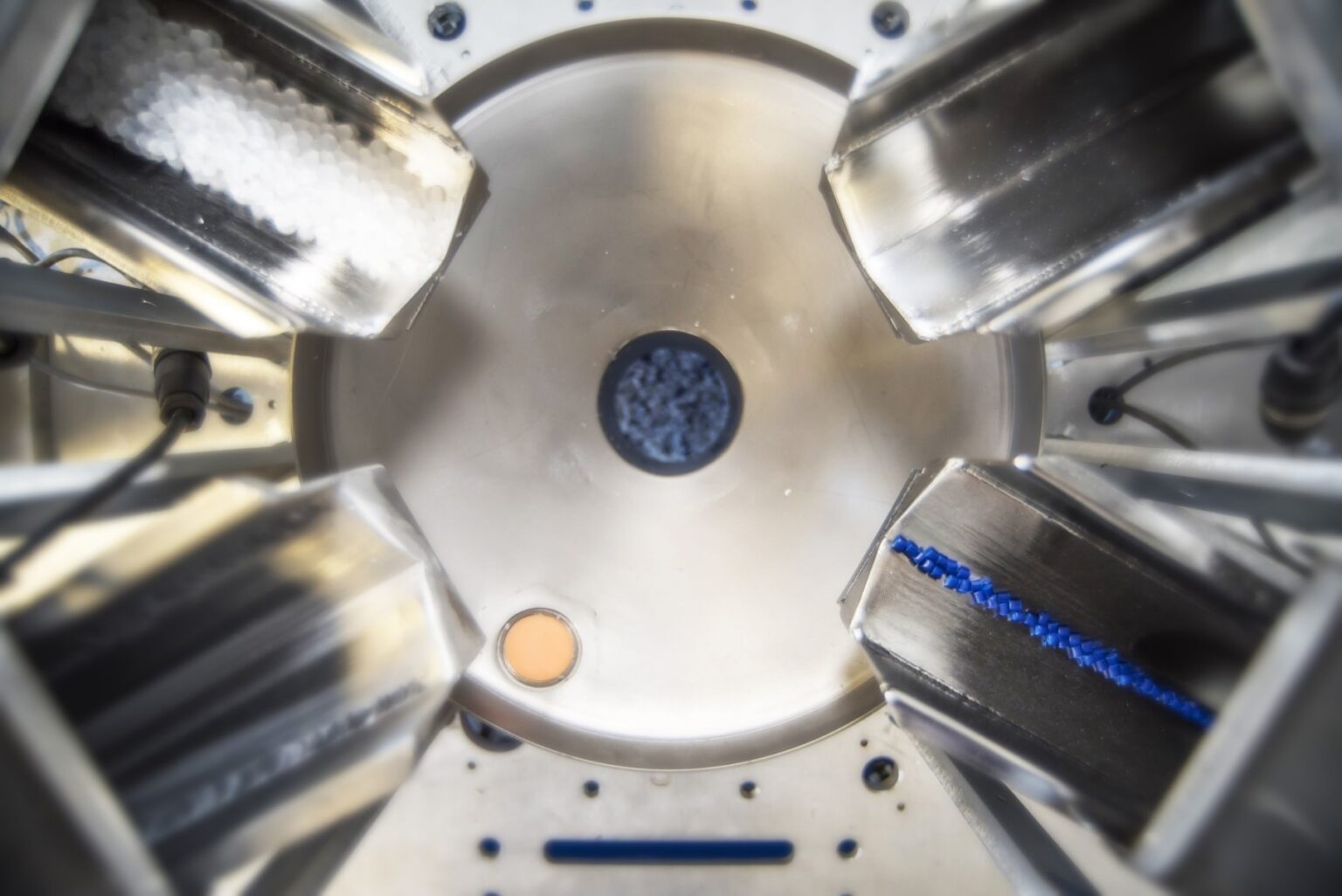
SIMPLICITY and SL gravimetric blenders continuously measure and control each ingredient by weight. They are used to combine virgin resin, regrind, color, powders, and additives at the percentages required by the process.

Advanced Blending Solutions auger feeder for powders and difficult-flowing materials

Pellets / Powders / Regrind

Material Feeders

Vibratory feeders work well with free-flowing pellets, while auger feeders provide positive metering for powders, additives, and materials that do not flow consistently. Dedicated feeder designs are also available for regrind and flake.

Advanced Blending Solutions desiccant dryer for moisture-sensitive plastic resin

Moisture Removal

Desiccant Drying Systems

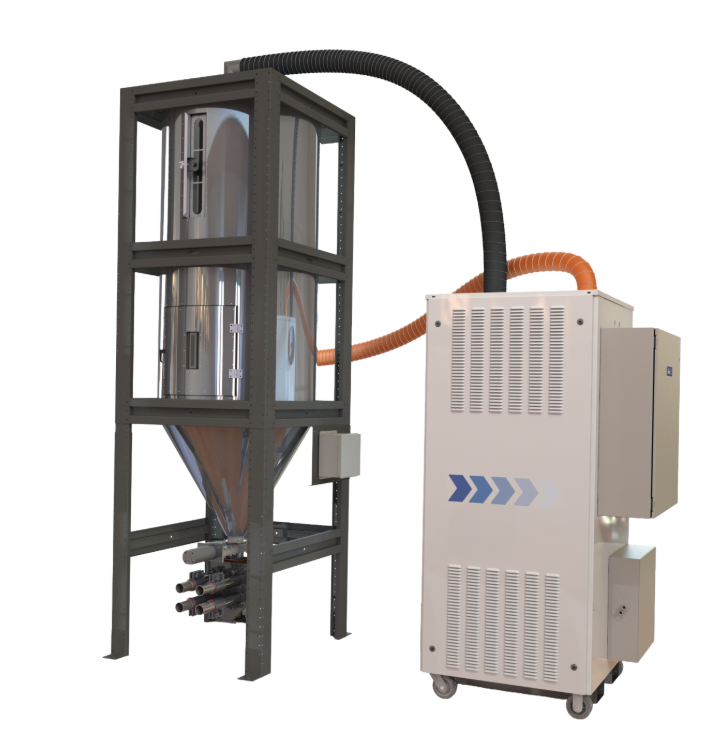
Desiccant dryers remove moisture from process air before it passes through the resin. They are commonly used for moisture-sensitive materials such as PET, nylon, polycarbonate, TPU, and other engineering resins.

Advanced Blending Solutions CK Series drying hopper

Residence Time / Material Capacity

Drying Hoppers

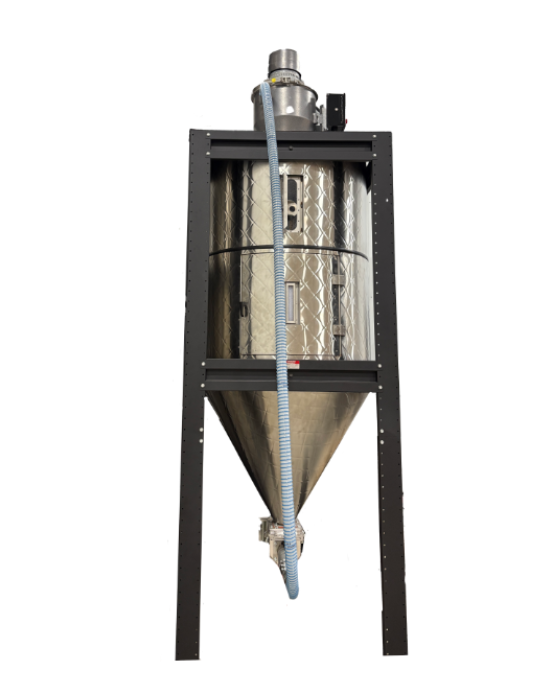
Drying hoppers hold resin at the required temperature for the time needed to remove moisture. Hopper size is selected using material throughput, bulk density, drying temperature, and required residence time.

Advanced Blending Solutions Tranquility vacuum pump for central resin conveying

Central Material Transfer

Vacuum & Pressure Conveying

Vacuum pumps move resin from gaylords, dryers, storage bins, or silos to processing machines. Pressure conveying is also available for applications such as railcar unloading and longer-distance transfer into bulk storage.

Advanced Blending Solutions vacuum receiver for resin conveying

Material Collection

Vacuum Receivers

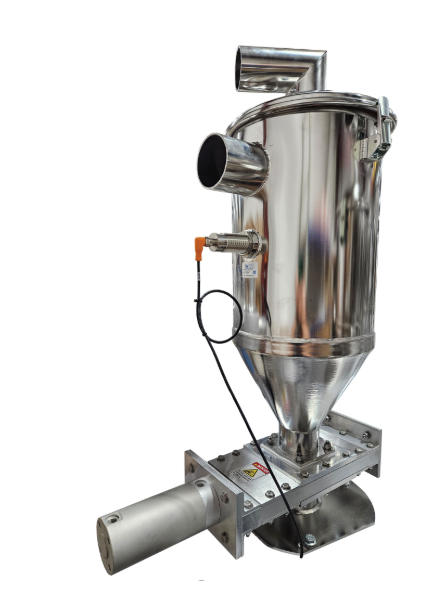
Vacuum receivers collect conveyed resin above a blender, dryer, storage bin, or processing machine. Standard, filtered, and regrind-specific designs are available for pellets, dusty materials, powders, and irregular flakes.

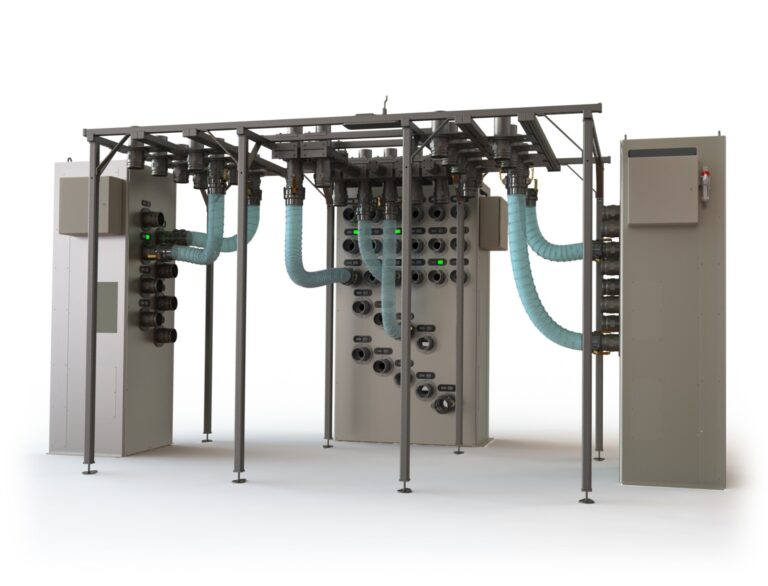
Advanced Blending Solutions SMART material distribution system

Verified Material Routing

SMART Material Distribution

SMART systems help operators connect the correct resin source to the correct machine or process destination. The system verifies each connection before conveying begins, reducing routing errors and simplifying complex multi-material plants.

Advanced Blending Solutions railcar resin unloading system

Bulk Material Transfer

Railcar Unloading Systems

Direct-pull and pull/push systems transfer bulk resin from railcars or trucks into plant silos. The correct approach depends on unloading rate, distance, vertical lift, silo layout, filtration, and available vacuum or pressure equipment.

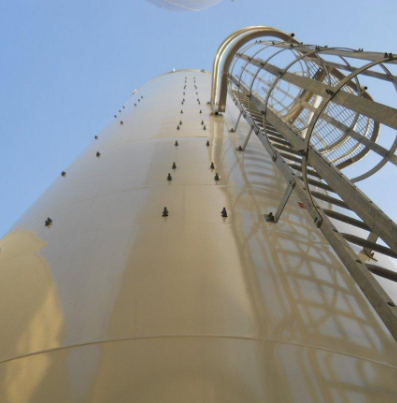
Advanced Blending Solutions resin storage silo

Bulk / Intermediate Storage

Resin Storage Systems

Silos, intermediate bulk storage, MobiHoppers, and machine-side bins hold material before it is conveyed to production. Storage capacity is selected using material usage, delivery size, refill frequency, and available floor or outdoor space.

Advanced Blending Solutions Sasquatch film repelletizing system

Scrap Recovery

Sasquatch Repelletizing

The Sasquatch system converts eligible film and process scrap into reusable pelletized material. The application should be reviewed using scrap type, material composition, contamination, feed form, and expected recovery rate.

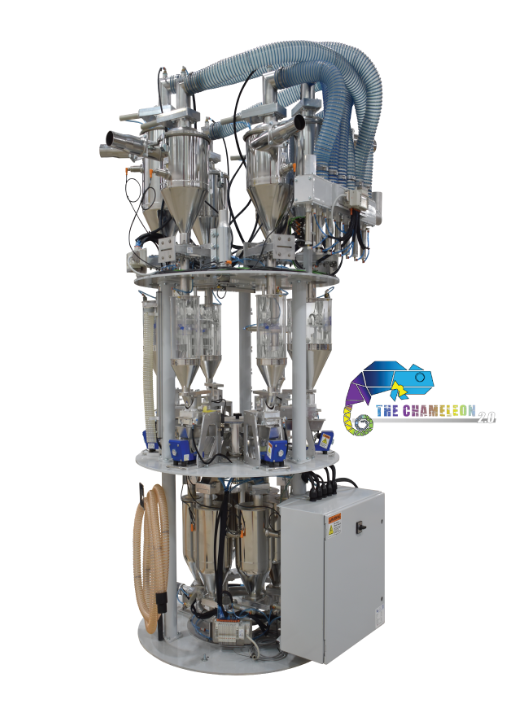
Advanced Blending Solutions Chameleon 2.0 automatic blender cleanout system

Faster Material Changes

Automated Cleanout

Chameleon 2.0 and central vacuum cleanout systems reduce the labor, downtime, and material waste associated with color or resin changes. These options are especially useful where frequent changeovers affect production uptime.

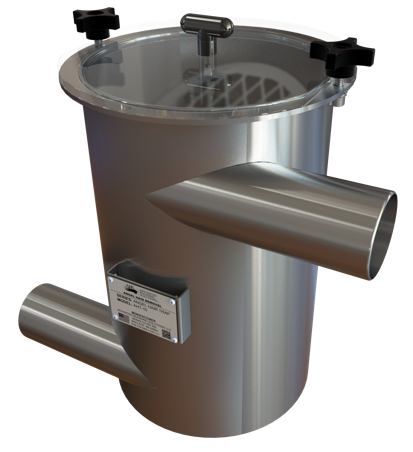
Advanced Blending Solutions central dust collection units

Pump Protection / Cleaner Air

Dust Collection & Filtration

Dust collectors and filter receivers remove fines from conveying air before they reach the vacuum pump. This protects equipment, improves reliability, and helps control dusty or contamination-prone materials.

Controls, Data & Automation

Connect the Equipment Into One Resin Handling System

After the primary equipment is selected, the next decision is how the system should be controlled, monitored, reported, and connected to the rest of the production line.

Advanced Blending Solutions central resin handling control system

Centralized Operation

Central Control Systems

PLC- and PC-based controls coordinate blenders, vacuum pumps, receivers, dryers, valves, and material-routing equipment. Systems can be scaled from one machine to a larger plant-wide installation.

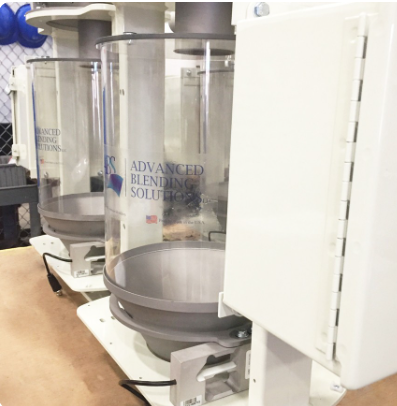
Advanced Blending Solutions weigh hopper for extrusion throughput monitoring

Usage / Throughput / Traceability

Weighing & Reporting

Weigh hoppers and reporting software measure material usage, monitor extrusion throughput, track ingredient consumption, and support production records by shift, job, or work order.

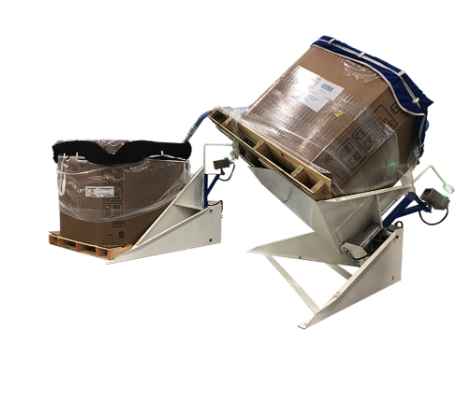
Advanced Blending Solutions barcode verification and box handling equipment

Material Verification

Barcoding & Material Tracking

Barcode verification, SMART routing, and material tracking help confirm that the correct resin is connected to the correct machine. These tools are especially valuable in plants with many materials, recipes, and destinations.

Selection note: Resin handling systems are normally selected as a group of connected components rather than as one isolated machine. Final sizing should account for the material, throughput, bulk density, temperature, moisture sensitivity, convey distance, vertical lift, number of sources and destinations, changeover requirements, controls, and available plant utilities.

Next Step After the Selector

Turn the recommendation into a complete resin handling system

The selector provides a strong starting point. Final equipment selection should also account for the material, production rate, plant layout, conveying distance, utilities, controls, and how each component will work together.

Why This Matters

Resin handling equipment should be selected as one connected system

A blender, dryer, vacuum pump, receiver, or storage bin may appear suitable on its own but still perform poorly when the surrounding equipment is not matched to the application. Reviewing the complete material path helps prevent loading delays, moisture problems, inaccurate blends, excessive dust, and avoidable downtime.

Capacity mismatch: A component may handle the total production rate but still be unable to feed, dry, store, or convey an individual material reliably.

Material behavior: Pellets, powders, regrind, flakes, and moisture-sensitive resins do not flow, dry, or convey in the same way.

System interaction: Pump size, line diameter, receiver capacity, dryer airflow, storage arrangement, and control sequence all affect one another.

Blending

Match the blender base, number of ingredients, and feeder style to the total line rate and the required rate of each resin, color, powder, additive, or regrind component.

Drying

Select the dryer and hopper using the resin, hourly usage, drying temperature, required residence time, bulk density, and target moisture level.

Central conveying

Size pumps, material lines, receivers, and controls around the longest convey path, vertical lift, material rate, and number of machines requesting material.

Storage and distribution

Review storage capacity, refill frequency, material sources, production destinations, level monitoring, and routing verification before choosing equipment.

Controls & System Integration

Decide how the equipment should work together

After the primary equipment is selected, the next decision is how material requests, recipes, vacuum sequences, alarms, reports, and routing should be managed across the system.

Equipment Control

PLC & Operator Interface

Coordinate pumps, receivers, blenders, dryers, valves, and material requests from one control platform.

Material Routing

SMART Distribution

Verify that the correct resin source is connected to the correct machine or destination before conveying begins.

Production Records

Trending & Reporting

Track material usage, blend percentages, alarms, throughput, inventory, and production data by job, shift, or work order.

Common Questions

Quick answers before application review

Is total throughput enough to size a blender?

Not by itself. Total throughput helps select the blender base, but each ingredient rate must also fit an available feeder. A low-percentage powder or high-rate regrind component may require a different feeder or larger blender frame.

What information is needed to size a vacuum pump?

Typical inputs include the material, required transfer rate, horizontal distance, vertical lift, line diameter, number of bends, receiver count, and whether several machines may request material at the same time.

When is a special vacuum receiver needed?

Standard receivers work well for many pellets. Filter receivers are better for dusty materials and fines, while regrind receivers help irregular flakes or lightweight scrap discharge more consistently.

Can conveying damage the resin?

Yes. Excessive conveying velocity can create angel hair, fines, heat, and material degradation. Velocity control can adjust the pump speed for different materials and convey paths.

Ready for the Next Step?

Use your selector results to start the application review

Whether you need blending, drying, central conveying, railcar unloading, storage, material recovery, or plant-wide controls, Gauge Advisor can help turn the preliminary recommendation into a complete resin handling equipment package.