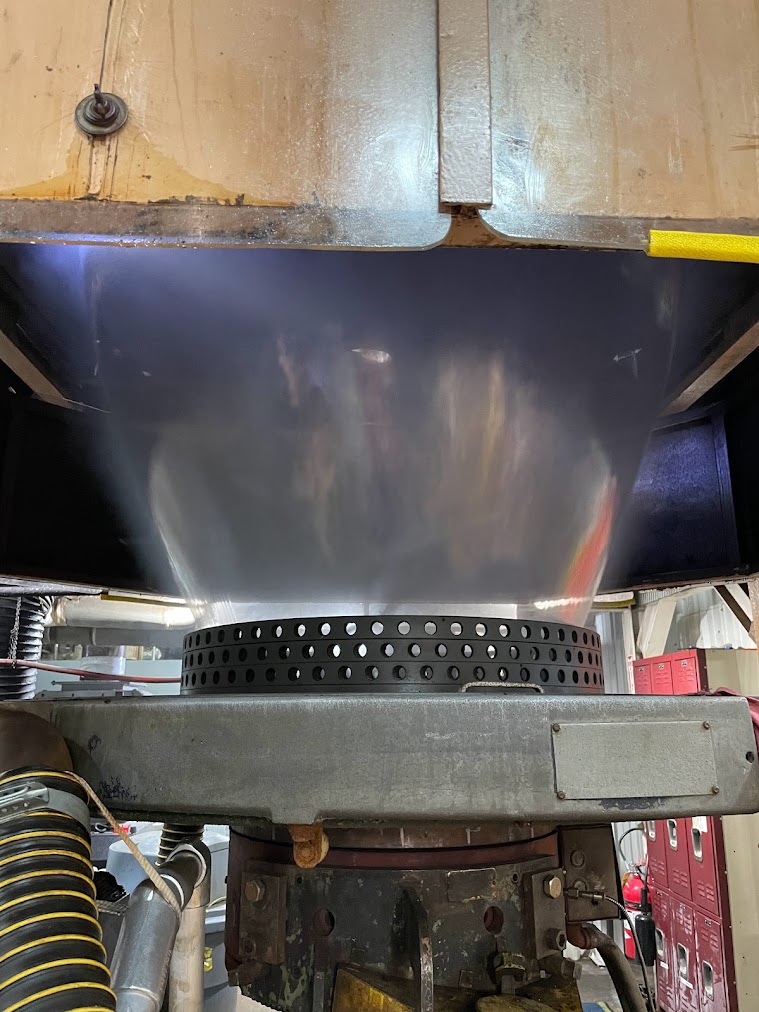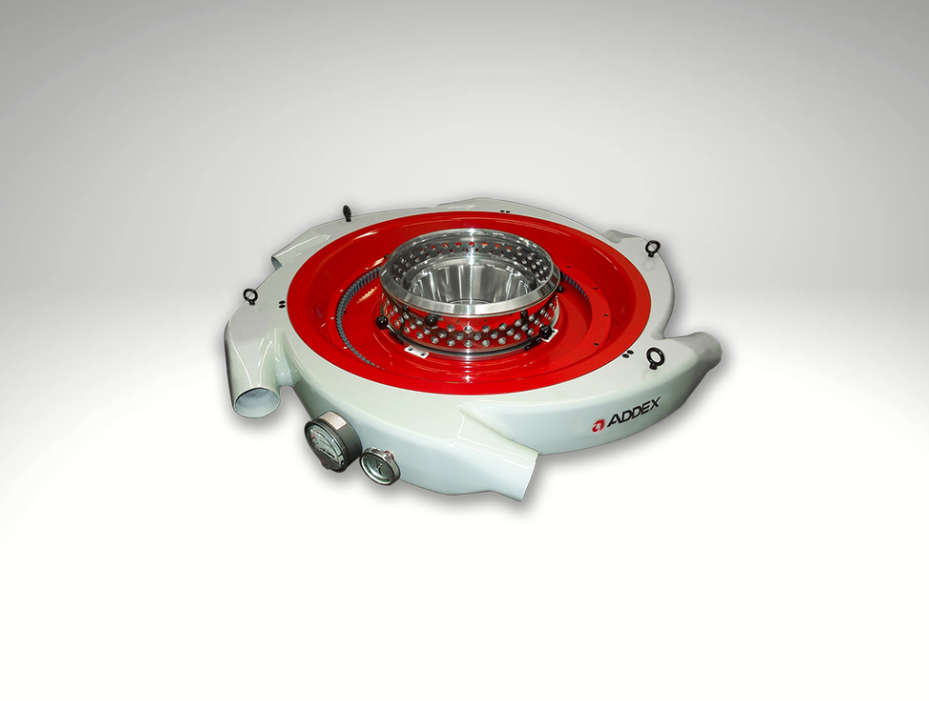
Replacement, retrofit or new line package
Do not size the air ring from die diameter alone
Resin, structure, blow up ratio, frost line, output, blower curve, IBC geometry, tower clearance and gauge profile objective determine the useful package.

Match the external cooling package to the film, die, output target and blown film line you actually run. Addex air rings can provide a high performance cooling foundation, manual gauge profile adjustment or automatic mapped correction for new lines and retrofits.
 Addex is the equipment manufacturer. Gauge Advisor provides authorized Addex sales, application review and quotation support across the Western U.S. and Canada.
Resin, structure, blow up ratio, frost line, output, blower curve, IBC geometry, tower clearance and gauge profile objective determine the useful package.
What the animation shows: how external cooling, gauge profile correction, bubble control, cage positioning and line movement can work as separate or coordinated layers. Continue to MGC and EGC gauge control, Digital IBC and layflat control, non IBC layflat control or complete line retrofits for the focused application path.
Direct replacement, more output, better bubble stability and gauge profile correction are different buying paths. The line data should identify which result the new equipment must deliver.
Restore reliable airflow, adjustment, lip geometry or serviceability on an aging line.
Condition and compatibility reviewFilm stays hot, frost line climbs or bubble stability limits saleable output.
LFR or Intensive Cooling pathThe bubble needs better support near the die across the required product window.
Lip, collar and airflow reviewA repeatable total film profile forces resin overbuild or roll quality segregation.
MGC or EGC pathThe air ring must coordinate with IBC, measurement, movement, cage or Gen3 controls.
Complete retrofit reviewChoose cooling, stability, gauge profile, layflat, changeovers or coordinated controls. The selector organizes a preliminary base air ring and the additional layers that belong with the application.
The air ring delivers controlled external cooling around the bubble. Selected Addex families can also adjust localized outside airflow for gauge profile. Internal bubble air, online thickness measurement and line movement remain separate functions.

The air ring works inside a larger airflow and process system. Blower capacity, duct losses, lip geometry, ambient conditions, IBC, frost line, tower and downstream equipment can all become the next limit.
Cooling, near-die stability and optional local gauge profile correction.
Compare families ↓Active IBC cooling and layflat, or retained air inflation and deflation.
Review IBC control →Total film profile, trends, records and the feedback signal EGC may use.
Review web gauging →Recipes, movement mapping, alarms and coordination of quoted modules.
Review modernization →LFR, MGC and EGC address different levels of gauge profile control. Intensive Cooling can be integrated when qualified output and stability improvement are also part of the objective.
Use LFR when the plant needs an external cooling and stability foundation without manual or automatic circumferential gauge profile adjustment.
Review an LFR application →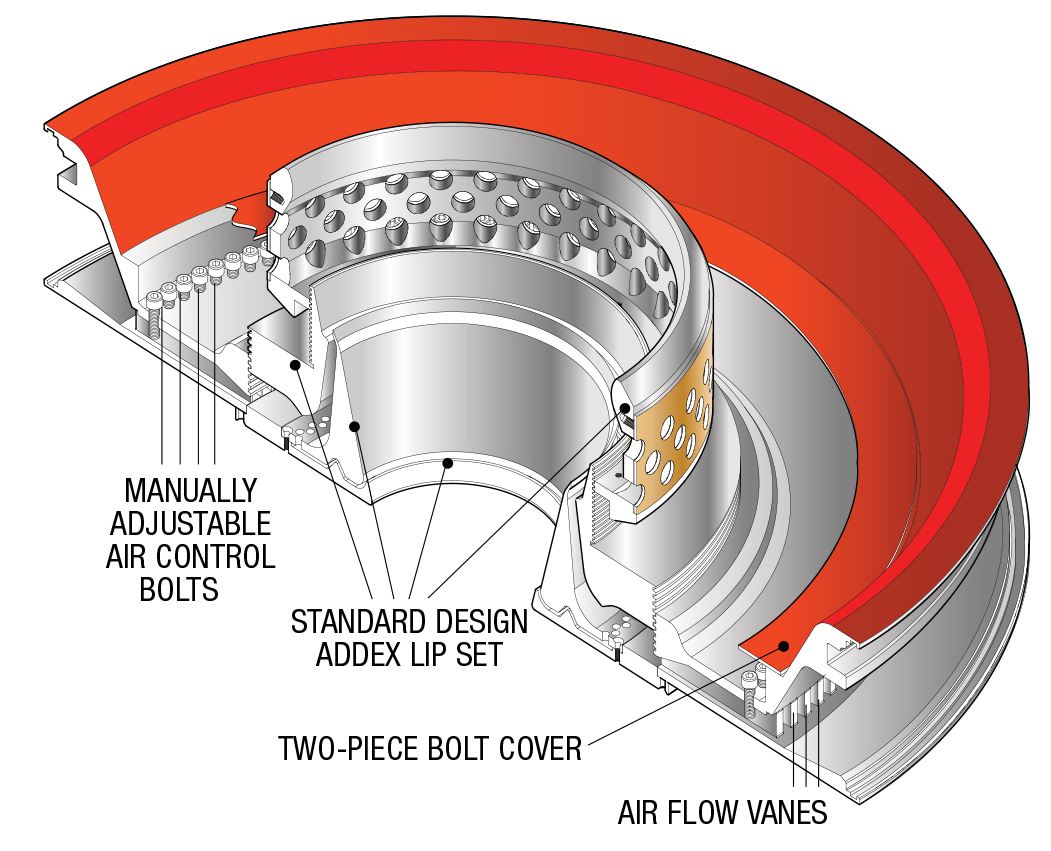
Use MGC when the total film profile has repeatable fixed bands and periodic operator optimization is acceptable.
Compare manual gauge control →
Use EGC when a valid online total film profile can be mapped to the bubble and closed loop correction is justified by resin, quality or operator workload.
Review automatic gauge control →More airflow is not automatically more saleable output. The external cooling package must preserve the film property window and bubble stability while the extruder, die, tower, nip, haul off and winder support the target rate.

The useful tier depends on current airflow, resin melt strength, output target, frost line, tower geometry, IBC and the first process signal that fails at higher rate.
The ring can only use the air it receives. Pressure, flow, temperature, filtration, duct geometry and distribution around the circumference should be reviewed with the selected lip and cooling architecture.
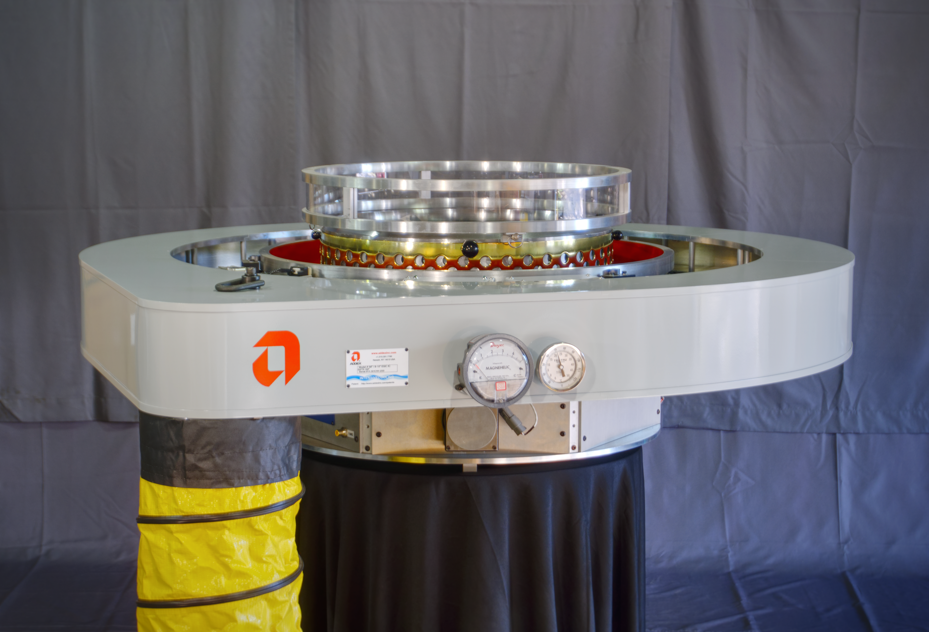
Current EGC planning uses job built Single Inlet Plenums in two inch diameter increments. One external connection simplifies hose routing while the internal distribution is engineered for the selected project.
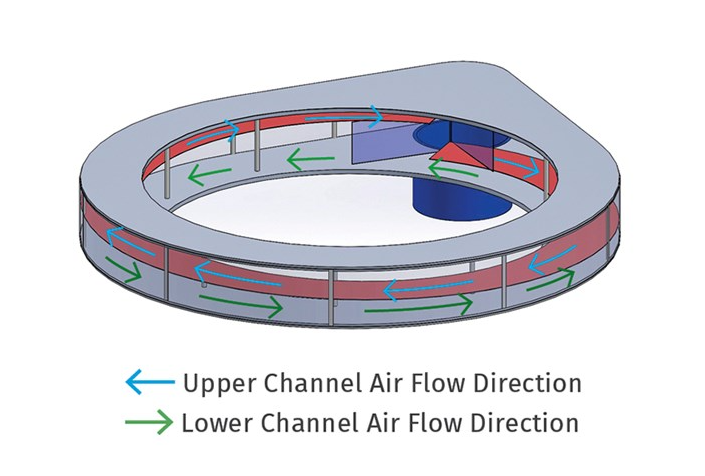
Counterflow paths distribute air around the plenum before it reaches the selected lip set and radial adjustment architecture.
The air ring should be reviewed against normal production and the products that currently define the line's cooling, stability or gauge profile limit.
| Application input | Why it matters | What to provide |
|---|---|---|
| Die and lip geometry | Sets the physical interface and influences the airflow path at the bubble. | Die diameter, lip details, current ring, mounting dimensions and photographs. |
| Resin and structure | Melt strength, layer structure, additives and properties affect cooling and stability. | Normal and difficult formulations, layer percentages and required film properties. |
| Blow up ratio and layflat | Changes bubble geometry, lip selection, collar needs and tower clearance. | Minimum, normal and maximum BUR or layflat for the product range. |
| Output and frost line | Shows the current cooling window and the first instability at higher rate. | Current and target lb/hr, melt temperature, frost line and limiting observation. |
| Blower and ducting | Defines whether the selected ring can receive usable pressure and flow. | Blower nameplate and curve, filters, hose sizes, duct route and inlet temperature. |
| IBC and tower | Internal airflow and physical clearances interact with external cooling and bubble stability. | IBC hardware, supply and exhaust path, cage, tower, nip and collapsing-frame layout. |
| Gauge profile objective | Determines whether LFR, MGC or EGC is the correct family. | Representative profiles, scanner location, movement and resin overbuild data. |
Start with installed equipment condition and the verified production loss. Retain compatible blowers, IBC, measurement or controls only when capacity and interfaces support the target.
Coordinate the die envelope, lip set, plenum, blower and ducts, IBC internals, tower, cage, scanner, movement feedback, controls, utilities and maintenance access early.

The external air ring cools the outside of the bubble. DIBC coordinates compatible active internal supply and exhaust airflow on an IBC line. BIDS inflates or deflates the contained air on a compatible non IBC line. Neither replaces EGC when the problem is circumferential gauge profile.
The equipment decision is only part of the job. Mechanical interfaces, blower and duct changes, utilities, controls, installation responsibilities and acceptance products should be clear before the shutdown.
Separate cooling, stability, gauge profile, IBC and downstream constraints using line and product data.
Choose LFR, MGC or EGC, cooling tier, lip set, plenum, blower and required controls.
Confirm dimensions, clearances, air delivery, electrical scope, movement, I/O and responsibilities.
Verify airflow, lip setup, bubble response, profile mapping, recipes, alarms and manual recovery.
Run agreed products and document stable operation, training, performance and support readiness.
You do not need to select the model first. Send enough evidence for Addex to match the cooling, profile and airflow architecture to the application.
Die diameter, current air ring, model and serial, dimensions, photographs, IBC, cage, tower and clearances.
Resin, structure, thickness, layflat, blow up ratio, film format, properties and output range.
Blower curve, filters, hose and duct geometry, inlet temperature, frost line and ambient conditions.
Gauge profiles, pressure and output trends, scrap, operator observations and the first signal that limits the line.
These pages separate complete line modernization, gauge control, internal air, selection, diagnosis and ROI so the air ring page can stay commercially focused.
Send the die and installed equipment, product range, output, blow up ratio, frost line, blower and duct details, IBC arrangement, gauge profiles and the result the plant needs to improve. Gauge Advisor will organize the application for Addex review and quotation.