
Rubber Extrusion Gear Pumps & Measurement Systems
Stabilize difficult elastomer flow before the die, then verify the dimensions, wall and surface of the product that leaves it. Gauge Advisor helps select MAAG rubber gear pumps, LaserLinc inline and offline measurement, and AIM coating measurement for suitable coated seals, with sample testing and manufacturer quotation support.
What has to improve on the line?
Choose the symptom or quality requirement closest to the project. Flow and dimensional paths open guided selectors. Surface and coating projects begin with a product and sample review because geometry, finish and material response determine feasibility.
Choose the first variable to investigate
Use the guided questions for rubber flow control or measurement, or request an application review for surface inspection and coating measurement. Results are preliminary starting points—not final equipment sizing or a performance guarantee.
Rubber flow, pressure & gear-pump duty
Choose Rubber & Elastomer service in the MAAG selector, then document the compound, Mooney or viscosity, temperature, throughput, inlet pressure, outlet pressure and current line arrangement.
If the MAAG selector does not load, open it on its own page.
Open the selector and choose Rubber & Elastomer →Rubber dimensions, hose wall & inspection
Start with the product geometry and the dimension or property used for acceptance. Round hose, tubing and cord need a different measurement setup from an oriented seal or a complex flexible profile.
If the measurement selector does not load, review the LaserLinc measurement systems below.
Continue with LaserLinc measurement systems →Surface inspection and sample testing
FlawSense maps the visible outside contour to find raised and recessed events on suitable products. Check rubber color, finish, texture, geometry, speed, presentation and representative defects during sample evaluation.
The complete product envelope
Minimum and maximum size, round or non-round geometry, wet or dry state, line speed, motion and available inspection location.
The defect as geometry
Provide good, borderline and reject samples with the required height, depth, length, position and acceptance logic when known.
Topography from appearance
Color, stain, gloss, chemistry, buried conditions and functional failures may require complementary inspection or testing.
Request sample testing →AIM seal-coating feasibility review
AIM has validated CoatPro thickness measurement for lubricant and flock adhesive on EPDM and neoprene rubber seals. Confirm the specific coating, substrate, range and geometry in the laboratory before selecting the system.
The functional coating layer
Test CoatPro at the coating locations you need to inspect. It measures coating thickness where feasibility is confirmed, not the bulk rubber cross-section.
At a point or sequence
A fixed sensor or coordinated motion can inspect repeatable locations when distance, angle and cycle time are controlled.
Representative references
Sample testing establishes measurability, calibration, realistic precision and measurement time for the actual coating/substrate pair.
Request a coating test →Control the compound flow. Then verify what the line actually makes.
A dimensional problem found after curing may have begun with compound delivery, extruder or strainer pressure, die behavior, cure conditions, cooling or haul-off. Trend the first unstable variable instead of assuming that a downstream gauge—or an upstream pump—can correct every source of variation.
Establish the upstream condition
Confirm the formulation, feed method, temperature and rheology reaching the extruder. Mixing and compound preparation remain upstream scope boundaries.
Start with the symptom →Stabilize delivery to the head
Use a rubber-specific gear pump where controlled flow, high discharge pressure or extruder pressure relief addresses the actual bottleneck.
Review MAAG extrex6 ER →Allow for the process response
Die swell, profile orientation, curing, cooling, line tension and haul-off can all change the final geometry after the pump.
See system boundaries →Verify the accepted product
Measure dimensions, wall, surface or functional coating at the location that best represents the customer’s acceptance condition.
Build the measurement system →The connection is diagnostic: synchronized pressure, speed and dimensional trends can show whether events move together. Correlation does not by itself prove cause, and a gauge only becomes a control system when the line has a compatible actuator and validated response.
Equipment optionsExplore rubber extrusion gear pumpsMAAG extrex6 ER gear pumps for controlled rubber and elastomer delivery.View equipmentHide equipment
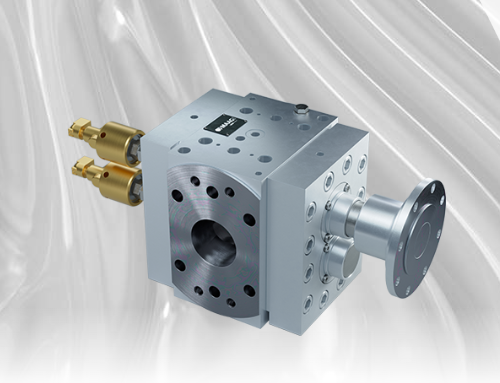
Let the extruder work the compound. Let the pump control delivery.
Rubber extrusion asks a positive-displacement device to convey material that can be extremely viscous, dry or sticky without adding unnecessary shear or heat history. MAAG designed extrex6 ER as a transfer, booster or metering pump for elastomeric processing. Its low-compression tooth geometry is intended to maintain precise flow at high discharge pressure while reducing shear and scorch risk.
- Rubber applications to review: natural rubber, SBR, NBR, EPDM, chloroprene, butadiene and silicone are included in MAAG’s rubber application range. Confirm the configuration for the actual compound.
- Application data first: compound rheology or Mooney, temperature, throughput and the complete inlet/outlet pressure profile determine which pump configuration to review.
- System integration: review the extruder, existing strainer or head, die, drive, sealing, thermoregulation, controls, access and mechanical interfaces as one package.
Separate delivery from plasticizing
Let the pump assume controlled downstream pressure generation and metering when head or strainer restriction is the real output limitation.
Review dry, sticky and sensitive material
High viscosity, low lubricity, temperature sensitivity, filler and process history change pump duty, sealing and thermoregulation.
Coordinate extruder, strainer & head
Review the ER between the extruder and head, including any screen changer or strainer head, as one complete pump and line arrangement.
Evaluate RV or RB replacement responsibly
Use the existing model, size, drive, footprint, connections and operating data to review an ER upgrade; do not assume drop-in interchangeability.
Equipment optionsExplore rubber measurement and inspection equipmentLaser micrometers, ultrasonic wall measurement, and surface inspection systems.View equipmentHide equipment
Measure the dimension the customer accepts—not just the one that is easiest to gauge.
Flexible rubber can sag, twist, stretch and change size with temperature, cure and handling. Choose the sensor, product presentation and measurement location from the actual acceptance method.
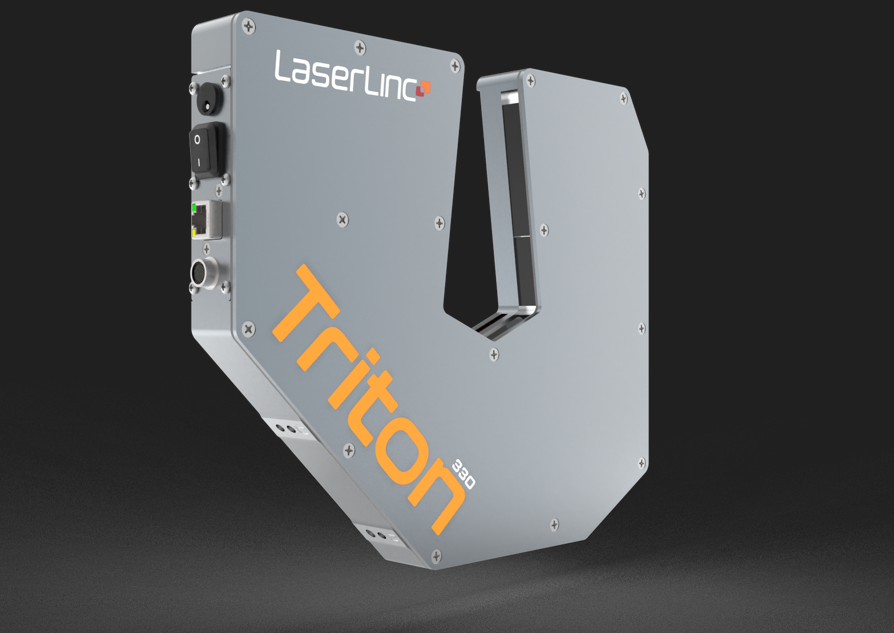
OD & estimated ovality
Start with triple-axis Triton when you need average diameter and estimated ovality on a moving round or elliptical product. Confirm the measurement setup for the actual material and motion.
Product guidance, sag, vibration, size envelope and the hot-to-cold correlation remain part of the application.Compare Triton laser micrometers →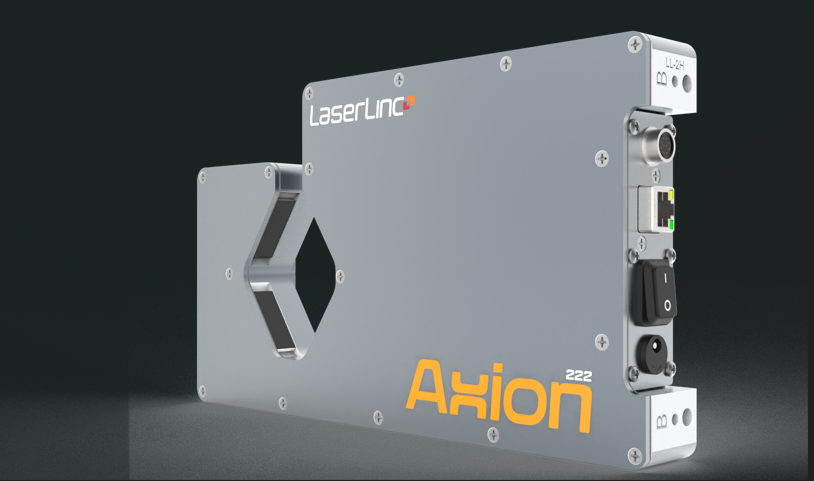
Width & height at a fixed orientation
One- or two-axis Axion systems monitor selected projected dimensions when the profile can be presented at a repeatable orientation.
A shadow measurement does not reconstruct every lip, hollow chamber, corner or undercut of a complex weatherseal.Compare Axion laser micrometers →
Wall, concentricity & calculated ID
UltraGauge can be evaluated for acoustically suitable rubber hose or tubing. Add synchronized laser OD when calculated ID and outside geometry are required.
Compound response, reinforcement, fillers, porosity, coupling, interfaces and sample waveforms determine feasibility.Screen the ultrasonic application →
Raised & recessed defects
FlawSense maps the visible outside contour for pits, bumps, cracks, scratches, blisters, wrinkles and other topographic events on qualified products.
LaserLinc has applied FlawSense to industrial hose. Complex non-round seals still need geometry and sample review.Explore surface inspection systems →Choose the inspection steps your product requires. Total Vu software connects LaserLinc readings with customizable displays, saved data, reports and optional process control for hose, seals and profiles. If you only need laser micrometer measurement tags in an existing machine interface, SmartLinc Processor can send them to your PLC or HMI.
Equipment optionsExplore seal-coating thickness measurementAIM CoatPro systems for noncontact coating-thickness measurement on qualified seals.View equipmentHide equipment
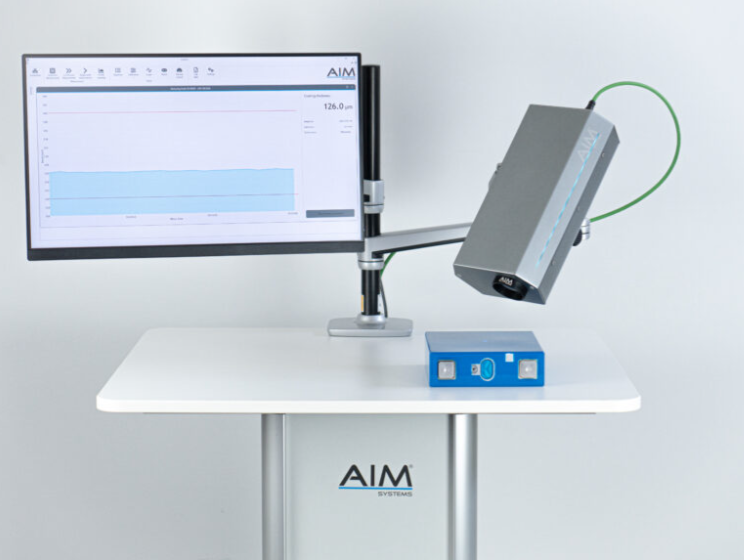
Measure the functional layer without cutting the seal apart.
AIM has validated lubricant and flock-adhesive thickness measurement on EPDM and neoprene seals, as shown in its validated-application list. The photothermal CoatPro platform can be evaluated for noncontact measurement at repeatable positions or along coordinated inspection paths. Test the actual coating and substrate together to confirm feasibility.
- Validated starting application: lubricant and flock adhesive on EPDM and neoprene rubber seals.
- What it measures: coating thickness where the material pair and range have been tested, not bulk rubber geometry, adhesion, chemistry or every functional property.
- What confirms fit: representative references across the expected range, surface geometry, measurement time, distance and angle.
- How it can deploy: laboratory, near-line, fixed production position or coordinated automated sequence after feasibility is established.
Focused on high-value profiles, seals and hose—not every rubber process.
The strongest fit is specialty elastomer manufacturing where compound cost, tight dimensions, surface quality or documented inspection justify better process visibility.
Seals, profiles, cord & sleeves
Silicone and qualified elastomer shapes where outside dimensions, repeatable profiles or surface condition matter.
Industrial seals & gasket profiles
Bulb, lip, channel, cord, sponge and solid profiles in EPDM, neoprene, silicone and other qualified compounds.
Industrial hose, tubing & sleeves
Round products requiring OD, ovality, qualified wall distribution, offline verification or automated surface inspection.
Weatherseals & enclosure profiles
Door, window, rail, vehicle, HVAC and enclosure seals where cross-section stability or functional coating consistency matters.
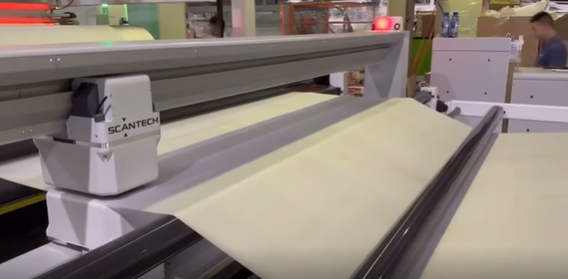
Running rubber sheet or reinforced calender stock?
Rubber calendering is a separate web process from profile extrusion. Gauge Advisor can review Scantech noncontact thickness or profile measurement and FMS web tension or guiding for the line. Check compound, surface condition, temperature, web support, reinforcement, width and sample response before selecting a sensor or control system.
- Distinguish direct physical thickness from calibrated attenuation or basis-weight results.
- Define whether the requirement is one fixed point, machine-direction trend or a full cross-web profile.
- Review tension and guiding around the calender, cooling section and windup separately.
- Confirm whether a compatible gap or process actuator can support a safe, validated control response.
Route the symptom before choosing the equipment.
Start by identifying the first process variable that becomes unstable, then choose equipment that can measure or control it.
A rubber gear pump may assume controlled downstream pressure generation and metering when that is the true constraint.
Confirm compound feed, extruder, strainer and head behavior before assigning the cause to the pump.
Continuous dimensional data establishes when the process moves and whether the product presentation is stable enough to measure.
Construction, acoustic response, coupling and representative sample waveforms determine whether inline ultrasonics is viable.
Qualified full-surface topography can find, size and locate raised or recessed events continuously.
Test the coating/substrate pair and range to establish whether CoatPro can measure the functional layer.
This is a web-gauging and web-handling application, not a profile-extrusion measurement method.
Know what each system can actually change or prove.
Rubber dimensions and flow depend on rheology, heat history, pressure, die swell, cure, cooling and mechanics. Identify which variable the pump or measurement system can address, then check the rest of the process separately.
Can meter flow & build pressure
It cannot mix the compound, repair poor dispersion, correct die design, eliminate die swell or control curing and downstream mechanics.
Can reveal product response
It cannot prevent sag, twist, stretch or shrinkage unless the process has a compatible actuator and a validated control response.
Can measure tested surface or coating features
It cannot replace application testing or guarantee that every irregular profile, defect mechanism and coating stack is measurable.
Bring a stronger operating profile to the review.
Quantify line rate, pressure behavior, capability and inspection value before equipment is finalized. Calculator results remain planning estimates until the application is confirmed.
Extrusion throughput & line speed
Relate product cross-section, density, production rate and line speed for preliminary operating ranges.
Extrusion pressure fluctuations
Organize evidence around feed, extruder, strainer, pump, die, controls and downstream response.
Cpk / Ppk capability
Compare stable measurement data with the tolerance window and separate spread from centering.
Extrusion engineering calculators
Browse pressure, throughput, melt-pump, measurement, calibration and ROI planning tools.
Rubber extrusion system selection
Use these answers to narrow the options. Final selection needs the actual compound, line conditions, geometry, acceptance method, samples and integration scope.
How is extrex6 ER different from a thermoplastic melt pump?
Can extrex6 ER process dry or sticky rubber compounds?
Can a laser micrometer measure a complex weatherstrip cross-section?
Can UltraGauge measure reinforced rubber hose?
Can FlawSense inspect rubber hose or profiles?
Can CoatPro measure coating thickness on an EPDM seal?
Does Gauge Advisor supply the extruder, strainer, die or curing line?
What if the material is TPE, TPV or TPU?
Can these systems run in closed loop?
Send the compound data, line layout and product drawing.
Gauge Advisor welcomes rubber extrusion equipment inquiries worldwide. I review the application remotely and coordinate the appropriate manufacturer team and project support for your location. We can separate the rubber-flow, forming, dimensional, surface and coating questions, then involve MAAG, LaserLinc or AIM only where each technology fits.
- Product drawing, geometry, tolerances and hot versus cold or cured dimensions
- Compound family, grade, Mooney or rheology data and operating temperature
- Minimum, normal and maximum throughput plus line speed
- Current extruder, strainer, head and pump arrangement
- Inlet, outlet and head-pressure trends
- Gauge location, product motion, cooling and cure condition
- Defect or coating target, representative samples and photos
- Controls, available layout, plant location and project timing