Choose the Project
Evaluate a melt pump or polymer filtration and screen-changing system using a business-case model tailored to that equipment.

Estimate the potential payback of an extrusion melt pump or polymer filtration system using your production, material, scrap, downtime, throughput, and energy assumptions.
Evaluate a melt pump or polymer filtration and screen-changing system using a business-case model tailored to that equipment.
Add your throughput, operating schedule, material cost, scrap, downtime, installed cost, and other relevant operating assumptions.
See the estimated annual benefit, material savings, recovered production, energy savings, payback period, and net present value.
Melt pumps can create value by stabilizing melt pressure and flow, reducing material giveaway and dimensional variation, lowering instability-related scrap, increasing usable throughput, and reducing the pressure-building work required from the extruder. Polymer filtration and screen-changing systems can create value by reducing contaminant-related scrap, shortening or eliminating manual screen-change downtime, lowering cleaning and maintenance labor, and reducing filter-media consumption. This calculator provides a practical first-pass estimate for MAAG melt pumps, continuous and discontinuous screen changers, and advanced polymer-filtration systems.

Melt Pump, Screen Changer, and Polymer Filtration Technology Partner
Extrusion lines often benefit from better control of melt pressure, flow stability, filtration, contaminant removal, throughput, and dimensional consistency. The right melt pump or polymer filtration system can reduce material giveaway, stabilize the process, lower scrap, recover uptime, and help the line run closer to its true operating potential.
A melt pump is a precision gear pump installed in the extrusion line to deliver a more stable and repeatable polymer flow to the downstream process. A polymer filtration system or screen changer removes contamination from the melt and helps maintain cleaner material flow, more stable pressure, and longer continuous production runs.
An extruder can generate output on its own, but the downstream process often performs better when melt delivery is steadier and less dependent on screw-driven pressure fluctuation. A melt pump separates the job of melting and mixing from the job of precise pressure generation and flow delivery.
This can help the process run more consistently at the die, head, tooling, or downstream measurement point. Operators often see tighter control, less instability-related waste, and more confidence when running closer to the intended target.
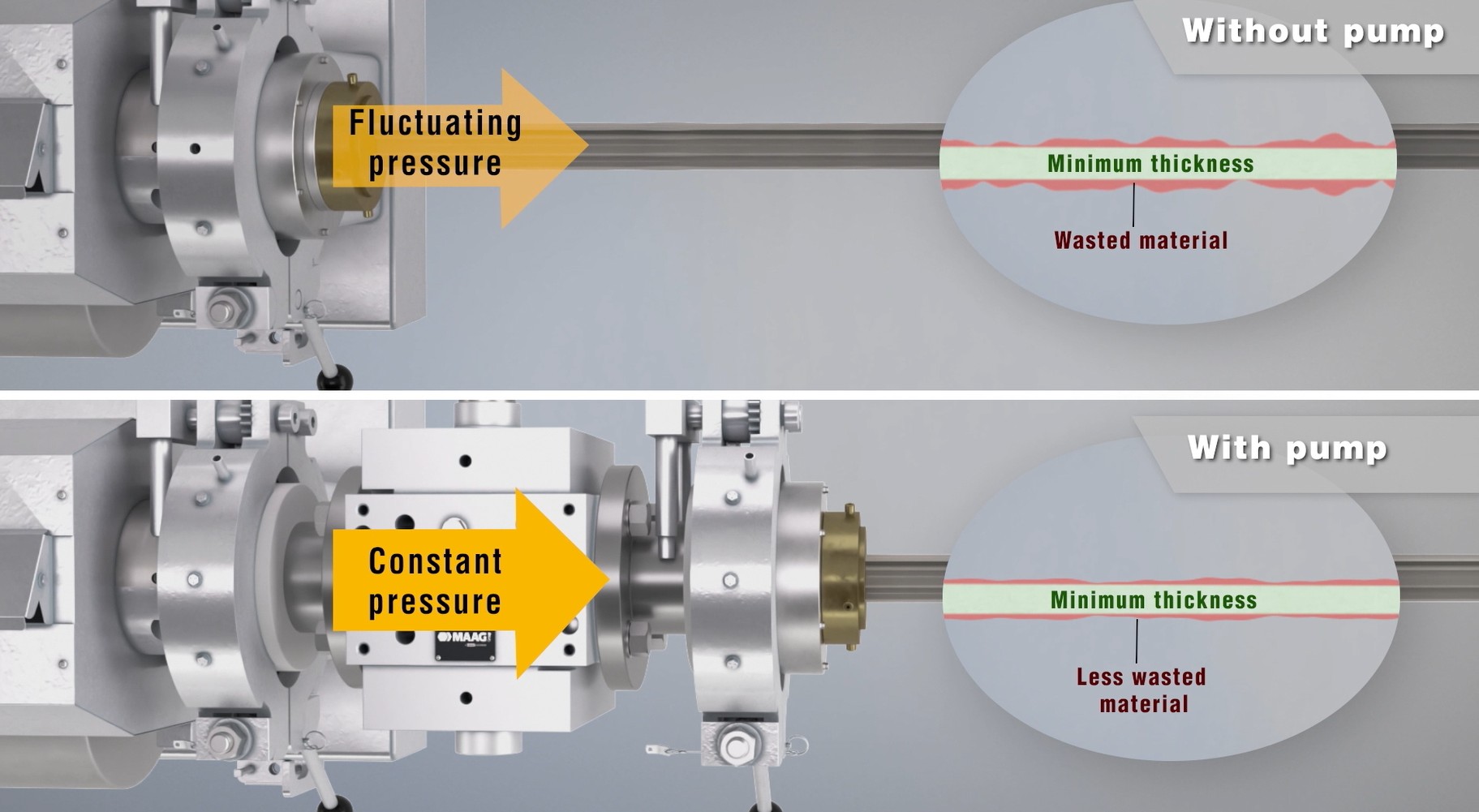
More stable pressure and flow can allow the process to run closer to the true target rather than carrying unnecessary extra wall, thickness, weight, or output cushion.
Better melt stability and cleaner polymer can reduce dimensional variation, gels, black specks, contamination-related defects, and other losses.
Some lines can take advantage of higher stable output when improved melt delivery or filtration reduces pressure interruption and instability.
Continuous or efficient screen-changing systems can reduce planned and unplanned line stops and keep production running longer between interventions.
Tighter control of melt delivery helps protect dimensions, output stability, and downstream quality through the die, sizing, gauging, winding, or pelletizing process.
Because the melt pump takes over part of the pressure-generation task, the extruder can often run with less pressure stress and more stable operating behavior.
Extrusion melt pumps provide a fixed, repeatable flow based on displacement and speed. They are used in sheet, film, pelletizing, profile, pipe, tubing, compounding, and other extrusion processes.
Polymer filtration systems remove contaminants before the melt reaches the die or downstream equipment. Selection depends on contamination, allowable interruption, pressure sensitivity, throughput, and material type.
A pump becomes especially attractive when the line needs tighter pressure stability, lower pulsation, more repeatable output, or more control over melt delivery.
Filtration can reduce gels, black specks, paper, metal fines, degraded polymer, and other contamination that affects quality or forces premature interruption.
Continuous systems are attractive when the plant cannot tolerate frequent shutdowns or pressure disturbance during manual screen changes.
Proper selection depends on resin, throughput, fineness, contamination level, process sensitivity, and whether the case is driven by quality, uptime, labor, or equipment protection.
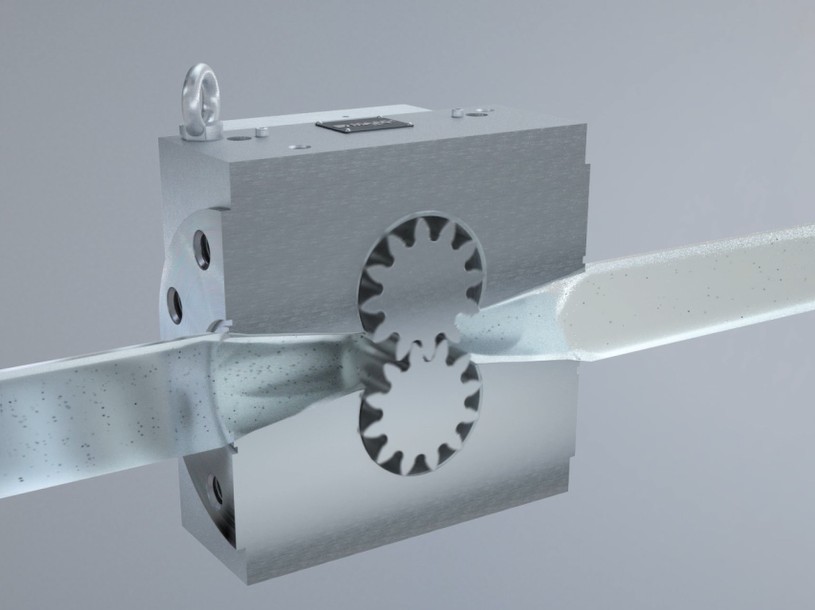
A modern melt pump provides repeatable volumetric output that helps smooth polymer delivery to the die or downstream process. That improved stability can appear as better dimensional consistency, lower overbuild, less scrap, and greater confidence at higher production rates.
The calculator separates melt pumps from polymer filtration because the financial drivers are different.
Contamination in the melt can create expensive downstream problems. A proper filtration system helps protect the product and downstream equipment before unwanted material reaches the die.


A continuous screen changer is especially attractive when the line cannot tolerate frequent shutdowns, major pressure disturbances, or extended operator intervention during a screen change.
Unlike a basic manual or discontinuous screen changer, a continuous design allows filtration media to be changed or indexed while the extrusion line remains in production.
For melt pumps, the most defensible cases usually begin with reduced average overbuild and lower instability-related scrap.
Added output should only be included when the line can run faster, downstream equipment can support it, and demand can absorb it.
For filtration, avoided downtime can be one of the largest savings drivers. Use a contribution-margin or productive-hour basis.
Avoid double counting. Some scrap reduction may overlap with material savings, downtime, or labor assumptions.
These articles provide additional technical context on melt-pump operation, PVC extrusion, filtration selection, pressure instability, and the production metrics that influence project ROI.
A melt pump is most attractive when extruder pressure fluctuation affects dimensions, output stability, scrap, or the amount of material needed to remain above the minimum specification.
A melt pump is a positive-displacement gear pump that meters polymer melt at a controlled rate. The extruder melts, mixes, and conveys the polymer, while the pump provides more stable pressure and flow downstream.
Yes. When pressure and flow are more stable, the plant may be able to reduce the operating cushion used to protect minimum wall, thickness, weight, or dimensional requirements.
It can on qualifying lines. Actual added throughput still depends on the extruder, die, cooling, downstream equipment, material, and available production demand.
A melt pump can reduce the pressure-building work performed by the extruder. The pump also requires its own motor, so the best evaluation compares total before-and-after system power.
Sizing is based on throughput, density, pump speed, volumetric capacity, viscosity, temperature, inlet pressure, outlet pressure, and differential pressure.
Inlet pressure enters the pump, outlet pressure leaves the pump, and differential pressure is outlet minus inlet pressure.
Current pressure data and the downstream pressure requirement help establish the future operating point. Final values should be confirmed during application review.
A screen changer holds filtration media in the polymer stream to capture contamination before it reaches the die or downstream equipment.
A discontinuous changer creates a more noticeable interruption or pressure disturbance. A continuous design allows filtration media to be exchanged or indexed while production continues.
It becomes more attractive when screen changes are frequent, downtime is expensive, the product is pressure-sensitive, or long uninterrupted production runs are required.
A backflush system reverses a controlled portion of clean polymer through the filtration element to remove accumulated contamination and extend screen life.
A high-performance melt filter is commonly considered for recycling or repelletizing applications with significant and variable contamination.
Fineness depends on product requirements, die sensitivity, contaminant size, viscosity, throughput, and allowable pressure drop.
Pressure rises as contamination accumulates and restricts flow. Screen fineness, area, viscosity, temperature, throughput, and support design also affect pressure drop.
It is commonly installed before the pump so contamination is removed before reaching the precision gears, but final placement depends on pump inlet pressure, contamination load, equipment design, and line layout.
Yes. The filter cleans the melt, while the pump meters the filtered polymer and provides more stable pressure and flow downstream.
No. Filtration removes solid contaminants larger than the opening, but some gels or degradation may deform, pass through, or be generated downstream.
Useful inputs include polymer, throughput, melt temperature, viscosity, filtration fineness, contamination type and loading, allowable pressure drop, pressure limits, run length, and continuity requirements.
Filtration ROI may include avoided downtime, reduced contaminant-related scrap, lower maintenance labor, reduced media consumption, longer runs, and fewer quality problems.
Melt-pump ROI commonly includes reduced material giveaway, lower instability-related scrap, added sellable output when justified, and potential drive-energy savings.