Choose the Project
Evaluate an inline thickness-measurement system, automatic gauge or die control, or web-tension measurement and control upgrade.

Estimate the potential payback of a web gauging thickness-measurement, automatic gauge-control, or web-tension measurement and control system.
Evaluate an inline thickness-measurement system, automatic gauge or die control, or web-tension measurement and control upgrade.
Add your production rate, operating hours, material cost, thickness variation, scrap, downtime, and estimated project cost.
See the estimated annual benefit, material savings, recovered uptime, payback period, and three-year net benefit.
Film and sheet measurement and web-tension systems can create value by reducing material giveaway, detecting thickness and profile drift sooner, lowering startup scrap, improving roll consistency, stabilizing coating or extrusion processes, and reducing tension-related wrinkles, breaks, telescoping, curl, and winding defects. The calculator provides a practical first-pass estimate for Scantech inline thickness gauges, scanners, profile-measurement and automatic-control systems, as well as FMS load cells, amplifiers, segmented tension rollers, web-guiding, and tension-control equipment.

Film & Sheet Thickness Measurement and Gauge Control Technology Partner

Web Tension Measurement, Guiding, and Control Technology Partner
Film, sheet, coating, laminating, and converting processes often require tighter control of thickness, basis weight, profile uniformity, coating consistency, and web tension. The right measurement and tension-control system can reduce material giveaway, reveal profile drift sooner, lower startup scrap, improve roll quality, and help operators maintain a more stable process from unwind through rewind.
A film and sheet measurement system uses non-contact sensing, scanning, software, and optional closed-loop control to measure thickness or coating profile across the web. A web-tension system uses load cells, amplifiers, segmented rollers, controllers, and guiding equipment to measure and stabilize tension through extrusion, coating, laminating, slitting, printing, winding, and other web-handling operations.
Manual thickness checks provide useful verification, but they only examine a small number of points. A web can drift between samples, and a cross-web profile problem may remain hidden until an entire roll is inspected or rejected.
An inline scanner provides a continuous picture of the machine-direction and cross-direction profile. Operators can see whether the process is moving toward a high or low limit and whether one area of the web is consistently heavier or thinner than the rest.
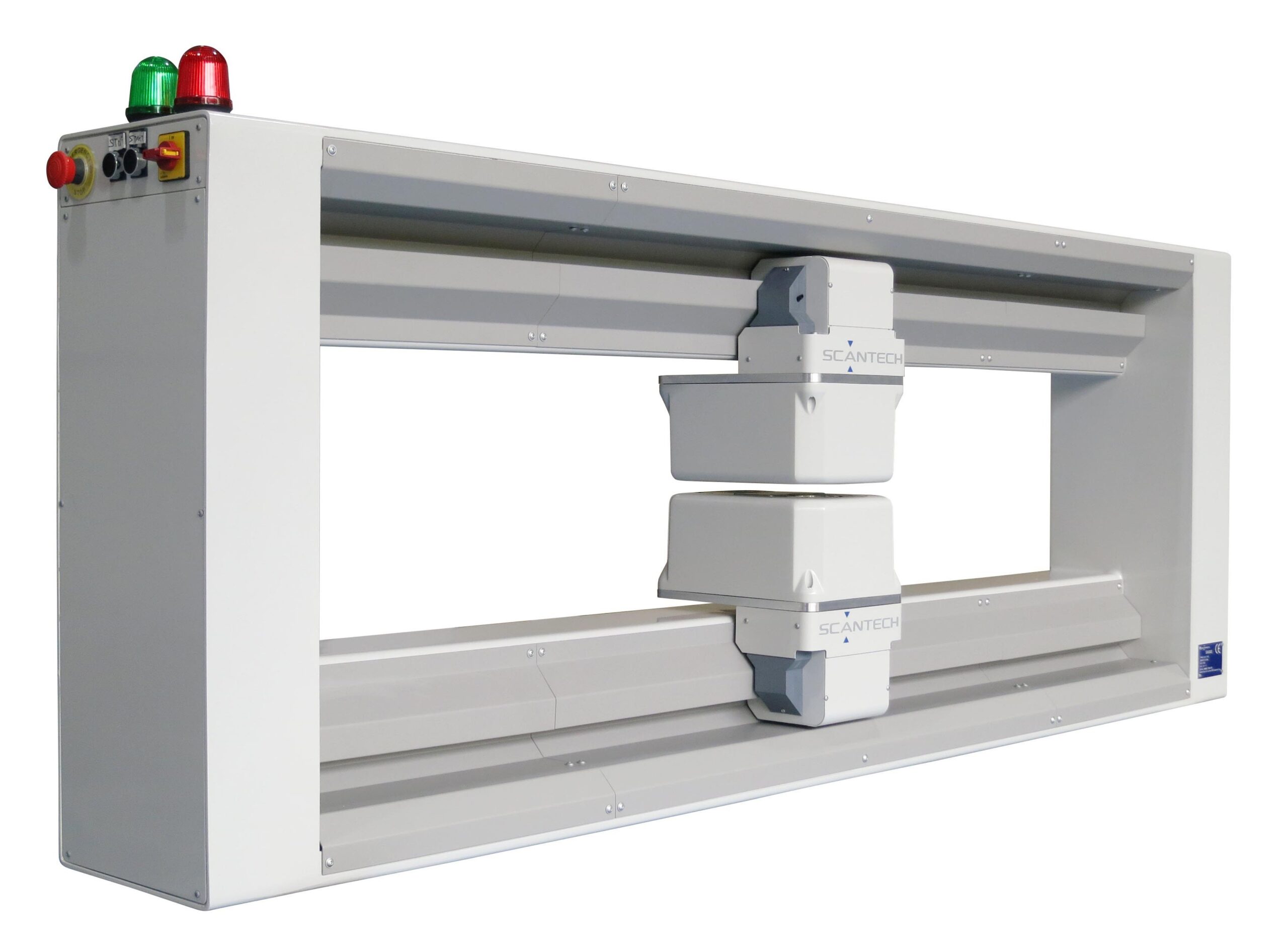
Better profile visibility and automatic control can allow the process to run closer to the true target rather than intentionally producing extra thickness or coating weight to protect the minimum specification.
Faster detection of thickness excursions, coating variation, unstable tension, wrinkles, or winding problems can reduce the amount of off-spec product produced before corrective action is taken.
Continuous feedback helps operators stabilize the process, adjust the die, center the profile, balance tension zones, and reach saleable production more quickly after startup or changeover.
Stable tension can reduce wrinkles, bagginess, curl, telescoping, edge problems, roll hardness variation, web wander, and other defects that create converting or customer issues.
Thickness measurement and stable web tension help protect coating weight, layer uniformity, registration, nip behavior, and dimensional consistency through multi-step web processes.
Stored profiles, trends, alarms, and tension data support troubleshooting, customer review, line comparisons, SPC, and continuous process improvement across shifts or facilities.
Scanning systems move a measurement head across the web to build a full cross-web profile. Depending on the application, the system may use X-ray, beta, infrared, optical, or another non-contact sensing method.
These systems are used for film, sheet, coating, laminating, battery materials, adhesives, barrier layers, and other continuous-web processes.
Measurement data can be used to adjust automatic die bolts, thermal actuators, coating controls, or another process variable. Closed-loop control continuously corrects the profile instead of relying only on manual operator adjustment.
Specialized measurement heads can evaluate total thickness, coating weight, or selected layer properties on coated, impregnated, laminated, or composite webs.
Tension load cells measure the actual force in the web so operators and controls can manage unwind, process-zone, and rewind tension using real process data rather than indirect settings alone.
A segmented tension roller measures how tension is distributed across the width of the web. This can reveal baggy lanes, uneven strain, coating or calender effects, edge problems, and other cross-web conditions that a conventional two-load-cell roller cannot show.
Tension and guiding equipment can be integrated with brakes, drives, dancers, steering frames, unwind stands, and rewind systems to stabilize the web path and maintain the desired operating tension.
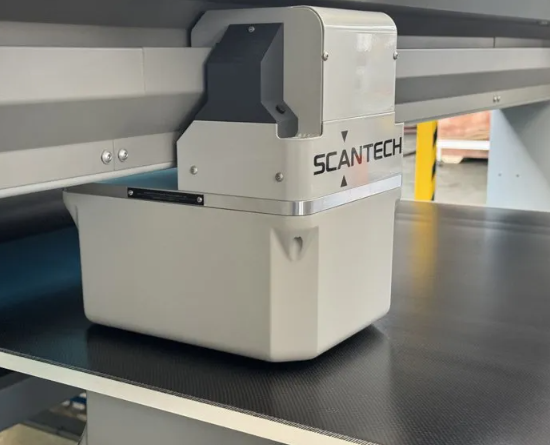
Measurement-only systems provide visibility, alarms, trends, reporting, and a better basis for manual process adjustment. They are often the right first step when the plant needs to understand the process before adding automatic control.
Automatic gauge or die control becomes more attractive when profile variation changes during the run, operators make frequent adjustments, material giveaway is high, or the process needs continuous correction to hold a tighter cross-web profile.
The calculator separates thickness measurement from web-tension control because the financial drivers are different. Thickness systems create value mainly through reduced material giveaway, lower scrap, and faster profile correction. Tension systems create value through fewer defects, recovered uptime, better winding, and more stable web handling.
A conventional tension roller usually reports one total tension value from two load cells. That number can look acceptable even when one lane is tighter than another or one side of the web is carrying more force.
A segmented tension roller measures the web in multiple zones across its width. This helps the plant identify where the tension imbalance is located and whether the issue is related to coating, calendering, stretching, winding, roll condition, or another upstream process.
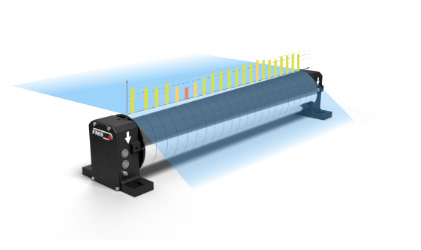

Tension measurement is most valuable when web handling problems are intermittent, product-dependent, or difficult to diagnose from machine settings alone.
Common warning signs include:
This estimates the value of reducing average thickness, coating weight, or basis weight while continuing to protect the minimum specification. Use only the material reduction that the process can safely achieve.
This includes profile excursions, off-spec rolls, startup waste, rework, downgrade, or customer-related losses that better measurement or automatic control can realistically reduce.
Faster measurement feedback and stable tension can shorten startup, adjustment, and troubleshooting time. Recovered line time should only be counted when it can be used productively or when the avoided downtime has a clear operating value.
This includes reductions in wrinkles, breaks, winding defects, bagginess, curl, telescoping, coating variation, and other losses tied to unstable or uneven web tension.
Better tension control may reduce wear on brakes, clutches, bearings, shafts, guides, and rollers. Keep this optional unless the plant has a defensible maintenance baseline.
Simple payback compares installed project cost with estimated annual benefit. Three-year net benefit subtracts project cost from three years of projected savings. Both are screening tools and should be validated with production data and an application-specific quotation.
Review related guidance on when to install a thickness measurement system , thickness gauges and material-control economics , and segmented tension roller benefits .
Depending on the sensing technology, a system can measure total thickness, basis weight, coating weight, selected layer properties, or other material characteristics across a moving web.
A fixed-point gauge measures one location. A scanning gauge moves across the web to build a full cross-web profile, which helps identify high and low areas that a single measurement position may miss.
Yes. When the process is measured more accurately and controlled more tightly, the plant may be able to run closer to target rather than intentionally producing extra thickness or coating weight.
Automatic control is most valuable when profile variation changes during the run, operators make frequent manual corrections, material giveaway is high, or tighter cross-web uniformity is required.
No. The correct sensing method depends on material composition, density, thickness range, additives, coating structure, temperature, line speed, and the specific property being measured.
Web tension measurement provides the actual running force in the process. This can help reduce breaks, wrinkles, winding problems, and setup variation compared with relying on indirect machine settings alone.
A segmented tension roller measures tension in multiple zones across the web width. It reveals cross-web tension differences that a conventional two-load-cell roller may hide.
Yes. Tension can influence web strain, apparent thickness, coating behavior, winding, and scanner presentation. Stable tension helps produce more repeatable measurement and process conditions.
ROI may include lower material giveaway, reduced scrap and rework, faster startup, recovered uptime, reduced manual sampling, and improved profile control. Estimated annual benefit is compared with installed project cost to determine payback and longer-term value.
Web tension ROI may include fewer breaks, less waste, reduced wrinkles and winding defects, recovered downtime, faster setup, and optional maintenance savings.
Useful inputs include process type, material, thickness range, web width, line speed, temperature, layer or coating structure, required accuracy, scanner location, control goals, and data requirements.
Important details include web width, tension range, roller size, wrap angle, bearing arrangement, machine speed, available mounting space, number of zones, and whether the goal is monitoring, control, guiding, or cross-web profile measurement.