Updated October 9, 2026
Choosing an extrusion filtration system is not simply a matter of picking a screen size or deciding whether the line needs a manual or automatic unit. The right starting point is the material stream: what is in the melt, how quickly it loads a filter, what pressure disturbance the product can tolerate, and how much operator intervention the process can absorb.
Select a MAAG filtration system and request pricing
Describe the resin, contamination and production rate. Gauge Advisor can help review the screen changer or melt-filter configuration and coordinate factory application review.
Review change frequency, allowable interruption and pressure stability.
Evaluate the contamination load and operating burden before selecting an architecture.
Consider filtration, melt-pump placement and pressure limits together.
Start with three details. These are optional; share what you know and we can clarify the rest.
Continue to the contact form to add your contact details and send your request. Gauge Advisor provides authorized MAAG sales and applications support.
This guide explains how manual, discontinuous, continuous, backflush, and self-cleaning melt filtration differ across film, sheet, pipe, profile, tubing, compounding, and recycling applications. It also includes an interactive selection tool, application matrix, pressure-window planner, screen-change cost calculator, and direct links to the most relevant Gauge Advisor melt pump and filtration resources.
Connected process path: Connect filtration choice to the contamination source, allowable pressure change, melt-pump duty, and the product’s moisture and quality limits.
Related next steps: polymer filtration selector, recycling and regrind melt delivery, extrusion pressure stability, melt-pump sizing calculator, desiccant resin drying systems, and film-scrap repelletizing.
What melt filtration can, and cannot, do
A filter sits in the melt stream, so every benefit comes with a hydraulic and thermal consequence. It can remove unwanted solids and protect downstream equipment, but it also adds resistance, creates a pressure-loading cycle, and introduces surfaces where material can reside.
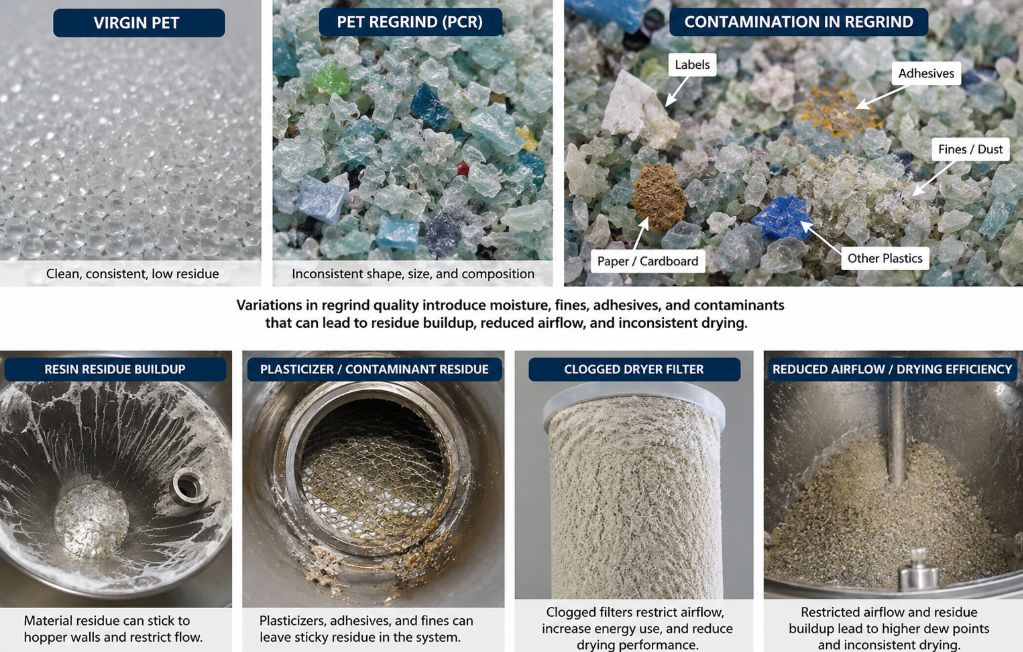
Paper, metal, wood, rubber, silicone, degraded particles, unmelted fragments, and incompatible high-melting solids may be captured when they are larger than the effective opening and do not deform through it.
Filtration can protect narrow die gaps, gear pumps, flow channels, and product surfaces from damaging or visible contamination. The required protection level depends on the downstream geometry and defect tolerance.
A clean filter has an initial differential pressure. As contamination accumulates, that differential normally rises. Screen area, weave, open area, melt rheology, temperature, throughput, and the developing filter cake all influence the result.[2][3]
Every design creates a different pattern of screen changes, backflush cycles, contaminant discharge, melt loss, labor, spare parts, pressure disturbance, and cleaning. Selection is an uptime decision as much as a filtration decision.
- Protecting a die or melt pump from foreign solids
- Reducing visible specks and retained contamination
- Maintaining longer production runs when the system can discharge or backflush contamination
- Creating a repeatable pressure-based screen-change strategy
- Supporting cleaner reclaimed or recycled polymer streams
- Moisture, volatiles, bubbles, or poor drying
- Unstable feeding, blending, or extruder surging
- Incomplete melting or poor dispersion
- Thermal degradation created upstream
- Every gel, because soft gels can deform through mesh
- A desired filler that is part of the formulation
Trace the defect through the complete melt path
Select each stage to see what it contributes to filtration performance. A loaded screen may be the visible symptom, while the cause is upstream contamination, incomplete melting, an unsuitable screen pack, or a pressure-control problem.
1. Material stream: characterize what enters the line
Separate the base polymer from intentional additives and unwanted contamination. Record the source, percentage of regrind or PCR, apparent contaminant type, particle-size distribution, moisture condition, and variability between lots.
- Save representative feed, purge, and filter-residue samples.
- Do not size a system from a single unusually clean or dirty batch.
- For recycled streams, quantify paper, metal, wood, elastomers, other polymers, ash, and fines where possible.
Build a preliminary filtration strategy
This tool narrows the equipment class to evaluate. It does not replace a MAAG application review because actual sizing depends on polymer rheology, throughput, temperature, clean and dirty pressure, required fineness, filtration area, contaminant samples, and the allowable operating window.
Starting architecture
Choose the filtration path by operating burden
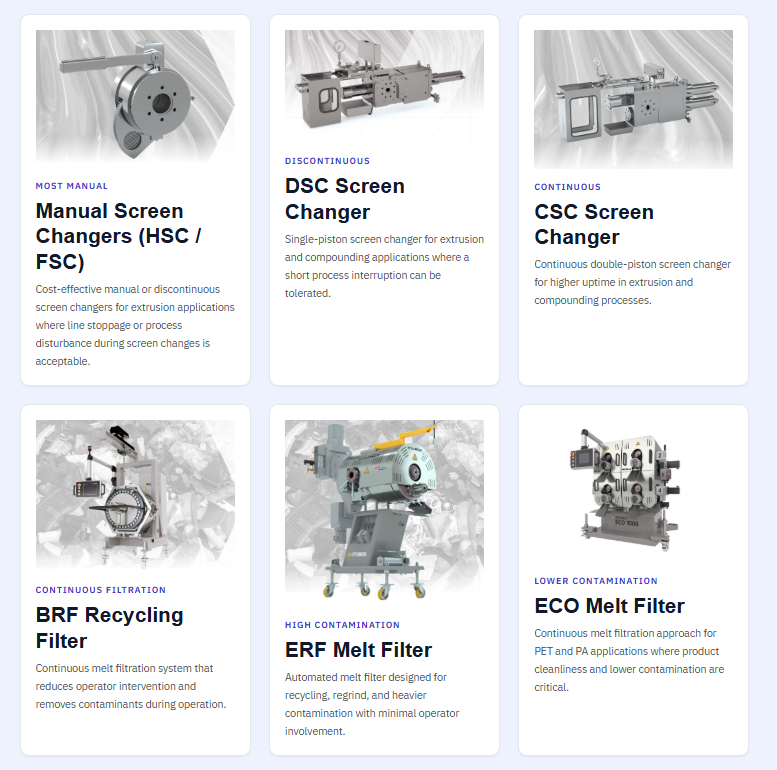
The most useful first split is not “basic” versus “advanced.” It is whether the line can stop, whether the melt path must remain open during a change, and whether contamination loading is occasional or continuous. The cards below combine the equipment image, operating fit, and model comparison in one place.

Manual and compact plate screen changers
Start here when the melt is clean or predictable and a planned manual or hydraulic screen change is acceptable.
Compare HSC and FSC
HSC
Manual screen changer- Starting fit
- Clean or predictable melt streams where a manual change and temporary process interruption are acceptable.
- Why consider it
- Simple operation, short residence time, low pressure consumption, and protection for pumps and fine die gaps.
- Watch
- Labor, change frequency, hot-screen handling, and the scrap or pressure disturbance created by each change.
MAAG lists PVC, coated-flow-channel, and stainless designs as options.[5]
FSC
Hydraulic plate screen changer- Starting fit
- Clean to moderately loaded extrusion where compact geometry, hydraulic actuation, and short residence time are valuable.
- Why consider it
- Pressure-adaptive sealing and a narrow design that MAAG positions for thermally sensitive materials.
- Watch
- Screen-change disturbance still needs to be accepted and included in the quality plan.
PVC, coated-flow-channel, stainless, and high-pressure options are listed by MAAG.[6]

Controlled or continuous screen replacement
Use the required melt-path behavior to separate the discontinuous DSC from the continuous double-piston CSC.
Compare DSC and CSC
DSC
Discontinuous single-piston screen changer- Starting fit
- Demanding melt filtration where a robust piston design is preferred and a controlled process disturbance is acceptable.
- Why consider it
- Single-piston, seal-free construction with multiple screen and breaker-plate options.
- Watch
- Do not describe it as continuous. Document the pressure and product response during piston movement and the screen change.
MAAG identifies the DSC specifically as a discontinuous design.[7]
CSC
Continuous double-piston screen changer- Starting fit
- Film, sheet, pipe, profile, compounding, and other lines that need filtration while maintaining a continuous melt path.
- Why consider it
- Double-piston construction allows one screen cavity to remain in service while the other is changed.
- Watch
- Continuous flow does not mean zero disturbance. Pressure balance, venting, control sequence, and screen loading still matter.
MAAG describes the CSC as a continuous double-piston design without additional seals.[8]
Backflush and rotating-disc filtration
Move beyond conventional screen replacement when regrind, recycling, or mineral loading shortens screen life and increases operator burden.
Compare backflush and rotating-disc designs
CSC/BF-4F
Automatic backflush screen changer- Starting fit
- Recycling and regrind applications where screen life, automatic operation, and high availability matter.
- Why consider it
- Four screen cavities and automatic backflushing extend screen use before replacement.
- Watch
- Backflush volume, contaminant discharge, screen sequence, and pressure recovery must fit the product and controls.
MAAG positions this design mainly for recycling applications.[9]
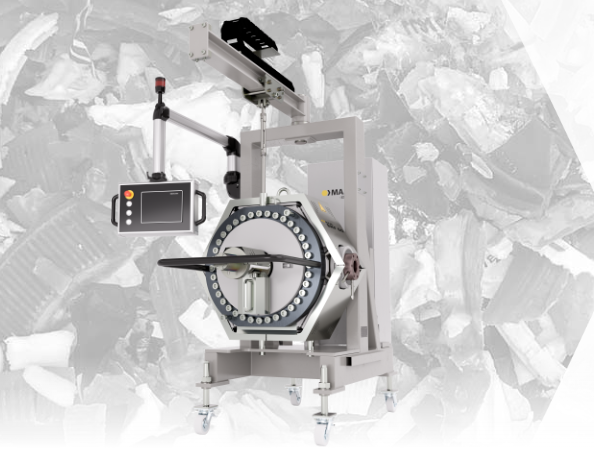
BRF
Continuous rotating-disc melt filter- Starting fit
- Common thermoplastics with ongoing contamination loading, especially recycling, compounding, and mineral-containing melts.
- Why consider it
- A rotating stripper continuously removes contaminants from the screen disk and sends them to controlled discharge.
- Watch
- Published fineness, pressure, polymer, and throughput limits need to be checked against the actual application.
MAAG describes BRF as its entry-level continuous melt-filtration technology and highlights mineral components.[10]

High-performance filtration for low or high contamination
ERF and ECO both use continuously cleaned filtration concepts, but they serve very different contamination ranges and polymer streams.
Compare ERF and ECO
ERF
High-contamination continuous melt filter- Starting fit
- Heavily contaminated polyolefin, styrenic, and compatible recycling streams with paper, wood, metal, rubber, silicone, or high-melting solids.
- Why consider it
- Continuous self-cleaning filtration for variable streams and long operating periods without conventional screen changes.
- Watch
- Polymer compatibility, contaminant type, melt loss, discharge behavior, and actual load must be verified. PVC is excluded.
MAAG publishes suitability up to 16% by weight contamination for appropriate materials and applications.[11]
ECO
Low-contamination continuous melt filter- Starting fit
- PET, PA, clean virgin, industrial waste, or lightly contaminated feed where fine, continuous filtration and low melt loss matter.
- Why consider it
- Constant outlet-side pressure, continuously cleaned filtration surface, short contaminant residence, and a closed design.
- Watch
- It is not the high-contamination choice. Confirm contaminant load, polymer, fineness, throughput, and process requirements separately.
MAAG publishes removal of up to 1.5% contamination and identifies PET and PA as classic applications.[12]
Match the filtration strategy to the process
Use the search field or process filters to narrow the table. These are preliminary architecture suggestions, not final model selections.
17 applications shown
| Application | Filtration challenge | Starting architecture to evaluate | First data to collect | Related resource |
|---|---|---|---|---|
| Medical tubing or catheter extrusion | Low contamination, fine die gaps, strict defect limits, short residence-time concerns, and a strong need to avoid introducing degradation. | HSC or FSC for protective filtration; DSC or CSC when the quality plan cannot accept the screen-change disturbance. Validate fine filtration against pressure and material residence. | Polymer grade, defect type, current pack, clean and dirty differential pressure, throughput, melt temperature, change frequency, and die-gap sensitivity. | Tubing melt delivery |
| Wire and cable insulation or jacketing | Small crosshead passages, surface quality, conductor-related scrap, and pressure sensitivity during long continuous runs. | HSC, FSC, or DSC for cleaner streams; CSC when continuous production and stable changeover behavior are priorities. | Material, output, crosshead pressure, defect sample, screen pack, acceptable disturbance, and conductor/product value during a change. | Filtration selector |
| Blown film with virgin resin or controlled regrind | Gauge and bubble response to pressure changes, gels or specks, long runs, and variable screen loading as reclaim percentage changes. | CSC for continuous production; HSC/FSC may still fit clean lines with infrequent changes. Evaluate CSC/BF-4F or BRF if loading becomes frequent. | MD thickness trend, head pressure, screen-change interval, reclaim percentage, contamination residue, melt temperature, and scrap during changes. | Film and sheet systems |
| Cast film or sheet with tight gauge tolerance | High sensitivity to melt-pressure disturbance, visible defects, die-line protection, and the interaction between filtration and a melt pump. | CSC or application-specific continuous filtration upstream of the pump; FSC/DSC may fit when changes are rare and the product can tolerate them. | P-up, P-down, pump inlet pressure, die pressure, thickness trend, filter area, clean baseline, dirty alarm, and change sequence. | Melt pump guide |
| PVC pipe, profile, or window extrusion | Thermal sensitivity, residence time, pressure, formulation solids, and the need for PVC-compatible flow channels and construction. | PVC-specific HSC, FSC, DSC, or CSC review based on interruption tolerance and pressure. Do not route PVC to ERF. | Rigid or flexible PVC formulation, stabilizer/filler package, temperature, output, current screen pack, pressure, residence time, and cleaning method. | Pipe and profile systems |
| PE or PP pipe/profile with variable regrind | Changing solids load, pressure rise, surface defects, and long production campaigns. | CSC or CSC/BF-4F for screen-based filtration; BRF or ERF review when contamination is continuous or substantially higher. | Regrind source and percentage, metal/wood/paper sample, filtration fineness, pressure rise per hour, change frequency, and discharge tolerance. | Filtration selector |
| PET thermoforming sheet from bottle flake | Low-level paper, aluminum, PVC, and black specks; high sensitivity to drying, degradation, and residence time. | ECO continuous melt filter review for low-contamination PET streams; screen-changer options may fit cleaner virgin or tightly controlled material. | Flake source, contamination analysis, IV/MFR method, moisture, drying history, black-speck count, throughput, and target fineness. | Filtration selector |
| PA film, fiber, or precision extrusion | Moisture sensitivity, fine defects, degradation risk, and a need for a clean, stable melt path. | ECO or a compact continuous screen-changer architecture, depending contamination, throughput, fineness, and acceptable residence time. | PA grade, moisture, temperature, residence history, defect sample, target fineness, clean differential, and product sensitivity. | MAAG solutions overview |
| Mineral-filled masterbatch or compound | Desired solids can load fine screens rapidly, while agglomerates, tramp metal, and oversized foreign material still require protection. | BRF review for ongoing mineral-containing melt filtration; robust HSC/FSC/DSC/CSC designs may fit cleaner or batch processes. | Filler identity and percentage, particle distribution, desired retained solids, agglomerate size, viscosity, abrasion, pressure, and screen life. | Filtration selector |
| TPE, TPU, or TPV compounding | Elastic contaminants, gel-like defects, high viscosity, thermal history, and material that may deform through the filtration medium. | FSC, DSC, CSC, or ECO-class review depending contamination and polymer behavior. Material testing is especially valuable. | Compound family, viscosity, hardness, filler, defect sample, temperature, pressure, target fineness, and whether defects deform under pressure. | Request application review |
| Post-industrial edge trim and clean reclaim | Relatively controlled material, but ink, adhesive, paper, degraded edges, and collection-system debris can create periodic loading. | CSC/BF-4F, BRF, or CSC depending the actual load and required automation. A simpler screen changer may fit very clean in-house scrap. | Scrap source, ink/adhesive, grinder and conveying debris, pressure rise, change frequency, screen residue, and intended end product. | Resin handling systems |
| PET bottle-flake repelletizing | Paper, aluminum, PVC, black specks, fines, and the need to limit melt loss and thermal exposure. | ECO continuous melt filter when the measured contamination is within its application range; higher or different contamination needs another path. | Contamination percentage and identity, moisture, IV/MFR, throughput, target product, required fineness, melt loss, and pressure. | Filtration selector |
| Post-consumer PE film waste | Wide variation in paper, labels, other polymers, moisture, ash, flexible solids, and contaminant size. | ERF for heavier compatible contamination; BRF or staged filtration for lower loads. Validate whether a second filtration stage adds enough value to justify its pressure and thermal burden. | Sorted input quality, contamination size/count, ash, polymer mix, moisture, first-stage result, final film requirement, and melt loss. | Filtration ROI |
| Mixed rigid PCR or high-contamination reclaim | Metal, wood, paper, elastomers, paint, high-melting polymers, and large changes in contaminant load. | ERF high-contamination melt-filter review for compatible non-PVC polymers. Upstream sorting and metal removal remain essential. | Base polymer, PVC presence, contaminant weight percentage, particle type/size, throughput, melt loss limit, target product, and sample material. | Request material review |
| Frequent color or material changes | Hold-up, cleaning time, cross-contamination, screen inventory, and the cost of purging a complex filtration system. | Favor low hold-up, accessible designs such as HSC/FSC/DSC unless uptime or contamination clearly justifies a more automated system. | Campaign length, number of changes, purge weight/time, color sequence, material compatibility, screen change time, and cleaning access. | ROI calculator |
| High-pressure die or tight dimensional tolerance | The dirty filter changes pressure demand, while the product responds to output or die-pressure variation. | Continuous filtration plus a coordinated melt-pump and controls review. Place pressure sensors to separate filter loading from pump and die behavior. | P-up, P-down, pump inlet/outlet pressure, die pressure, motor load, output, dimension trend, alarm limits, and screen-change event data. | Pressure guide |
| Two-stage or double filtration | A second stage can reduce contaminant size/count, but also adds pressure, residence, thermal exposure, equipment cost, and another operating constraint. | Use only when product testing shows the second stage creates a meaningful improvement that the first stage cannot deliver alone. | Contaminant count/size before and after each stage, pressure, MFR/IV, color, oxidation or degradation indicators, energy, melt loss, and final-product tests. | Independent study |
Screen fineness is not the whole specification
“What micron do I need?” is an important question, but it is not enough to size the hydraulic load or predict screen life. Research on polymer flow through screen packs shows that pressure drop depends on screen geometry, flow, and melt rheology, and newer modeling work treats multi-layer woven packs as a coupled flow problem.[2][3]
Mesh count and nominal micron language do not fully describe the smallest particle that will be retained in a real polymer melt. Particle shape, deformability, and pressure matter.
Two screens with similar nominal openings can have different open area, thickness, support, flow resistance, and contamination capacity.
Support screens, fine layers, coarse layers, and breaker-plate geometry affect both mechanical integrity and total pressure drop.
A larger effective area can reduce flux through the media and extend time between changes, but the actual flow distribution and unused edge area must be considered.
Higher viscosity or lower temperature increases resistance. A screen pack that works on one polymer or temperature may be unsuitable on another.
Some contaminant layers create useful depth filtration; others blind the surface, deform through it, bridge unpredictably, or drive a rapid pressure rise.
Plan the filter pressure window
Install and trend pressure on both sides of the filtration device. The current differential pressure is the upstream pressure minus the downstream pressure. The clean baseline, normal loading rate, dirty alarm, screen-change sequence, and downstream pressure demand tell a much clearer story than one pressure value by itself.
Planning aid only. Filter loading is often nonlinear, and the permissible differential depends on the screen, breaker plate, screen changer, melt pump, die, polymer, temperature, pressure ratings, and control strategy. Use machine and component limits for actual alarms.
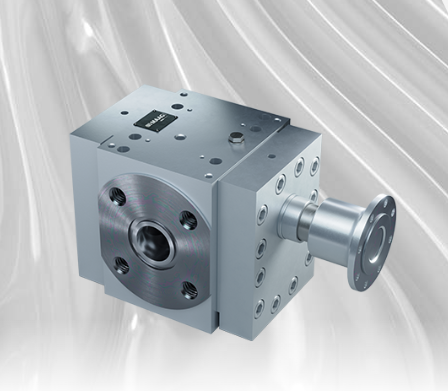
Where the filter sits relative to a melt pump
A common architecture is extruder → filtration → melt pump → die. That arrangement protects the gear pump from damaging solids, while the pump can meter the filtered melt more consistently to the die. It is not the only possible architecture, so pressure locations and component protection must be reviewed for each line.
This is often preferred because it protects the pump from contamination. The controls need a stable pump-inlet condition, while the extruder responds to increasing filter resistance. Trend pressure upstream and downstream of the filter, plus pump inlet and outlet pressure where available.
This can be selected for specific process reasons, but the pump sees the unfiltered melt. Protection, pressure rating, filtration disturbance, and die response require careful review. Do not rearrange an existing line based on a general diagram alone.
The polymer changes the filtration decision
The same contaminant percentage can behave very differently in LDPE, PET, PVC, TPU, or a highly filled masterbatch. Always evaluate the base resin, viscosity, temperature window, thermal sensitivity, additive package, desired solids, and final product together.
These polymers cover everything from clean film lines to heavily contaminated recycling. The correct solution may range from HSC to ERF depending on the stream, not simply the resin name.
Drying, degradation, residence time, and fine black-speck requirements matter. ECO is positioned strongly for low-contamination PET and PA, but the actual feed and final application still control the choice.
Use PVC-compatible construction and flow geometry. Thermal sensitivity and formulation solids require special attention. MAAG excludes PVC from ERF applications.
Rigid recycled streams may include other polymers, labels, wood, metal, rubber, paint, or degraded particles. Identify the contaminant and product requirement before choosing fineness.
Elastic particles and gel-like defects may deform rather than behave as rigid contamination. Viscosity, shear, thermal history, and material testing can be more decisive than nominal micron size.
Do not use a screen fine enough to remove the intended formulation. Focus on tramp metal, agglomerates, foreign solids, abrasion, active area, and pressure capacity.
Medical tubing, wire coating, and other clean processes may need protective filtration with low hold-up and predictable change behavior rather than a high-contamination filter.
Polymer compatibility, PVC presence, contaminant identity, load variability, sorting quality, melt loss, and final product expectations drive whether BRF, ERF, staged filtration, or upstream cleanup is needed.
What common filtration symptoms usually mean
Use these patterns as a disciplined first pass. Change one variable at a time and trend pressure, temperature, output, screen events, and product quality on the same timeline.
Clean differential pressure is already too high
Check whether the screen pack is finer or thicker than intended, the active area is smaller than assumed, support layers are reversed, the breaker plate is restricted, the polymer is colder or more viscous, the throughput is higher, or a sensor is offset. Compare against a documented clean baseline for the same material, rate, and temperature.
Differential pressure rises very quickly after a new screen
Inspect the retained material. A rapid rise may indicate a dirty feed stream, excessive fines, desired filler being retained, incomplete melting, degraded polymer, an undersized filtration area, or a filter cake that blinds the surface. Do not automatically move to a coarser screen until the defect requirement is understood.
Pressure spikes or drops during the screen-change sequence
Review piston or plate motion, venting, prefill, timing, hydraulic condition, screen-pocket temperature, melt leakage, control logic, and whether the design is actually continuous. Correlate the event with pump inlet pressure, die pressure, gauge, dimensions, and scrap.
Finer screens do not eliminate gels or black specks
The defect may be soft enough to deform through the mesh, smaller than the effective retention, or created downstream of the filter. It may also be thermal degradation generated in the extruder, adapter, screen changer, pump, or die. Save defect and screen-residue samples and compare their chemistry and appearance.
Gels or specks increase as the run continues
Look for dead spots, stagnant screen cavities, leaking seals, poor temperature control, excessive residence, oxidized material, or contamination recirculating during a cleaning cycle. A filter cannot correct degraded material that is generated after the filtration surface.
A filled compound plugs screens too quickly
Confirm whether the filter is retaining intentional filler or agglomerates. Review filler particle distribution, dispersion quality, screen opening, open area, active area, melt viscosity, and whether a BRF-class continuous design is a better fit for ongoing mineral loading.
Large contaminants still appear in the product
Check for torn or bypassed screens, incorrect installation, leakage around the pack, damaged breaker plates, a contaminant source downstream of the filter, or material that folds and deforms through the opening. Verify the actual defect size and composition rather than relying on a photograph alone.
Melt loss or purge waste is higher than expected
Measure the waste from each screen change, backflush, or contaminant-discharge cycle. Review cycle frequency, pressure trigger, discharge settings, contaminant concentration, cleaning sequence, and whether the selected architecture is appropriate for the actual load.
A second filtration stage improves appearance but hurts another property
Do not assume more filtration is automatically better. A 2024 study on post-consumer PE film waste found that double filtration reduced contaminant amount and size, but the second filter also had distinct effects on measured material properties.[4] Compare optical defects, MFR, oxidation or thermal history, pressure, residence, energy, and final-product performance before standardizing the second stage.
Estimate the annual burden of screen changes
This simple calculator totals entered downtime and resin scrap. It does not include labor, energy, quality holds, lost throughput, maintenance, screens, melt loss from automatic filtration, financing, or the value of avoiding a customer complaint. Use the full Melt Pump and Screen Changer ROI Calculator for a broader analysis.
The result is an arithmetic scenario based only on the entered assumptions. It is not a guaranteed savings from any filtration system.
Collect these data before requesting a filtration quote
A representative sample, a used screen, and synchronized pressure trends are often more valuable than a long equipment description. The list below is designed for a first MAAG application review.
- Polymer and gradeBase resin, MFR/MFI or viscosity data, fillers, additives, color, regrind, and PCR percentage.
- Material source and variabilityVirgin, in-house scrap, post-industrial, post-consumer, lot-to-lot variation, and sorting method.
- Contaminant samplePhotographs plus retained feed, purge, defect, and used-screen residue when possible.
- Contaminant identity and loadPaper, metal, wood, rubber, other polymers, ash, filler, gels, specks, and estimated weight percentage.
- Throughput rangeMinimum, normal, and maximum rate, not only the nameplate target.
- Melt temperature and pressureCurrent upstream, downstream, pump inlet/outlet, and die pressure at clean and dirty conditions.
- Existing screen packMesh or micron, weave, layers, support, breaker plate, active area, and screen dimensions.
- Current operating burdenChanges per shift/week, labor, downtime, scrap, purge, screen cost, cleaning, and safety concerns.
- Required product qualityDefect type, acceptable contaminant size/count, gauge or dimensional sensitivity, and final application.
- Interruption toleranceFull stop acceptable, brief disturbance acceptable, continuous path required, or unattended operation required.
- Mechanical and utility constraintsFootprint, orientation, flange, heating medium, temperature, pressure rating, controls, and maintenance access.
- Project objectiveProtect equipment, reduce defects, extend screen life, reduce labor, increase uptime, process more reclaim, or improve pressure stability.
Material testing may be recommended when contamination is mixed, deformable, difficult to identify, or near the limit of a proposed filtration method.
Extrusion filtration FAQ
What is the difference between a screen changer and a melt filter?
A screen changer presents replaceable screen media to the melt and provides a way to change that media. A continuous melt filter typically removes contamination from a continuously cleaned filtration surface and discharges it without conventional screen replacement. The names are sometimes used loosely, so compare the actual mechanism.
What is the difference between HSC, DSC, and CSC?
HSC is a manual screen changer. DSC is a discontinuous single-piston screen changer. CSC is a continuous double-piston screen changer. The practical difference is how the melt path behaves during a screen change and how much process disturbance the line must tolerate.
Is an automatic backflush screen changer the same as a self-cleaning melt filter?
No. A backflush screen changer reuses screen cavities by reversing clean melt through a loaded screen during a controlled sequence. A self-cleaning melt filter uses a continuously cleaned filtration surface and contaminant-discharge mechanism. Both reduce manual intervention, but the architecture and operating behavior differ.
How do I choose the correct micron or mesh?
Start with the actual defect or downstream protection requirement, then review particle deformability, screen weave, wire diameter, open area, support layers, active area, polymer rheology, temperature, throughput, clean pressure, dirty pressure, and desired screen life. A nominal micron value alone is not enough.
Will a finer screen remove all gels?
No. ASTM notes that many gels break up or deform through wire mesh under pressure. Some high-molecular-weight gels may be retained, while others require correction of upstream melting, mixing, residence time, temperature, or contamination rather than simply a finer screen.
Can filtration remove calcium carbonate or other filler?
It can retain oversized agglomerates or foreign solids, but the intentional filler should normally remain in the compound. A screen that captures the desired formulation can load rapidly and change product composition. Filled-material applications need a dedicated review.
Should the filter go before or after the melt pump?
Filtration before the pump is common because it protects the pump. Other architectures are possible, but the pump, filter, pressure sensors, controls, and die must be engineered as a system. Do not relocate equipment based on a generic sequence alone.
Does a continuous screen changer eliminate pressure fluctuation?
It reduces the need for a full stop and can reduce disturbance, but it does not guarantee a perfectly flat pressure trace. Piston movement, venting, prefill, backflushing, screen loading, control timing, and downstream resistance can still affect pressure.
What filtration system should be used for PVC?
Use a PVC-compatible MAAG screen-changer design selected for the formulation, temperature, pressure, residence time, and interruption tolerance. HSC and FSC list PVC options. ERF is not suitable for PVC according to MAAG.
When is material testing worth doing?
Testing is especially valuable when the contamination is mixed, soft, elastic, high in ash, difficult to quantify, or when the product requires fine filtration. A representative sample can show whether contaminants are retained, deform through the media, create excessive pressure, or cause unacceptable melt loss.
Sources used in this guide
The references are collapsed to keep the article easy to scan. Open them to review the independent technical literature and official MAAG product information used throughout the guide.
Open technical references and source notes12 sources
Commercial disclosure: Gauge Advisor is the authorized MAAG sales and applications partner. MAAG product pages below are manufacturer sources and are identified separately from the independent standards and research papers.
- ASTM International. ASTM D6265-17, Standard Practice for Separation of Contaminants in Polymers Using an Extruder Filter Test. Discusses paper, metal, gels, incompatible polymers, wire-mesh separation, and the fact that many gels deform through mesh under pressure. View the ASTM record.
- Carley, J. F., and Smith, W. C. “Design and Operation of Screen Packs.” Polymer Engineering & Science, 18(5), 408-415, 1978. Develops pressure-drop relationships using screen dimensions, flow, and polymer rheology. View the paper record.
- Bennett, J. D., Wilson, M. C. T., Kapur, N., Jimack, P. K., Maltby, R. P., and Looney, M. K. “Computational Modelling and Experimental Validation of Pressure Drop Through Multi-Layered Woven Screens for Polymer Melts.” Chemical Engineering Research and Design, 209, 323-333, 2024. View the paper record.
- Langwieser, J., and Fischer, J. “Investigation of the Impact of Single and Double Filtration Systems on Post-Consumer PE Film Waste.” Polymers, 16(16), 2238, 2024. Reports that double filtration reduced contaminant amount and size but also affected selected material properties. Open the peer-reviewed article.
- MAAG. HSC manual screen changer product information. Manufacturer source for operation, residence time, pressure consumption, pump and die protection, and available PVC-related options. View the MAAG HSC page.
- MAAG. FSC hydraulic plate screen changer product information. Manufacturer source for pressure-adaptive sealing, narrow design, thermally sensitive applications, and available options. View the MAAG FSC page.
- MAAG. DSC single-piston screen changer product information. Manufacturer source identifying the DSC as a discontinuous, seal-free single-piston design. View the MAAG DSC page.
- MAAG. CSC continuous screen changer product information. Manufacturer source identifying the CSC as a continuous, seal-free double-piston design. View the MAAG CSC page.
- MAAG. CSC/BF-4F backflush screen changer product information. Manufacturer source for the four-screen-cavity design, automatic backflushing, recycling focus, and screen-service-life objective. View the MAAG CSC/BF-4F page.
- MAAG. BRF continuous melt filter product information. Manufacturer source for the rotating screen-disk and stripper mechanism, common-polymer range, mineral-containing applications, and published limits. View the MAAG BRF page.
- MAAG. ERF high-performance melt filter product information. Manufacturer source for compatible polymers, solid and elastomer contaminants, published contamination range, recycling applications, and the PVC exclusion. View the MAAG ERF page.
- MAAG. ECO high-performance melt filter product information. Manufacturer source for PET and PA applications, continuous outlet pressure, low-contamination range, clean filtration surface, and published throughput options. View the MAAG ECO page.
Evaluating a MAAG screen changer or melt filtration project?
Gauge Advisor is the authorized MAAG sales and applications partner for screen changers, melt filtration systems, melt pumps, and related controls. I help extrusion, compounding, and recycling processors review the equipment application, select and quote the appropriate MAAG configuration, and coordinate the information needed for factory engineering and integration.
Gauge Advisor supports equipment selection and integration for the manufacturers represented here; independent process consulting is not offered. Send the line information below and I will respond within one business day, often within a few hours.
- Polymer, grade, filler, regrind, and PCR percentage
- Contaminant sample, identity, size, and estimated load
- Minimum, normal, and maximum throughput
- Current screen pack, filtration area, and change interval
- Clean and dirty upstream/downstream pressure
- Melt temperature and pressure rating
- Required fineness and final product defect limit
- Allowed interruption, footprint, controls, and timeline