Extruder & feed
Melt, mix, and transport a consistently supplied formulation.
Review resin handling
Identify whether product variation comes from melt pressure and flow, contamination or another part of the extrusion line. Use operating measurements to compare melt pumps, screen changers, filtration and controls, including upgrades to existing equipment.
What a melt pump can address: a melt pump can improve finished dimensions when variation tracks mass-flow or die-pressure movement. It cannot correct unstable solids feed, incomplete melting or fusion, a poor die, calibration and cooling imbalance, or haul-off behavior.
Need the whole line—not only the melt section? Use the connected pipe & profile extrusion systems guide.
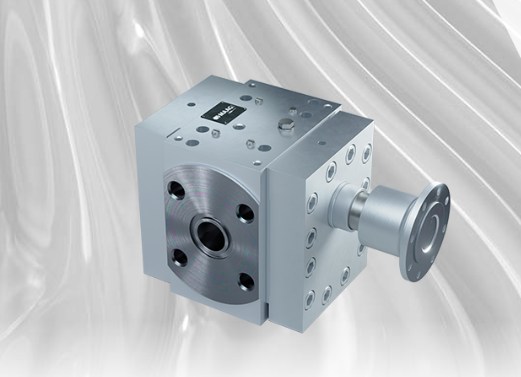
Compare pressure, temperature, throughput, screen loading and product dimensions over the same time period. This helps identify which part of the process changes before the finished dimensions drift.
If feed, melting, and filter condition are understood but die pressure or mass flow still moves, begin with pump duty and control response.
Review pump paths → 02 / Melt cleanlinessReview contamination, required fineness, screen area, allowed interruption, pressure response, and operator involvement.
Review filtration paths → 03 / Special materialUse the dedicated extrex⁶ EC branch and review formulation, fusion, temperature window, residence time, cooling, pressure, and filtration separately.
Review rigid-PVC fit → 04 / Complete lineThe dominant variable may sit outside the melt system. Follow material, forming, calibration, cooling, speed, and measurement together.
Open the connected-line guide →A common layout places filtration upstream of the melt pump so unwanted particles are kept away from the pump and die. Polymer, contamination, residence time, pressure limits, and equipment design determine the final sequence.
Melt, mix, and transport a consistently supplied formulation.
Review resin handlingRetain qualified unwanted particles at a selected opening.
Meter molten polymer and supply controlled downstream pressure.
Shape, calibrate, cool, haul off, and cut the product.
Trend dimensions with the process variables that can change them.
A properly selected gear pump meters molten polymer and supplies controlled downstream pressure. On a pipe, tubing, or profile line, that can reduce the amount of downstream pressure-building duty carried by the extruder and improve flow repeatability when the pump is addressing the actual bottleneck.

MAAG GU, EP, SP, MP, and specialty paths address different pressure, load, media, and integration envelopes. They are not a simple good-better-best ranking.
Start with material, viscosity, temperature, pressure differential, throughput, and installation envelope. Restrictive tooling or high load may require a different execution than a lower-pressure metering application.
Compare current MAAG familiesMAAG positions extrex⁶ EC specifically for challenging rigid-PVC conveying. Confirm formulation, stabilizer package, fusion state, thermal window, residence time, cooling, pressure, output, and downstream restriction.
Review rigid-PVC requirementsQualified regrind, abrasive filler, inconsistent viscosity, and remaining contamination affect clearances, materials of construction, filtration, torque, speed, and maintenance. Treat this as an application-specific branch.
Open the recycling application guideA screen changer holds replaceable filtration media. A continuous self-cleaning melt filter separates and discharges contamination during operation. Neither term describes the other, and “continuous” does not automatically mean zero pressure disturbance.

CSC is a continuous screen-changing architecture for qualified extrusion duties where production continuity and controlled screen changes matter.

HSC can fit simpler applications when contamination is manageable and the process can tolerate planned operator intervention and interruption.
| Starting architecture | Where it can fit | Questions that still decide the result |
|---|---|---|
| HSC manual plate | Lower complexity, manageable contamination, and an acceptable planned interruption. | Change frequency, safe access, pressure decay, screen area, operator workflow, and startup scrap. |
| FSC hydraulic plate | Hydraulic actuation where a plate-style change method fits the line and interruption tolerance. | Pressure class, actuation sequence, sealing, screen area, utilities, and line response during a change. |
| DSC discontinuous piston | Single-piston screen changing where the selected design and process can accept its change sequence. | Allowed interruption, pressure response, residence time, heating, access, and intervention frequency. |
| CSC continuous double piston | Production where continuous melt flow and controlled screen changes are important. | Actual pressure disturbance, backflush need, screen geometry, contamination, fineness, and controls. |
| Continuous self-cleaning melt filter | Compatible streams where screen packs create excessive labor, pressure cycling, or downtime. | Polymer, contaminant type and amount, fineness, melt loss, pressure, temperature, and discharge handling. |
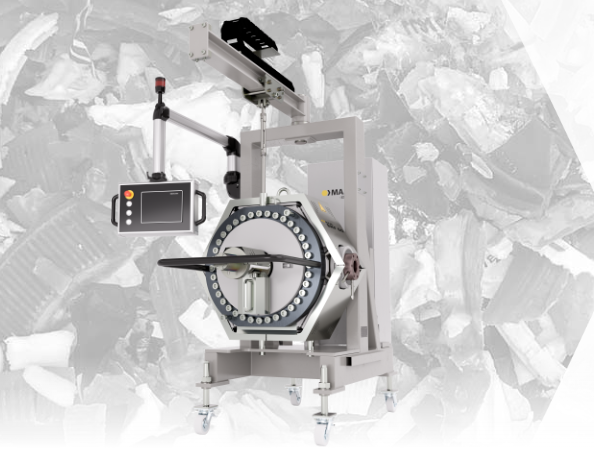
Recycling-oriented systems such as BRF or current continuous-filter families belong in a separate stream review. MAAG's ERF can serve compatible heavily contaminated polyolefin or polystyrene applications, including qualified pipe streams, but MAAG expressly excludes PVC from the ERF application range.
Intentional filler is not automatically contamination. Calcium carbonate, talc, glass, pigment, or another desired ingredient must be separated from unwanted particles when defining the filter opening and technology. Soft gels may deform through mesh, and degradation created downstream of the filter cannot be removed upstream.
Define the process change you expect from a pump or filter and how you will measure it. Record the variables that expose feed, filter, pump, die, speed, and dimensional response before and after the change.
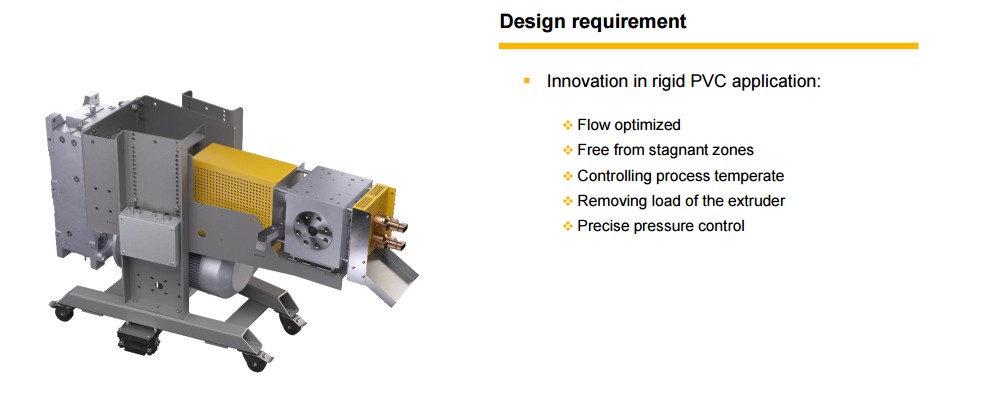
Confirm which process variable moved first, whether the dimensional response followed it, and whether the result holds across startup, steady production, screen loading, and product changes.
Laser micrometers directly measure the outside silhouette presented to each axis: OD, X/Y, width, height, and qualified estimated ovality.
Explore laser micrometersFor acoustically suitable products, ultrasonics measure qualified wall distribution and concentricity. Synchronized laser OD plus wall data can support calculated ID.
Screen ultrasonic feasibilityIf the uncertain variable is material entering the extruder rather than melt leaving it, measure the solid-feed rate and refill behavior before assigning the problem to the pump.
Review throughput controlDrive sizing, sensors, heating, control authority, line interfaces, support, access, guarding, and startup logic determine whether the selected hardware can operate safely and repeatably.
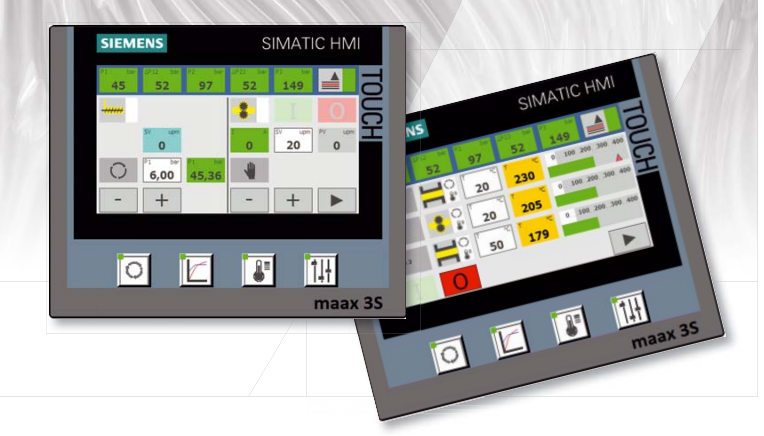
Coordinate pump speed, inlet-pressure control, temperatures, alarms, startup and shutdown, recipes, trends, and the division of authority between pump and extruder controls. Confirm the current MAAG control generation during selection.
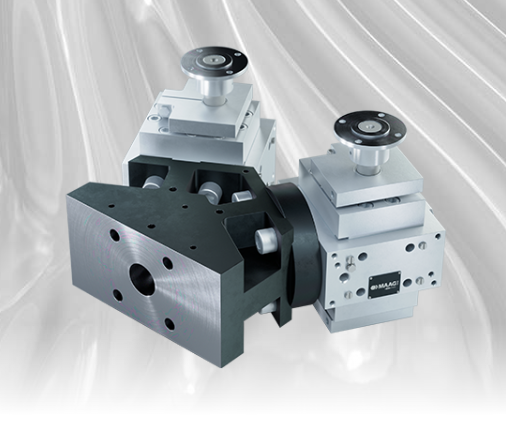
The extrex⁶ Y-Adaptor combines two independently driven pump outlets so one upstream melt source can feed two separately metered die streams. It is a specific architecture—not a generic flow splitter for every line.
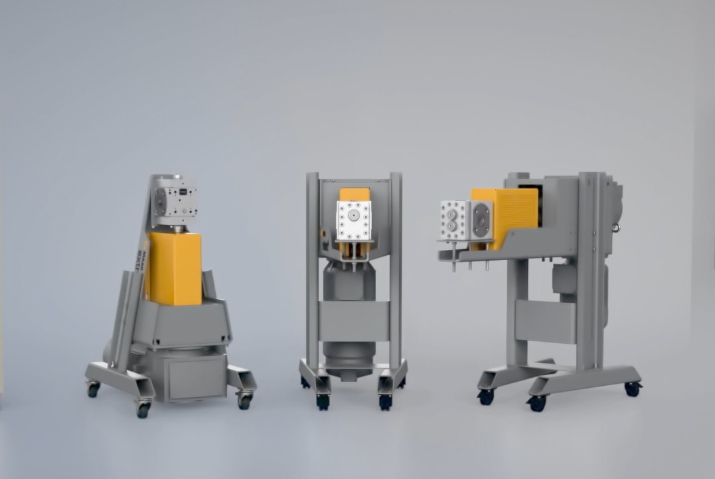
Retrofit scope can include the pump, drive, coupling, base or cart, adapters, sensors, heating, controls, wiring, guarding, lifting access, and installation sequence.
Use the selectors and diagnostic tools to organize known conditions. Results remain preliminary until the material, pressure, temperature, layout, and operating data are confirmed.
Screen throughput, polymer, pressure severity, and operating assumptions before application review.
Start pump review → Filtration selectorCompare manual, discontinuous, continuous, and self-cleaning starting architectures.
Start filtration review → Diagnostic guideSeparate feed, melting, filtration, pump, controls, tooling, and downstream causes.
Open diagnostic → Planning toolOrganize scrap, downtime, material, labor, energy, and improvement assumptions.
Estimate the opportunity →Also useful: the extrusion throughput and line-speed calculator, Cpk/Ppk capability calculator, filtration selection guide, and rigid-PVC application guide. For other extrusion applications, see film and sheet or recycling and regrind.
These answers define the starting architecture. Final sizing still requires representative material, line, pressure, temperature, geometry, and operating data.

Gauge Advisor provides MAAG sales and applications support for qualifying melt-pump, screen-changing, filtration, control, and retrofit projects. Final selection and performance remain application- and configuration-dependent.
A finished equipment specification is not required. Share what the line makes, what changes, when it changes, and the conditions around that event. Gauge Advisor can separate pump duty, filtration, integration, and complete-line measurement questions.
Planning and educational guidance only. Confirm final equipment, pressure rating, materials, filtration media, controls, guarding, installation, operating limits, and performance with current manufacturer information and application engineering.