
Extrusion Screen Changer Retrofits & Continuous Filtration Upgrades
Evaluate a replacement screen changer or a filtration upgrade to address pressure disturbance, production interruptions or recurring contamination. Compare continuous, backflush and self-cleaning MAAG systems based on your polymer, production rate and operating needs.

Gauge Advisor is an authorized MAAG sales and applications support representative. I help gather application and existing-equipment details, compare suitable options and coordinate MAAG’s technical review and quotation.
Choose a filtration retrofit to address a specific operating problem
Document the screen-change cycle and its real production consequence. The best system may be a compact powered changer, a continuous melt path, automatic backflushing or a continuously cleaned filter.
The line stops or loses sellable product
Measure shutdown, restart, pressure recovery, purge, scrap and downstream stabilization for a normal screen-change event.
Operators change screens too often
Record current screen packs, active area, clean and dirty pressure, hours between changes and the actual residue on the removed media.
Reclaim or PCR changes the loading rate
Separate normal, worst-approved and upset material. Percent contamination alone is incomplete without particle type, size, softness and variability.
The installed system no longer fits the plant
Obsolete hydraulics or controls, unreliable operation, added output, finer filtration or a competitive installed unit can justify engineered replacement.
Decide whether you need service or replacement equipment. MAAG handles parts, inspection, repair and maintenance for installed MAAG equipment. Gauge Advisor can help route that request, or help you evaluate and quote an upgrade or replacement.
Define how filtration must perform during production
A continuous screen change, an automatic backflush cycle and a continuously cleaned contaminant-removal surface are not the same machine. State what the process may do during loading and cleaning before comparing families.
One screen remains in service while another changes
A double-piston screen changer can keep melt flowing through one cavity while the other is moved and serviced. Prefill, venting, pressure balance, piston movement and controls still affect the event.
Starting family: MAAG CSCClean a loaded screen through a controlled backflush
Clean melt is used during an automatic sequence to dislodge retained contamination and extend screen use. The backflush volume, discharge, pressure recovery and product response must fit the line.
Starting family: MAAG CSC/BF-4FClean and discharge from the filter during operation
A continuously cleaned melt filter uses a scraper or comparable removal mechanism rather than conventional screen replacement as its normal operating method. Polymer and contamination compatibility govern fit.
Starting families: BRF, ERF or ECOGuardrail: “continuous” does not promise a perfectly flat pressure trace, zero melt loss, zero scrap, unlimited contamination or maintenance-free operation. Define the accepted pressure and product response, discharge plan, runtime target and maintenance interval in the written application.
Trend signals on the same timebase as screen movement, backflush, alarms and product-quality records.
Compare pressure before, during and after a screen change
A high upstream pressure alone does not prove that the screen changer is undersized. Trend clean baseline, loading rate, change trigger, piston or plate movement, downstream pressure, line speed, output and product quality together.
- Upstream and downstream melt pressure with sensor locations and ranges
- Clean-screen baseline, dirty alarm, differential pressure and hours to trigger
- Screen pack construction, active area, mesh or micron basis and support layers
- Event timestamps for movement, prefill, vent, backflush and pressure recovery
- Scrap length or weight, thickness or dimension trend and time back to approved product
Broader melt-delivery scope: if the project also involves adding or replacing a melt pump, changing the drive or controlling die pressure, use the complete melt-pump and screen-changer retrofit page. This page stays focused on filtration.
Manual, powered and continuous screen-changing options
These families are not a universal progression from inexpensive to best. A clean, short-residence-time extrusion line may need a compact plate system; a long, pressure-sensitive campaign may justify a continuous double-piston design.

FSC hydraulic plate screen changer
Evaluate when compact geometry, powered movement and short residence time are valuable and the product can tolerate the defined melt interruption and recovery behavior.

DSC single-piston screen changer
A piston design for applications where a controlled process disturbance remains acceptable. DSC is not a continuous-flow design. Check how the pressure change affects your product.

CSC double-piston screen changer
One screen cavity can remain in service while the other changes. Prefill, venting, pressure balance and control sequence still matter when film, sheet, pipe, profile or compounding quality is pressure-sensitive.
Continuously cleaned filtration for recurring contamination
BRF, ERF and ECO use different continuous-filtration designs for different polymers and contamination levels. Choose the filter based on your material and production requirements.
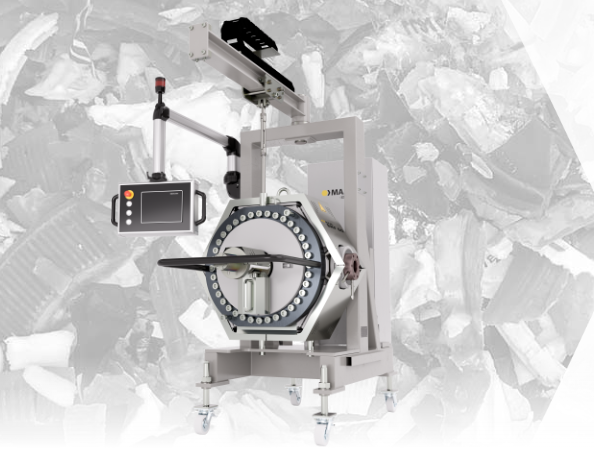
BRF continuous melt filter
MAAG positions BRF for common polymers in recycling, compounding and extrusion with ongoing low-to-high contamination. Review mineral content, filtration target, stripper and discharge behavior, pressure, temperature and throughput.

MAAG | ETTLINGER ERF
ERF is a self-cleaning filter for compatible, more heavily contaminated recycling streams containing foreign solids or elastomers. MAAG excludes PVC. Confirm polymer, contaminant type and percentage, melt loss, discharge and final quality.
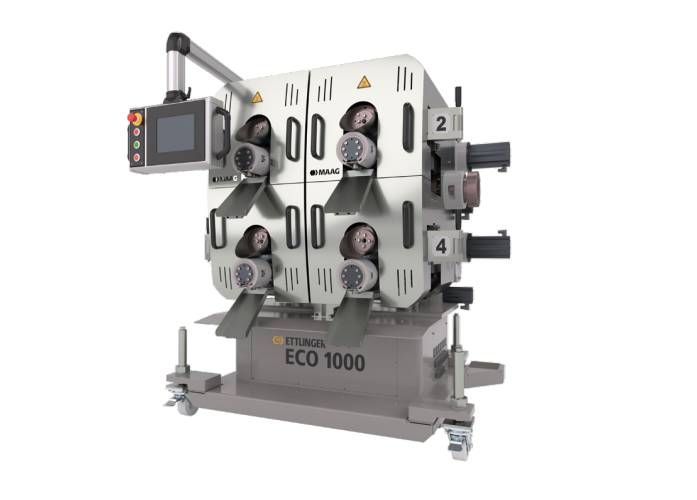
MAAG | ETTLINGER ECO
ECO is positioned especially for PET and PA, cleaner industrial waste, lightly contaminated material and clean virgin streams where fine continuous filtration and low melt loss matter. It is not the high-contamination choice.
Staged filtration may be the right answer. A primary continuous filter can remove a larger contaminant burden before a downstream fine-filtration stage. Do not force one product to satisfy incompatible contamination, fineness, pressure and runtime targets.
A screen changer retrofit is an interface project—not a flange-size swap
Document what is installed, what remains and who owns every interface. A new MAAG system can be evaluated for an aging MAAG unit or competitive equipment, but compatibility must be engineered.
Rebuild the line envelope from verified field data
Use current drawings and field measurements together. Confirm hot and cold centerline, face-to-face length, flange geometry, available extraction path, screen access, support structure, thermal growth and the retained upstream and downstream equipment.
- Extruder, adapter, pump and die sequence
- Maximum working pressure and melt temperature by retained component
- Heaters, thermocouples, insulation and wiring zones
- Hydraulic unit, accumulator, valves, hoses and utility location
- Removal, rigging, lifting and maintenance clearances
Preserve the full change, vent, alarm and protection narrative
Inventory the current PLC/HMI, I/O, pressure sensors, temperature zones, hydraulics, recipes, permissives and line communication. The written scope must identify source-code ownership, retained panels and third-party interfaces.
- Normal run, loading, change, prefill, vent and backflush states
- Clean baseline, dirty alarm, shutdown and maximum-pressure logic
- Extruder, melt pump, die and downstream interlocks
- Operator messages, trends, recipes and event records
- Plant platform, protocols, cybersecurity and remote-access rules
For service on existing MAAG equipment: send the model, serial number, nameplate photo and symptoms so the request can be routed correctly. MAAG assesses the service need and confirms response and technician availability.
Convert screen-changing burden into annual operating cost
Use a representative normal cycle and a worst-approved cycle. Avoid generic savings percentages. The project value comes from the actual line rate, product value, event frequency, labor, media, purge and quality consequences.
Lost contribution during events
Approved production rate × event duration × screen changes per year × contribution value.
Off-spec and startup scrap
Include pressure upset, dimension or gauge recovery, purge, downstream web or strand loss and requalification.
Hands-on change burden
Count operators, maintenance involvement, screen packs, cleaning, hot handling and waste disposal.
Unplanned and variable events
Separate planned average cost from production loss or quality exposure when a screen loads unexpectedly.
Match screen-change behavior, contamination and uptime to a filtration option
Use the selector to compare planned-stop, brief-interruption, continuous screen-changing and self-cleaning filters. It organizes a starting direction and the open questions needed for MAAG review; it does not perform final sizing.
Selector boundary: the result is preliminary. Final family, model, screen pack, pressure, temperature, hydraulics, controls, interfaces, material compatibility, discharge, retained equipment and performance require MAAG application review and written quotation.
Share the current screen-change cycle and filtration requirements
You can begin with partial information. A process sketch, nameplate photos, pressure trends and representative screen residue help MAAG assess the application.
Define what passes through the filter
Use normal and worst-approved conditions rather than one nominal recipe.
- Polymer, grade, blend, filler, regrind and PCR percentage
- Unwanted contamination type, particle size, percentage and variability
- Minimum, normal and maximum throughput
- Melt temperature, rheology or viscosity basis and degradation limits
- Required filtration, defect target and downstream product sensitivity
Document the real screen-change event
Attach trends or timestamps when possible.
- Current make, model, serial, screen pack and active filtration area
- Clean and dirty upstream/downstream pressure and alarm points
- Hours between changes, movement time and pressure recovery
- Scrap, purge, labor, media and disposal per event
- Photos or retained samples of representative screen residue
Show what the new system must fit
Identify every retained component and responsibility.
- Process sequence, field dimensions, face-to-face length and centerline
- Flanges, adapters, support, access, extraction and rigging path
- Hydraulic and electrical utilities, heating zones and pressure sensors
- PLC/HMI platform, I/O, protocols, source files and plant standards
- Available shutdown, installation, startup and acceptance plan
State what the project must improve
A measurable target makes the quotation easier to evaluate.
- Allowed screen-change interruption and pressure disturbance
- Desired runtime or change interval and operator involvement
- Output, quality, scrap, labor, energy or safety objective
- Budget stage, approval process and required operating date
- Responsibilities for removal, installation, integration and commissioning
Related extrusion project resources
Use each page for its intended decision so the project does not force pressure stability, contamination, pump duty and product measurement into one equipment assumption.
Extrusion screen changer and continuous-filtration FAQ
These answers establish the application starting point. Final equipment, retained interfaces, installation, controls, service, schedule and performance require written MAAG review.
When does it make sense to replace a manual screen changer?
Is a hydraulic plate screen changer continuous?
Does a continuous screen changer eliminate pressure fluctuations?
What is the difference between a backflush screen changer and a continuous melt filter?
Can MAAG replace a competitive screen changer?
When should BRF, ERF or ECO be evaluated?
Can ERF process PVC?
How do we choose the right micron or mesh?
Should the filter be before or after the melt pump?
How should we justify the filtration upgrade?
Who handles parts, inspection, repair and maintenance on installed MAAG filtration equipment?
What is Gauge Advisor's role in a screen-changer retrofit?
Official MAAG technical sources used on this page
- MAAG filtration systems overview — current screen changer, continuous-filter and large-area families.
- MAAG CSC — continuous double-piston construction, operation and advantages.
- MAAG CSC/BF-4F — four-cavity automatic backflush screen changer.
- MAAG high-performance melt filter ERF — compatible polymers, contaminants, applications and published range.
- MAAG high-performance melt filter ECO — PET/PA and lower-contamination positioning.
- MAAG pumps and filtration systems — screen-changer mechanism and large-area-filtration context.