Lifecycle support for plastics material handling

Plastic Resin Handling Equipment Service, Retrofits & Legacy System Support

Get production moving again—or turn an aging resin-handling system into a controlled modernization plan. Gauge Advisor helps processors define the issue and coordinate Advanced Blending Solutions troubleshooting, parts, controls work, field service, commissioning, plant expansions, and replacement equipment.

Advanced Blending Solutions logoGauge Advisor is an authorized Advanced Blending Solutions sales & applications support partner. We organize the equipment identity, symptoms, process duty, controls information, site conditions, project objective, and quotation path so the right technical team can review the work.
Advanced Blending Solutions gravimetric blenders installed on a production mezzanine
Service and modernization should follow the complete material path. A symptom at one blender may begin with a receiver, pump, route, control sequence, material condition, line handshake, or shared utility elsewhere in the plant.
Production troubleshooting

Organize symptoms, alarms, recent changes and operating evidence before selecting remote or field support.

Planned modernization

Audit controls, drives, equipment condition, documentation, capacity and lifecycle risk before changing hardware.

Expansion and commissioning

Add machines, routes, storage or controls without treating the installed system as an undocumented black box.

Legacy installed base

Identify exact models and decide whether service, selective retrofit or replacement is the defensible path.

Choose the path that matches the plant need

Is production down now, or are you planning a controlled upgrade?

An urgent support request and a planned retrofit require different information, approvals and expectations. Selecting the right path at the start helps the technical team focus on the next useful action.

Urgent production issue

Stabilize the situation and preserve useful evidence.

Use this path for a new alarm, failed load, control fault, loss of throughput, temperature or dew-point problem, receiver or pump issue, or other production interruption.

  1. Make the equipment and work area safe. Follow plant lockout, electrical, pressure, heat, combustible-dust and escalation procedures.
  2. Identify the affected asset. Record manufacturer, model, serial, control platform, voltage, location and the equipment immediately upstream and downstream.
  3. Capture the symptom before resetting. Save alarm text, HMI photos, status lights, sequence state, trend data and the last known good operating condition.
  4. Document what changed. Note maintenance, recipe, resin, route, setpoint, software, network, utility or operator changes before the failure.
Planned retrofit or expansion

Build the scope from the business problem and installed base.

Use this path for capacity increases, recurring faults, obsolete controls, new machines, added routes, energy or noise projects, dryer or blender replacement, reporting, and plant expansions.

  1. Define the outcome. State the capacity, reliability, quality, labor, energy, safety, data or support problem the project must improve.
  2. Audit the installed system. Map equipment, routes, I/O, panels, drives, software, drawings, utilities, structure and physical access.
  3. Compare service, retrofit and replacement. Separate repairable faults from process limitations, obsolete hardware and undersized equipment.
  4. Plan verification and startup. Define shutdown windows, responsibilities, staging, testing, backups, training, commissioning and acceptance criteria.
Safety and response boundary: this webpage is not an emergency-response channel. For fire, electrical, pressure, combustible-dust, exposure, injury or other immediate hazards, follow the facility emergency plan and contact the appropriate onsite and local emergency resources. Advanced Blending Solutions availability, response method, parts, remote access and field deployment require confirmation.
Support across the resin-handling lifecycle

One service scope can include equipment, controls and the process between them

Advanced Blending Solutions publishes field service, technical support, parts, controls changes, installation, commissioning, training, material testing and project engineering. The final combination depends on the installed equipment and written scope.

DIA

Troubleshooting & diagnosis

Review alarms, sequence behavior, sensors, utilities, airflow, material flow, operating changes and recurring failure patterns before recommending parts or replacement.

FLD

Field service & repair

Scope onsite inspection, mechanical or electrical work, repair support and post-work verification around site access, safety, schedule and equipment condition.

PRT

Parts & maintenance

Identify wear items, filters, valves, sensors, motors, blowers, desiccant, heaters and control components from the exact model and serial information—not appearance alone.

PLC

Controls & software changes

Audit PLC/HMI programs, panels, I/O, drives, networks and backups before modifying sequences, alarms, screens, reports, interfaces or obsolete hardware.

SAT

Startup, commissioning & training

Define checks, dry runs, material tests, performance acceptance, documentation, operator training and maintenance handoff for new or modified systems.

EXP

Plant expansions

Add receivers, pumps, lines, routes, silos, dryers, blenders or machines while reviewing available capacity, shared resources, controls, structure and future phases.

LAB

Material and application trials

Use representative normal and worst-approved material when flow, dust, drying, feeding, reclaim or throughput behavior could change the equipment decision.

PM

Project and installation planning

Coordinate layouts, responsibilities, shutdowns, utilities, rigging, piping, electrical work, controls, testing and phased startup around the complete project.

Why this matters commercially

Replacing the most visible component can leave the root cause untouched. A failed receiver load may be caused by filtration, pickup settings, air leaks, line routing, pump demand, sequence logic or material behavior. A dryer alarm may begin with airflow, return-air contamination, hopper loading or process demand. The service review should follow evidence across the system.

Modernize without losing the operating knowledge

Audit, isolate, engineer and commission the change

A retrofit is not simply a new panel, drive or machine placed beside old equipment. The project must preserve required production behavior, define new interfaces and establish how the plant will support the system after startup.

01 / AUDIT

Capture the installed base

Equipment, nameplates, drawings, I/O, programs, firmware, networks, utilities, maintenance history, routes, capacity and physical condition.

02 / ISOLATE

Separate cause from symptom

Compare good and bad production periods, recent changes, trends, material duty and actual sequence behavior before selecting the fix.

03 / ENGINEER

Define scope and boundaries

State retained equipment, replacements, interfaces, safety ownership, testing, documentation, backups, spares and future capacity.

04 / START

Stage and commission

Plan shutdown, migration, functional tests, material trials, alarm checks, operator training, acceptance and a controlled rollback path where applicable.

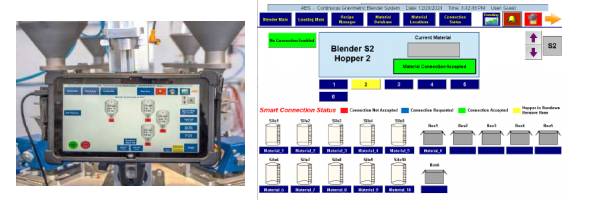
Advanced Blending Solutions blender controls and operator interface screens
Dedicated in-house controls engineering

Modernize the sequence, operator experience and support path—not just the PLC.

Advanced Blending Solutions maintains controls engineers and panel-building capability for its material-handling systems. A modernization can address obsolete hardware, panel condition, PLC/HMI software, alarms, permissives, diagnostics, reports, remote-support readiness, expansion capacity and the interface to production equipment.

  • Lead with Allen-Bradley or Beckhoff where it matches the plant and project
  • Inventory programs, backups, licenses, firmware, I/O and network dependencies
  • Define source ownership, change approval, testing and documentation before modification
  • Review third-party equipment and protocols individually; compatibility is never assumed

Third-party integration boundary: an existing pump, receiver, dryer, blender, VFD, line control or supervisory system may be integrated when its hardware, documentation, I/O, protocols, source access, safety boundaries and lifecycle are suitable. Some devices require an interface, selective replacement or continued independent control.

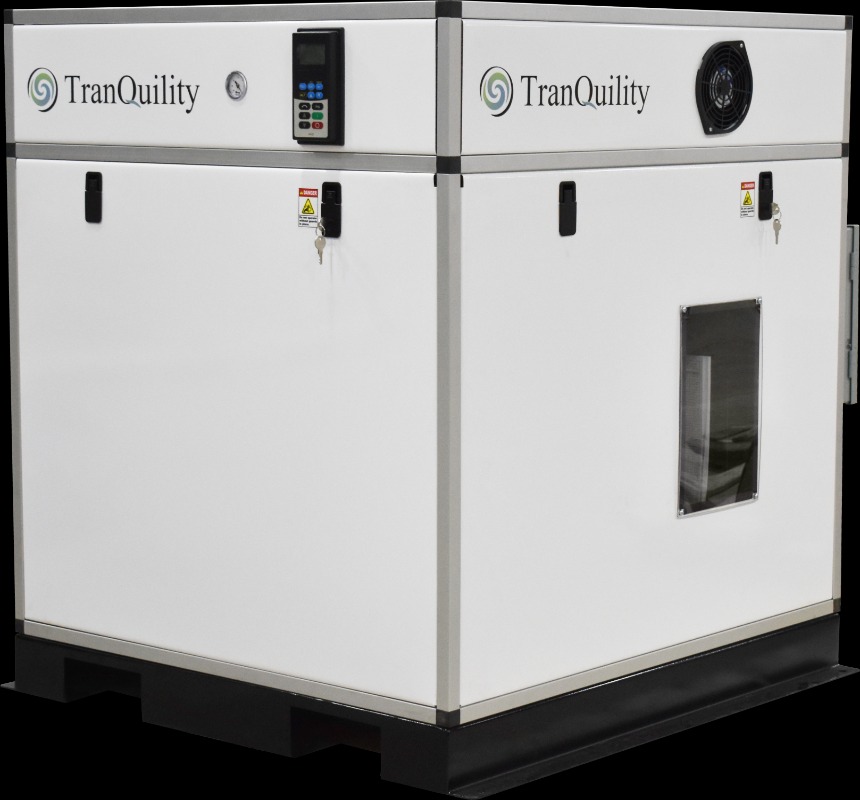
Advanced Blending Solutions Tranquility variable frequency drive vacuum pump
Conveying modernization

Pumps, VFD velocity control & filtration

Review actual route demand, pickup velocity, energy, noise, filter condition and material degradation. A VFD can help match conveying velocity to the route and reduce excess velocity associated with angel-hair formation; savings and performance remain application-specific.

Review Tranquility pump modernization →
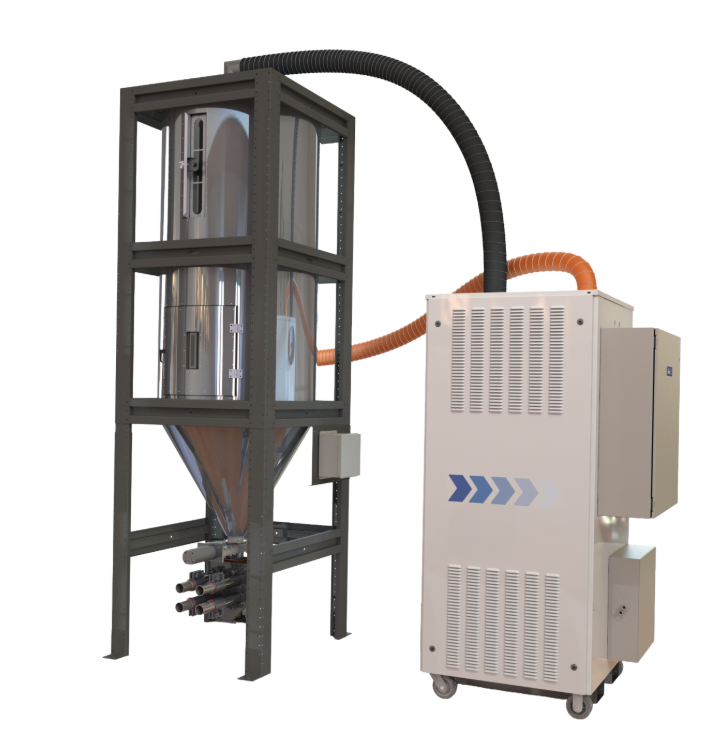
Advanced Blending Solutions desiccant resin dryer
Drying modernization

Dryer, hopper, airflow & loading upgrades

Separate dew point from actual resin moisture, temperature, airflow, residence time, return-air contamination, loading and hopper channeling before deciding whether to repair or replace the dryer.

Review desiccant drying systems →
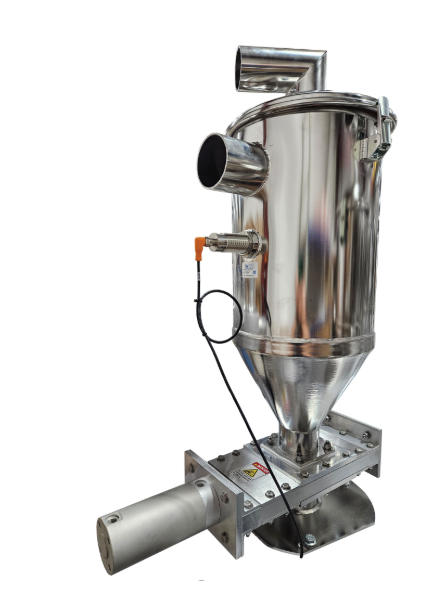
Advanced Blending Solutions vacuum receiver for plastic resin conveying
System expansion

Receivers, routes, blenders & destinations

Add equipment only after checking shared pump capacity, filters, line size, available I/O, sequence conflicts, material identity, structure, access and the effect on every existing load request.

Plan central resin conveying →
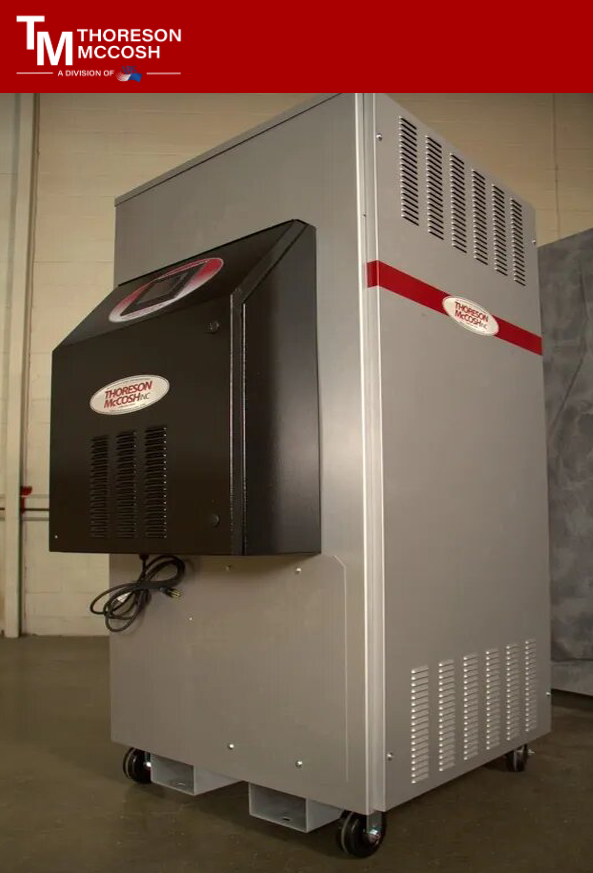
Legacy Thoreson McCosh resin dryer supported through Advanced Blending Solutions
Legacy installed-base evaluation

Supporting or replacing a legacy Thoreson McCosh system?

Advanced Blending Solutions is the current brand and support path. The former Thoreson McCosh name is relevant here only to help plants identify legacy dryers, hoppers, loaders, pumps and controls already in service. Parts availability, documentation, retrofit compatibility and remaining useful life are model-specific.

Start with the exact nameplate and the process duty. A legacy search term is not enough to select a part, control board, sensor, motor, desiccant, heater, blower, loader or replacement dryer.

IdentityManufacturer nameplate, model, serial, year, voltage, photos and original drawings.
Controls generationPLC, HMI, boards, drives, software, firmware, backups, alarms and panel condition.
Current dutyMaterials, rates, temperatures, dry times, dew point, target moisture and production schedule.
System conditionFilters, coolers, desiccant, heaters, blowers, seals, sensors, ducting, hopper and loading.
Failure historyRecurring alarms, repairs, unavailable parts, downtime, quality issues and recent changes.
Future needRequired capacity, resins, controls standard, energy target, footprint and expansion horizon.
Repair

Restore a known, supportable fault

Best when the equipment is correctly sized, mechanically sound, documented and supportable, and the problem can be isolated without creating new lifecycle risk.

Selective modernization

Keep useful equipment and correct the weak layer

Best when vessels or mechanical components remain suitable but controls, drives, sensors, loading, filtration or documentation limit reliability and support.

Replacement

Correct capacity, condition or lifecycle limits

Best when the system is undersized, damaged, inefficient, unsupported, repeatedly unreliable, poorly matched to current materials or uneconomical to modernize.

Do not diagnose a dryer by dew point alone. Actual resin moisture, airflow, temperature, residence time, hopper fill, loading and return-air contamination can create similar symptoms. The dedicated desiccant resin drying systems page maps that decision in detail.

From first triage to onsite work

Use the least disruptive support method that can answer the question

A clear alarm, current documentation and authorized connectivity may support useful remote diagnosis. Advanced Blending Solutions publishes a 24-hour telephone support path; availability, response, service method and any field deployment still require confirmation. Mechanical inspection, electrical testing, material observation, calibration, installation or safety work may require qualified onsite personnel.

TEL

Published 24-hour phone path

Start with asset identity, symptom, alarm, sequence state, recent changes, production impact and safe observations. Confirm availability and the next support method for the actual request.

VPN

Authorized remote diagnostics

When compatible access is configured and approved, controls specialists may review program state, HMI behavior and diagnostic information.

AR

Visual guidance

Phone or tablet video and augmented-reality guidance can help a qualified plant technician show the equipment and document findings.

FLD

Field service

Use onsite support when the work requires physical inspection, measurement, repair, installation, testing, commissioning or training.

Remote support works best when access, authority and backups were planned before downtime.

Maintain current drawings, equipment labels, program and HMI backups, software versions, network information, alarm history, change records and a named authorization path. Those basics shorten the distance from a symptom to a useful diagnosis.

For a deeper look at PLC/HMI architecture, plant integration and support, see Plastic Resin Handling Controls & Automation.

Remote-access and cybersecurity boundary: customer IT approval, compatible access hardware, network policy, authentication, segmentation, logging, licenses, backups and change authorization govern the connection. Remote access does not bypass machine safety, lockout, emergency stops or onsite electrical/mechanical procedures. Availability, response, subscriptions, program changes and field follow-up are separately confirmed.
Commercial application support

Turn the plant problem into a reviewable technical scope

Gauge Advisor helps define the application and coordinate the Advanced Blending Solutions review. The goal is to give service, controls and project teams enough evidence to choose the next technical step without forcing the plant to diagnose the entire system first.

For a planned project, start at the complete resin conveying, blending and drying systems hub. For an active issue, send the asset identity, symptom and production impact first.

01

Identify the equipment and plant objective

State what is installed, what is happening now and what useful result the plant needs.

02

Route the request to the right discipline

Separate controls, mechanical, process, parts, field-service, commissioning and project-engineering needs.

03

Confirm scope, responsibilities and boundaries

Define remote versus onsite work, retained equipment, interfaces, site work, safety, utilities, schedule and testing.

04

Coordinate quotation and next actions

Close information gaps, organize drawings and evidence, and establish the path to parts, service, trial, retrofit or replacement.

Gauge Advisor with the Advanced Blending Solutions team
Gauge Advisor and Advanced Blending Solutions coordinate application review, equipment scope, controls, service, commissioning and lifecycle support. The team image is intentionally presented as a compact landscape rather than enlarged beyond its useful detail.
Interactive resin-handling selector

Map the physical system before scoping the service work

Choose the resin-handling tasks and operating requirements that apply. The selector can organize a preliminary equipment profile for a replacement, expansion or modernization review.

Service boundary: the selector does not diagnose a live fault or determine part compatibility. A service review still needs the exact equipment identity, symptom, controls information, operating evidence and site conditions.

Loading the resin-handling equipment selector…
If the selector does not appear, open the full equipment selector.
What to send for useful technical review

Start with evidence—not a guessed part number

You do not need a complete diagnosis. Send what is known, distinguish facts from assumptions and avoid resetting, changing or bypassing equipment solely to create more information.

Urgent support request

Send the minimum useful incident package

Lead with production impact and safe observations so the request can be routed quickly.

  • Plant, contact, affected line and best callback details
  • Equipment manufacturer, model, serial, voltage and clear nameplate photo
  • Exact symptom, alarm text, HMI state and time the issue began
  • What still works, what does not and whether the fault is repeatable
  • Resin, recipe, rate, source, destination and operating mode
  • Recent maintenance, setpoint, software, network, route or material changes
  • Safe photos or video of the equipment and adjacent material path
  • Drawings, programs, backups and service history that are available
  • Plant remote-access policy and whether compatible access already exists
  • Shutdown constraints and onsite technical resources
Planned retrofit, replacement or expansion

Send the installed-base and project package

Define the outcome and constraints before choosing hardware, controls or project phasing.

  • Current process flow from material source through every destination
  • Equipment list, nameplates, layout, photos, line sizes and route distances
  • Actual materials, bulk density, rates, temperatures, dry times and schedules
  • PLC/HMI, I/O, drives, networks, software versions, licenses and backups
  • Electrical, pneumatic, structural, utility and access information
  • Known failures, maintenance history, unavailable parts and obsolescence
  • Required capacity, quality, labor, energy, noise, data or safety outcome
  • Equipment to retain, preferred plant standards and third-party interfaces
  • Shutdown windows, installation responsibilities, testing and training
  • Budget phase, required-in-service date and future expansion plan
Service, retrofit and legacy questions

Plastic resin handling equipment service FAQ

These answers establish a practical starting point. Final parts, availability, compatibility, response, remote access, field work, performance and project responsibilities require an equipment-specific review and written scope.

What plastic resin handling equipment can Advanced Blending Solutions support?
Advanced Blending Solutions publishes support for blending, conveying, drying, bulk receiving, storage, material routing, controls and associated equipment it manufactures or supplies. A project may involve blenders, feeders, weigh hoppers, dryers, hoppers, loaders, vacuum receivers, pumps, filtration, valves, manifolds, silos, bins, SMART stations, railcar systems, controls and auxiliary equipment. Exact support depends on model, condition, documentation, parts and written scope.
Does Advanced Blending Solutions support legacy Thoreson McCosh dryers?
Advanced Blending Solutions is the current support path for the legacy installed base associated with the former Thoreson McCosh name. Start with the exact model, serial, voltage, controls generation, drawings, photos, hopper and current process duty. Parts availability, retrofit compatibility and the choice to repair, modernize or replace are model-specific.
How do I decide whether to repair, retrofit or replace an existing system?
Repair is strongest when the equipment is correctly sized, mechanically sound and supportable and the fault can be isolated. A selective retrofit may make sense when the mechanical equipment remains useful but controls, drives, sensors, loading, filtration or documentation limit reliability. Replacement becomes stronger when capacity, condition, efficiency, supportability or repeated downtime makes continued investment difficult to justify.
Can Advanced Blending Solutions integrate existing third-party equipment?
Potentially, after an engineering audit. Document the device, I/O, controls, protocols, source access, software and firmware, network, safety responsibilities, drawings, lifecycle and current behavior. Some equipment can be integrated, some needs a defined interface or selective replacement, and some should remain independently controlled. Compatibility should not be assumed before review.
Can Advanced Blending Solutions modify PLC and HMI software?
Advanced Blending Solutions publishes controls and software-engineering services, including changes to existing applications and custom controls work. The review should establish the platform, source and backup availability, version, licenses, I/O, networks, plant standards, requested functions, testing, documentation, cybersecurity and change-authorization process before modification.
Can a VFD retrofit reduce conveying energy, noise or angel hair?
A properly engineered variable-frequency-drive strategy can match pump speed and pickup velocity more closely to route and material demand. That may reduce unnecessary energy, noise and excess conveying velocity associated with pellet degradation or angel-hair formation. The result depends on the pump, line, lift, rate, controls, material and operating schedule and must be evaluated for the actual system.
Can Advanced Blending Solutions troubleshoot equipment remotely?
Remote diagnosis may be available when compatible access is configured, authorized and supported. It can help with program state, HMI behavior, alarms, sequences and some software or controls issues. It cannot replace every mechanical inspection, electrical test, material observation, calibration, repair or safety procedure, so field service or qualified plant personnel may still be required.
How should remote access and cybersecurity be handled?
Customer IT policy governs remote connectivity. Define approved hardware, authentication, network segmentation, logging, access windows, user authority, backups, source ownership, change approval, licenses, subscriptions and the procedure for testing or disconnecting access. Remote support must not bypass machine safety, lockout, emergency-stop or onsite electrical and mechanical procedures.
What information should I send when production is down?
Send the plant and contact, affected line, production impact, manufacturer, model, serial, voltage, nameplate, exact symptom, alarm text, HMI or status photos, time the issue began, what still works, material and rate, recent changes, available drawings or backups, and whether approved remote access already exists. Follow plant safety procedures and do not bypass safeguards to gather information.
Does commissioning automatically come with a retrofit or replacement system?
Commissioning, startup, material testing, training, documentation and performance acceptance should be explicitly included or excluded in the written quotation. Define who supplies utilities, installation, electrical and mechanical work, network access, material, operators, test conditions, instruments and acceptance criteria before the planned startup.
Can service include a plant expansion or new resin-handling route?
Yes, a planned project can review added machines, receivers, pumps, lines, storage, dryers, blenders, SMART routing or controls. The audit should check shared pump and filter capacity, line size, route distance, available I/O, software and panel capacity, utilities, structure, access, existing sequence conflicts and future phases.
What is Gauge Advisor's role in an Advanced Blending Solutions service project?
Gauge Advisor is an authorized Advanced Blending Solutions sales and applications support partner. Gauge Advisor helps the processor define the problem, collect useful application and installed-base information, connect the request to the appropriate Advanced Blending Solutions review and coordinate commercial scope and quotation. Final technical work, availability, parts and responsibilities follow the written project or service scope.
Service and retrofit application review

Ready to turn the equipment problem into the next useful action?

Send the asset identity, symptom or project objective, current material duty, controls information, photos, drawings, production impact, site constraints and desired schedule. Gauge Advisor will organize the application and coordinate the Advanced Blending Solutions review.

Gauge Advisor is an authorized Advanced Blending Solutions sales & applications support partner. Availability, response, remote access, field work, parts, compatibility, third-party integration, repairs, performance, installation, commissioning, training, cybersecurity, safety and warranty responsibilities require equipment-specific review and written quotation.

Interactive resin-handling selector

Build your resin-handling system profile

Choose the material-handling tasks your process needs, then answer only the questions that apply. The selector will organize a practical Advanced Blending Solutions starting system.

5 guided stepsAbout 1 minute per task
Gauge Advisor interactive tool

Resin Handling Equipment Selector