Buyer and engineering questions
Central plastic resin conveying FAQ
These answers establish the initial equipment selection. Final selection still requires the materials, route matrix, plant layout, operating sequence, controls, safety review, and installation scope.
What equipment is included in a central plastic resin conveying system?
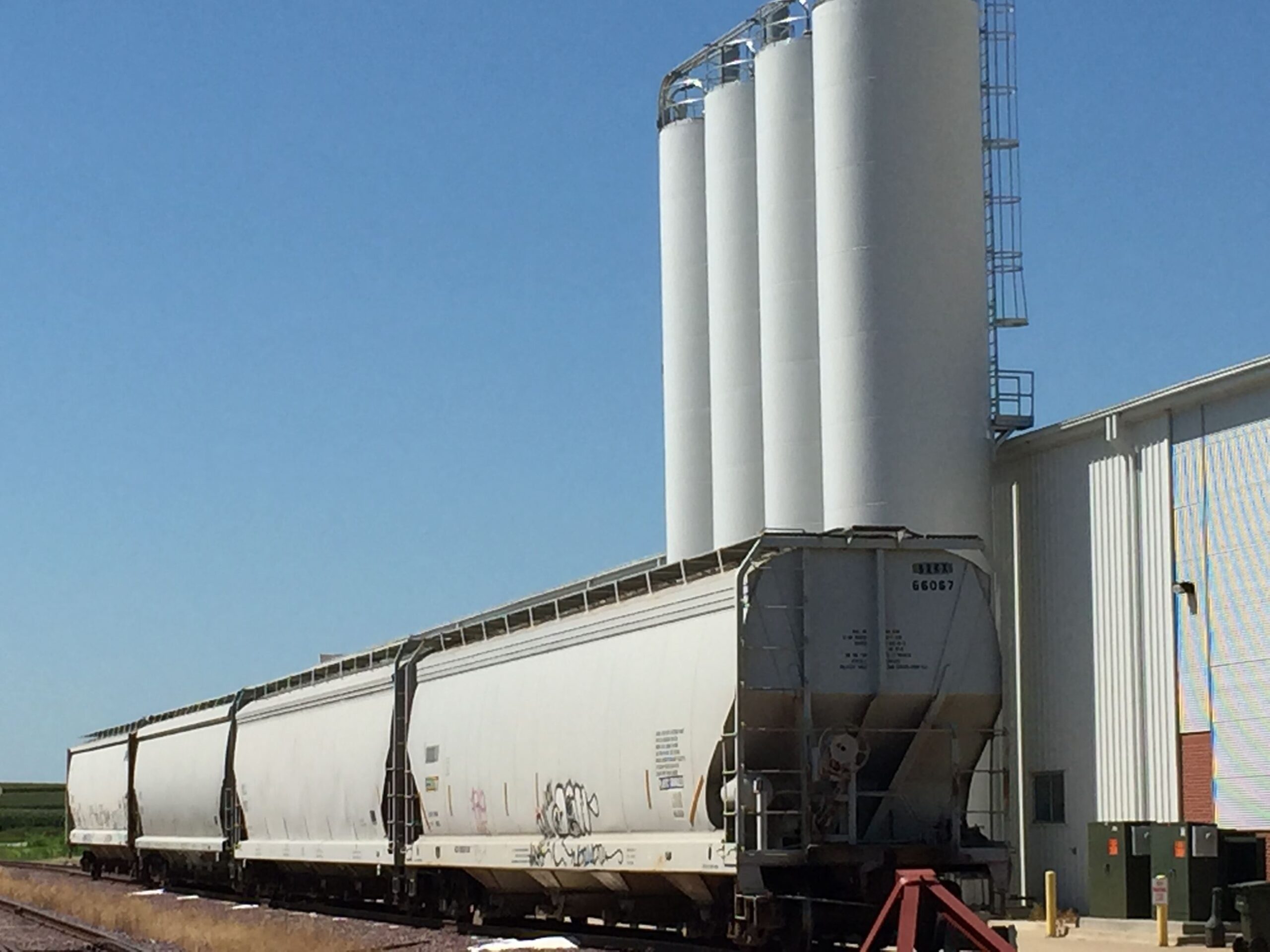
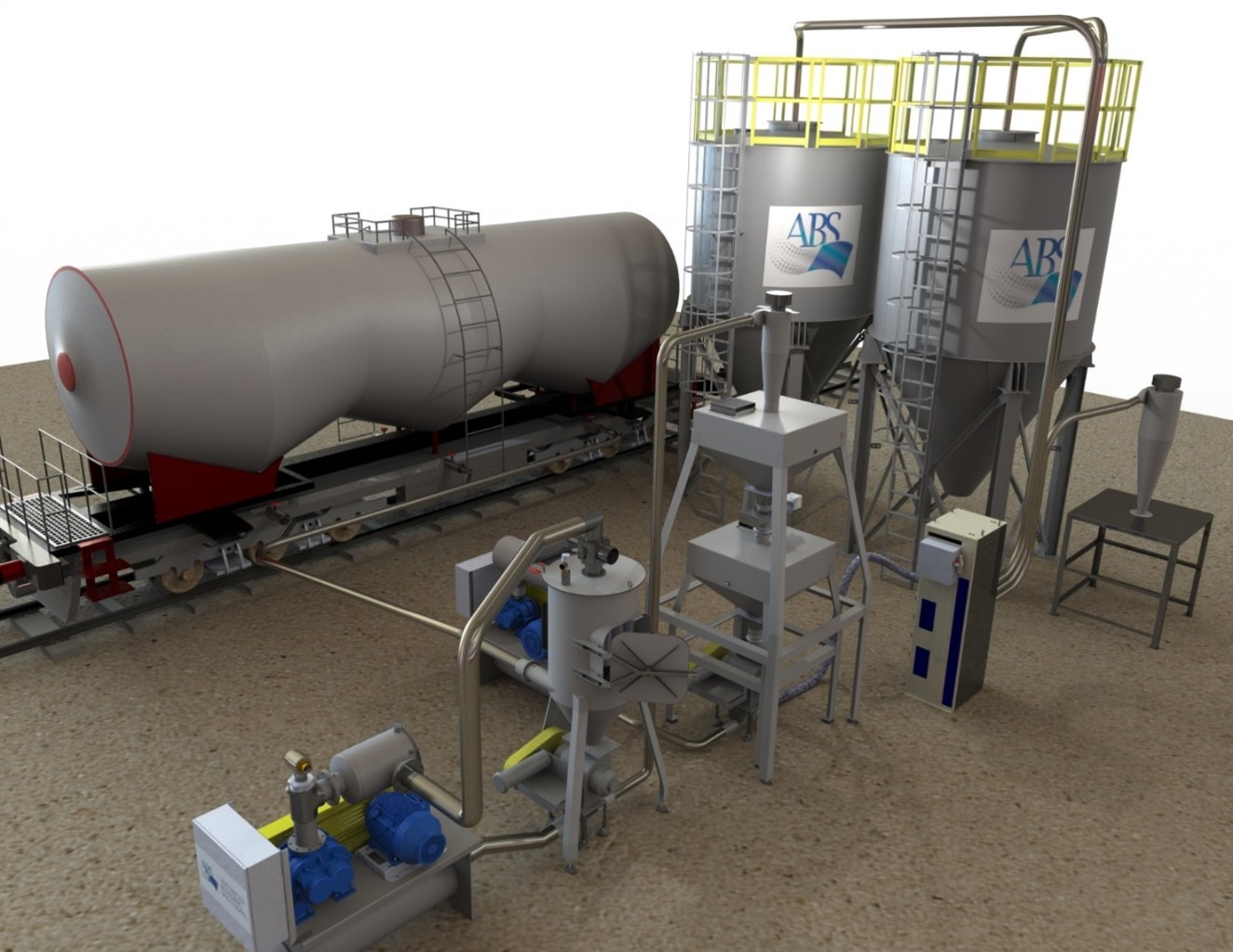
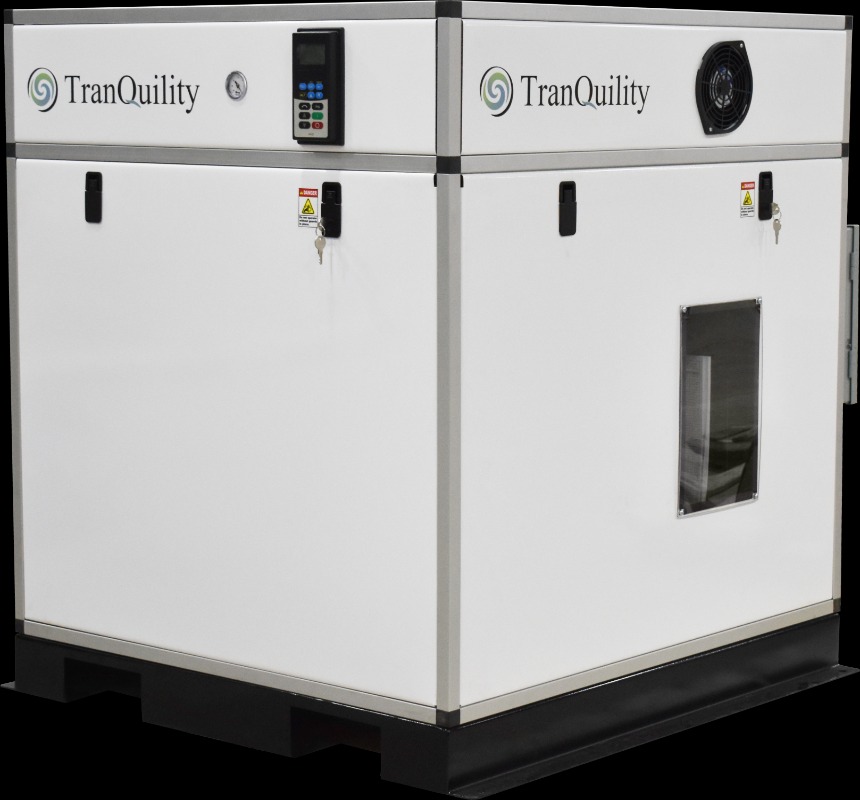
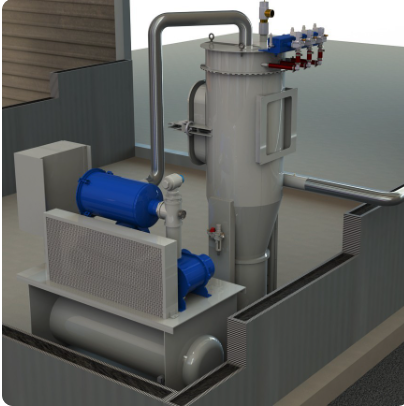
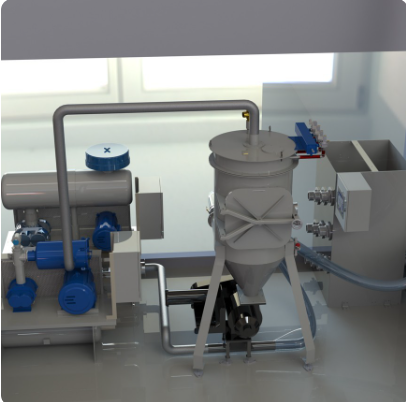
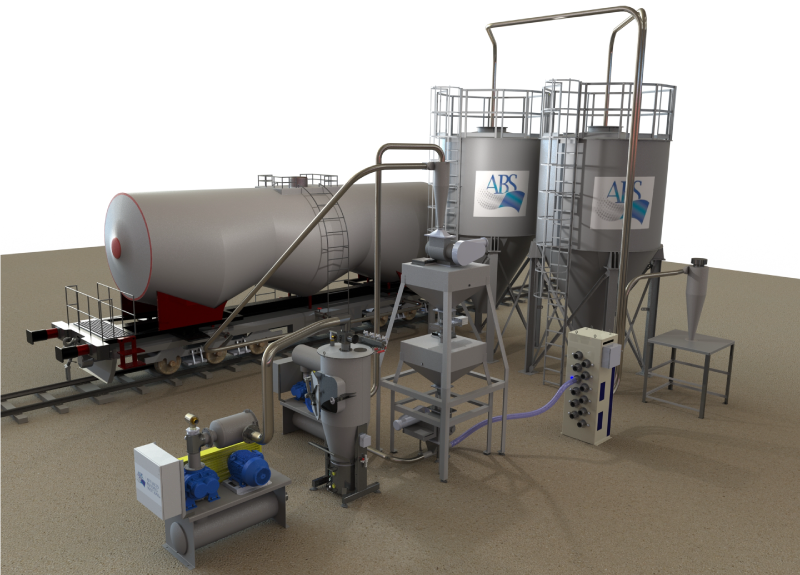
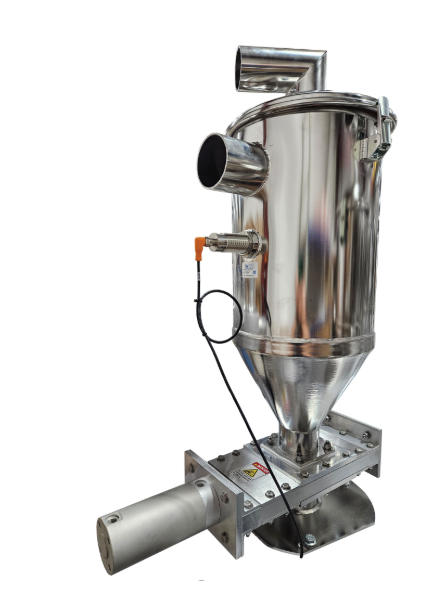
A complete system can include railcar or bulk unloading, silos or bins, takeoffs and probes, vacuum or pressure pumps, VFD pickup-velocity control, dust collection, pneumatic and vacuum sequence manifolds, rigid and flexible material lines, valves and diverters, SMART distribution, vacuum receivers, loaders, central controls, level devices, reports, and the mechanical/electrical installation. The actual scope follows the source-to-destination route matrix.
What is the difference between direct pull and pull/push railcar unloading?
Direct pull uses a vacuum pump to draw resin from the railcar directly to a vacuum receiver at the silo. Pull/push draws resin under vacuum to a filter receiver or cyclone, then meters it through a rotary airlock into a pressure line to the silo. Distance, lift, unload rate, destination layout, filtration, available space, controls, and maintenance access decide the better system.
Can the system verify how much resin was received from a railcar or hopper truck?
An ABS presentation illustrates an application-specific loss-in-weight unload arrangement that tracks compartment quantity and delivery data. It is not a universal standard package or legal-for-trade statement. Define the required measurement range, accuracy, calibration, scale location, lot record, supplier comparison, and custody-transfer requirement before the system is quoted.
How is a central vacuum pump sized?
Use the material form and bulk density, required lb/hr, source and destination, horizontal distance, vertical lift, bend count and type, line size, temperature, air-to-material loading, filter loss, simultaneous receiver demand, cycle time, and operating margin. The longest route is not automatically the only governing route; high-rate or time-critical receivers can control the design.
What does SMART stand for and how does it prevent wrong connections?
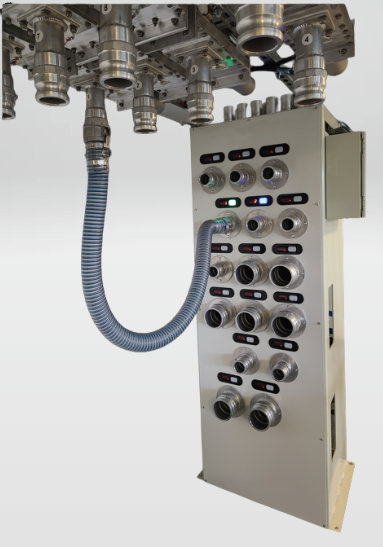
SMART means Sequential Material Allocation & Redistribution Tower. It uses connection detection and controls to compare the selected hose connection with the active material route or recipe. Optional lights can guide the operator to a port, and current ABS literature says convey will not start until the correct connection is recognized. SMART reduces risk but still requires material identification, line clearance, procedures, and controlled overrides.
Can ABS expand an existing conveying system?
Yes. A phased scope can add pumps, VFD velocity control, DCUs, receivers, sequence manifolds, pump-sharing manifolds, bridge adapters, SMART ports, storage, controls, or new process destinations while reusing suitable assets. Start with an equipment and controls audit, pneumatic review, marked-up layout, and a clear list of existing versus new responsibility.
How are powder, regrind, flakes, and dusty materials handled?
These materials can require filter receivers, specialty regrind receivers, different line or pickup geometry, lower or controlled velocity, flow aids, additional dust collection, special outlets, and representative material testing. Provide particle form, bulk density, dust behavior, bridging or compaction tendency, temperature, static, abrasion, moisture sensitivity, and any combustible-dust data.
How do I reduce angel hair and pellet degradation?
Address pickup velocity and the full route first: hot resin, excessive speed, long transport time, tight bends, rough joints, impacts, and poor pickup conditions can create stringers or fines. VFD velocity control can run different routes and materials at programmed speeds. Angel-hair traps capture stringers and help locate the source, but they do not correct the source by themselves.
What information is needed for useful budget pricing?
For an initial equipment review, send your material, approximate conveying rate, and whether you need a new system, an expansion, or an upgrade. A rough layout or photos are helpful, but you can begin before every detail is available. To prepare useful budget pricing, we will then confirm sources and destinations, route distances and lift, simultaneous demand, existing equipment, controls, and the installation scope.