ABS SMART material selection & route verification

Plastic Resin Selection Stations with Verified Hose Routing

Connect the right resin source to the right machine or silo. The ABS SMART resin selection station organizes hose changes in one place. Its controls identify the connected port, compare it with the active recipe, and keep conveying from starting when the system recognizes a mismatch. Optional lights can guide the operator to the requested port.

Advanced Blending Solutions Authorized Advanced Blending Solutions sales & applications support partner. Gauge Advisor helps processors map every resin source and destination, select the station and controls, and coordinate the surrounding conveying equipment.
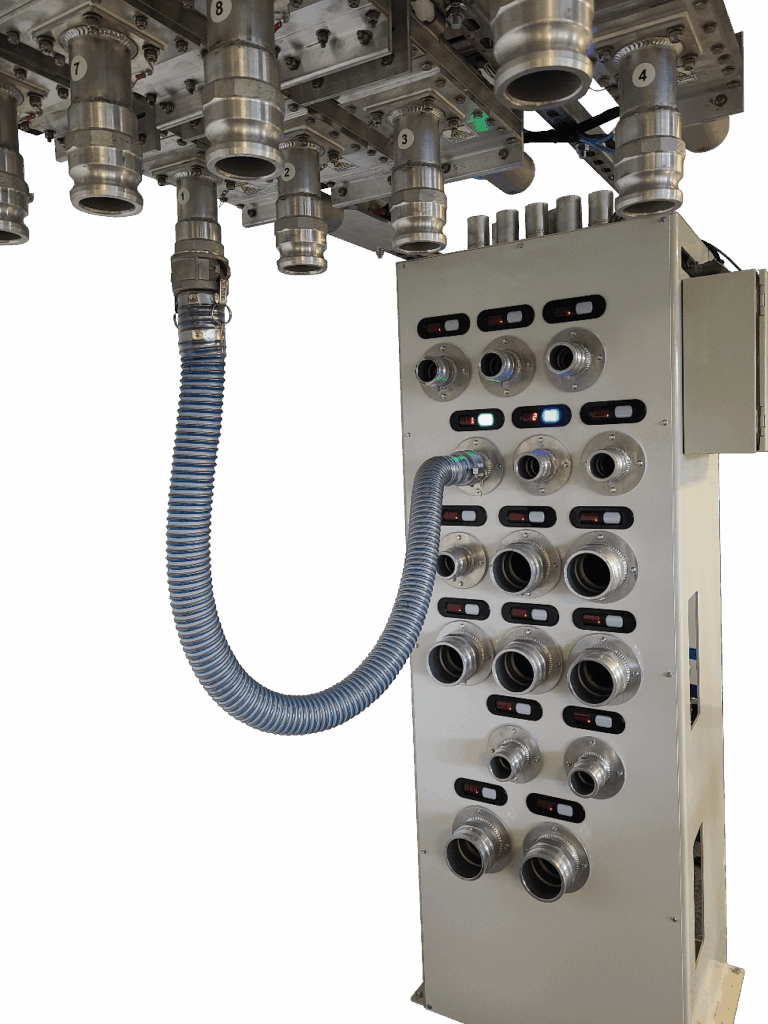
Connection checked before conveying ABS SMART plastic resin selection station with hose connection verification
The operator moves the hose by hand. An embedded electrical wire tells the controls which port is connected, and the controls compare that port with the requested route before allowing resin to convey.
Wrong route stays blocked

Current ABS literature says conveying does not start until the system recognizes the correct connection.

Hose sizes from 1.5 to 6 in

Choose the base and hose diameter together; the largest port count and largest hose size are not on one base.

Up to 16 verified connections

Five published base families and seven entry layouts support different line sizes, footprints, and routing plans.

2–4 destination expansion

Port expanders let one source serve more destinations while keeping connection verification.

Where wrong connections matter most

Where can a wrong resin connection cause the most damage?

A verified resin selection station is most valuable when one manual hose move determines which material reaches a machine or silo. The best applications combine frequent hose changes, several possible routes, and a costly consequence if resin goes to the wrong destination.

One controlled connection point

Route many resin sources to many machines from one organized station.

The ABS SMART station stores the allowed source-to-destination routes in the controls. After the operator connects a hose, the system checks that port against the requested route before it allows conveying to start.

  • Document every material source, pump group, receiver, dryer, blender, and machine.
  • List which destinations each source is allowed to feed.
  • Reserve physical ports and controls capacity for future sources and machines.
See the pumps, receivers, piping, and controls →
Central plastic resin selection stations with organized hose routing
Recipe-intensive routing

Keep each resin and additive assigned to the correct coextrusion layer.

In multilayer coextrusion, one wrong hose connection can send a resin, additive, or reclaim stream to the wrong blender, extruder, or product layer. A verified selection station adds a connection check before that material moves.

  • Map each recipe component to its permitted blender, hopper, or layer destination.
  • Coordinate the route with blending, receiver loading, and extrusion controls.
  • Define how each line will be emptied or purged during a material change.
Coordinate verified resin routing with continuous blending →
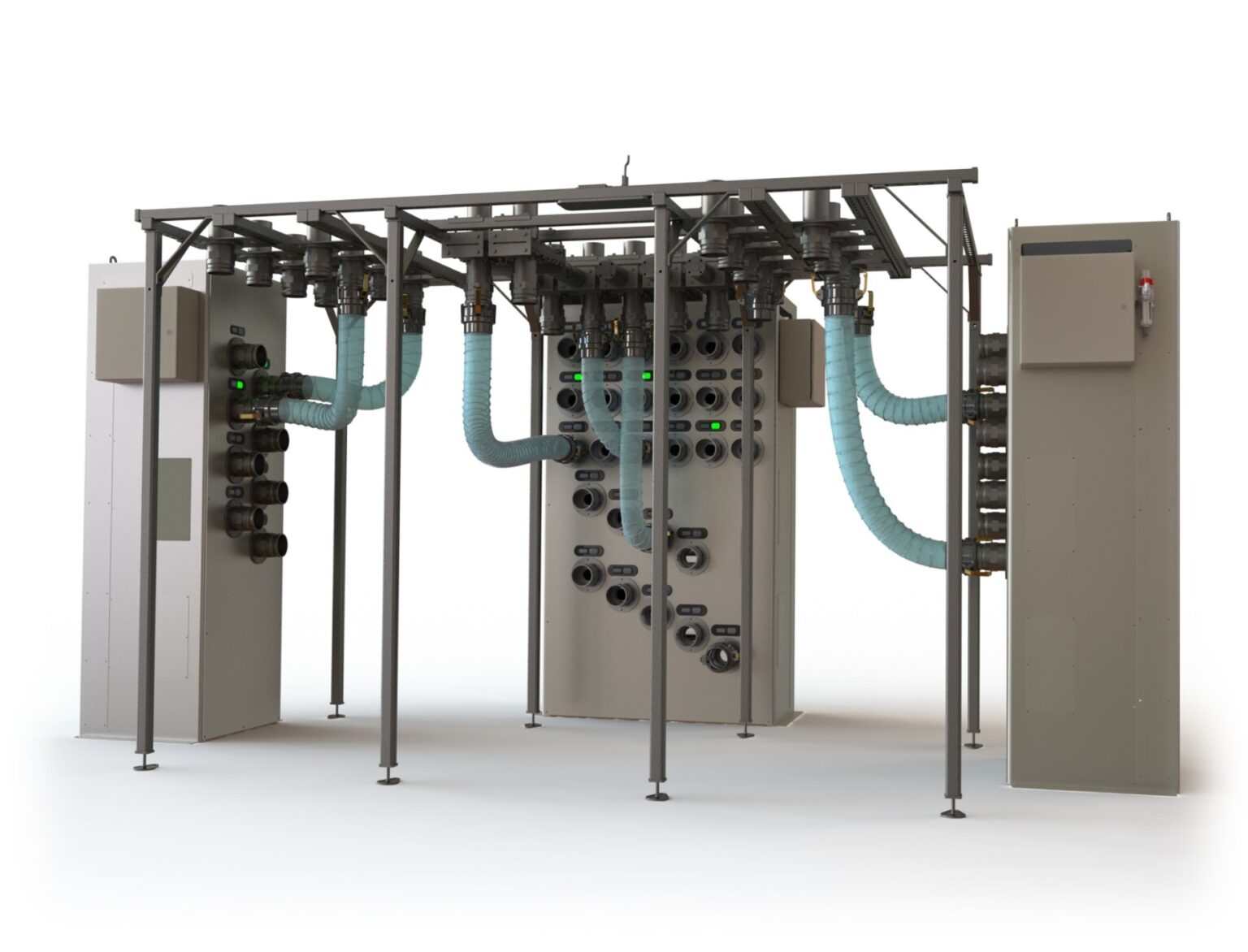
ABS SMART plastic resin selection station with multiple verified connection ports
High-consequence receiving route

Confirm the destination silo before unloading bulk resin.

A wrong route can mix a large amount of resin in the wrong silo before anyone sees the problem. A project-specific SMART station can check the selected source-to-silo connection. Weighing, lot identification, sampling, and inventory tracking remain separate system functions.

  • Define railcar or hopper-truck compartments, silos, transfer equipment, and allowed routes.
  • Decide whether the project also needs barcode data, lot records, delivery reconciliation, or process weighing.
  • Keep legal-for-trade or custody-transfer weighing separate from hose connection verification.
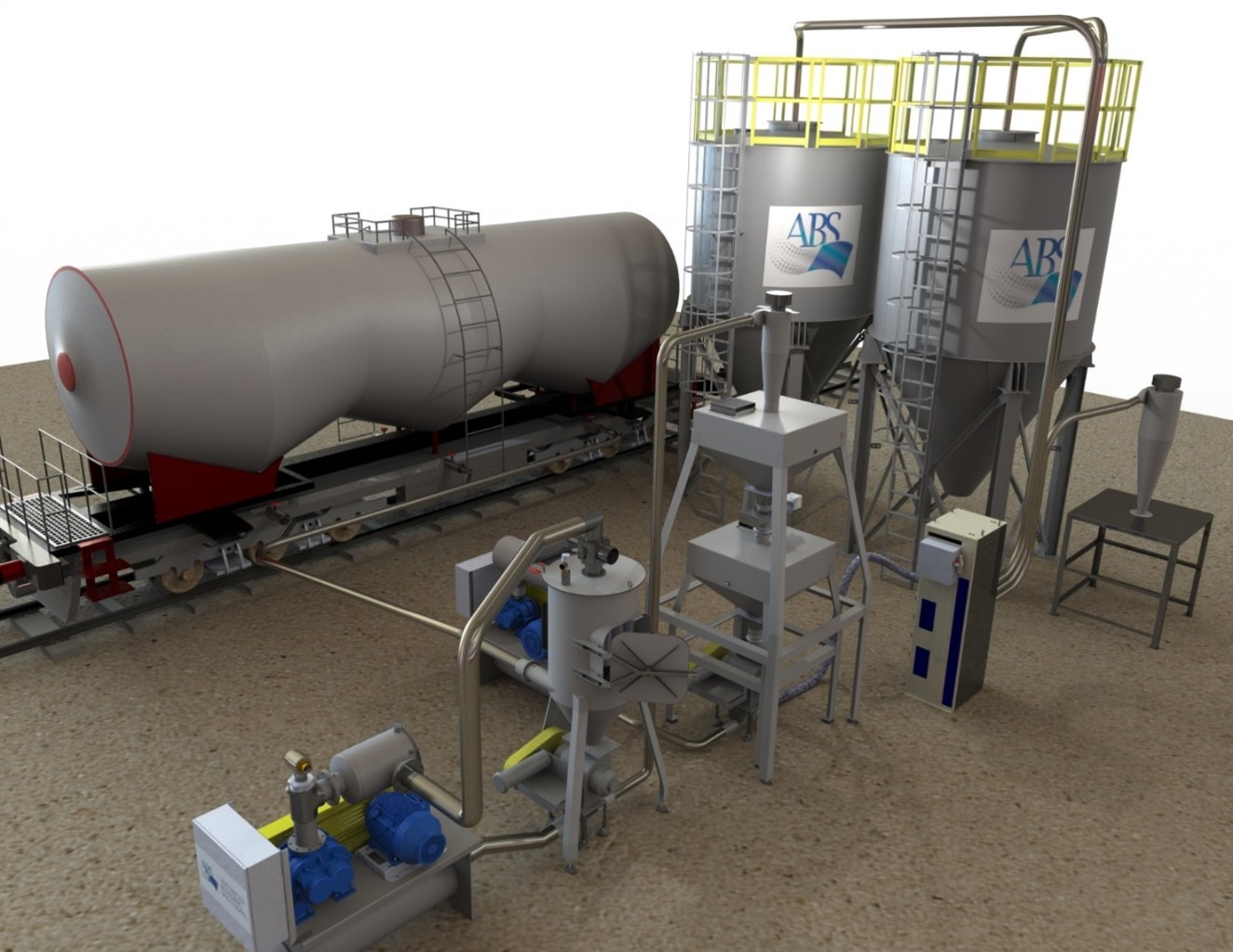
Plan railcar unloading and bulk storage →
Railcar unloading system and resin transfer equipment used in a bulk material handling application
Phased modernization

Replace a manual hose manifold with an organized, verified resin selection station.

An upgrade starts with the equipment already in the plant: ports, pipe sizes, hoses, pumps, controls, wiring, and available floor space. Reusing any of it requires a coordinated airflow, mechanical, and controls review.

  • Photograph and label the existing stand, hoses, source lines, and destination lines.
  • Record wrong connections, near misses, workarounds, and time spent searching for hoses.
  • Use expanders and reserved ports only where future choices remain clear to operators.
Modernize an existing resin-routing system →
Modular plastic resin selection station layout for future routing expansion

Not sure where to start? Send a hand sketch and a simple route table listing each resin source, the pump it uses, and every machine or silo it is allowed to feed. That allowed-route table determines the station layout and port count.

Build the business case

What can one wrong resin connection really cost?

The lost resin is only the first cost. A wrong hose connection can affect every pound transferred before the line is stopped, plus resin already inside the piping, receiver, dryer, blender, work in process, or finished product. Material that cannot be separated confidently may need to be reworked, downgraded, discarded, or sold for much less than its original value.

Planning formula: affected pounds × lost value per pound + cleanup and disposal + lost production + testing and rework + replacement and customer-quality costs.

Wrong-connection cost estimator

Use your own credible exposure. Do not assume an entire silo unless that amount could actually move before the route is isolated.

Include only material plausibly affected before containment.
Use purchase cost plus relevant freight or handling.
Use zero only if no recovery is realistically available.
Include labor, containers, disposal, and line cleaning.
Estimate time lost to containment and restart.
Use the plant’s own finance-approved figure.
Include requalification, scrap, or finished-goods review.
Add expedited material or other event-specific costs.
Use documented plant history—not an industry assumption.
No resin selection station prevents every material-quality error.
Material value loss$0
Downtime loss$0
Potential cost per event$0
Plant-estimated annual avoidable-loss potential$0

Planning estimate only. It is not an accounting opinion, performance guarantee, or claim that SMART prevents every event. Validate costs, event frequency, and avoidable share with operations, quality, engineering, and finance.

Material at risk

Bulk inventory, resin remaining inside the conveying line, receiver contents, and material already inside downstream equipment.

Recovery work

Segregation, purging, cleaning, sampling, lab testing, disposal, and revalidation.

Lost production

Downtime, restart instability, schedule disruption, and expedited replacement resin.

Quality exposure

Rework, finished-goods quarantine, traceability investigation, and potential customer impact.

Manual hose connection with an electronic check

How the system checks a hose connection before conveying

The operator still moves the hose, but the control system checks the selected port before resin can move. Optional lights can show which port to use, while the embedded electrical wire in the SMART Premium Flex Hose provides the connection signal used by the controls. Review resin-handling controls and automation.

Step 1

The recipe expects a specific route

The active recipe or production job tells the controls which port connection is expected for the required source-to-destination route.

Step 2

Operator receives guidance

Optional lights can guide the operator to the requested connection. Light colors, screen messages, and alarm meanings are configured for each project.

Step 3

Operator moves the hose

The operator connects the camlock hose by hand. SMART checks the connection; it does not move the hose automatically.

Step 4

The system identifies the selected port

The SMART Premium Flex Hose includes an embedded electrical wire that provides the connection indication the controls use to recognize the selected port.

Step 5

The controls check for a match

The controls compare the recognized port with the port expected by the active recipe or production job.

Correct connection — conveying can start Wrong connection — conveying stays off
What the station checks: SMART confirms that the hose is connected to the port expected by the recipe. It does not identify the resin itself, confirm that a camlock is fully sealed, remove resin left inside the line, measure transferred weight, or correct a wrong recipe or mislabeled source. Good labeling, changeover, maintenance, and access-control procedures still matter.
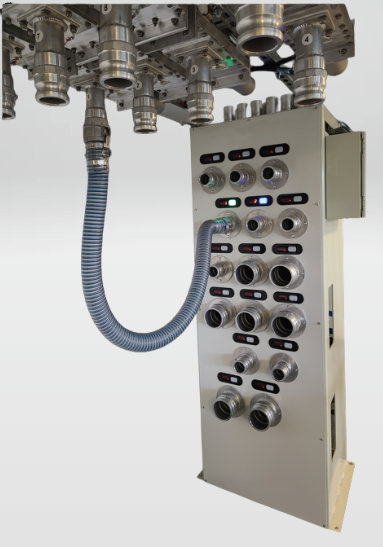
ABS SMART plastic resin selection station with organized hose connection ports
Beyond wrong-connection reduction

Replace the hose maze with one organized selection point.

An ABS SMART resin selection station can allow several vacuum pumps to use one planned set of shared material lines. This can reduce duplicate piping, make the correct hose easier to find, and provide organized connection points for future machines or resin sources.

30traditional common lines in ABS’s 10-silo × 3-pump example
10common material lines in the published SMART example
  • One organized station for source-to-destination selection.
  • Hose connection checked against the active recipe.
  • Optional light guidance for faster, clearer changeovers.
  • Expansion ports and custom layouts for future growth.

Why the piping reduction will vary: ABS’s 30-to-10 example shows one conceptual plant arrangement. The actual number of shared lines depends on the resin sources, pumps, destinations, conveying distances, equipment that may call for material at the same time, and controls design.

ABS SMART equipment options

Choose the station size, hose layout, and expansion options

ABS publishes five station-base families. The right configuration depends on the number of connections, hose diameter and length, hose-entry direction, available space, material temperature, optional lights, and future destinations.

Published ABS SMART resin selection station limits — May 2026 catalog
Base modelMaximum hose sizeMaximum verified connectionsTypical reason to choose it
SMRTUp to 3 in16Highest published connection count for lines through 3 in.
SMRTHUp to 3 in8Half-size base where footprint and port count are both constrained.
SMRTLUp to 4 in12Larger-line applications needing more than eight connections.
SMRTLHUp to 4 in8Half-size base for larger lines with a lower port count.
SMRTXLUp to 6 in7Largest published line size; fewer maximum connections.

These are physical configuration limits, not throughput ratings. SMART has no universal published lb/hr rating; conveying capacity still depends on the resin, bulk density, line diameter, distance, lift, bends, pickup conditions, pump capacity, velocity, filtration, and how many receivers may request material at the same time.

ABS SMART resin selection station base with multiple connection ports
5 base families7 entry layouts

Station base & hose-entry layout

Choose side-entry termination or shared, rear entry, bottom entry single- or double-sided, or top entry single- or double-sided. The stand should fit both today’s lines and the operator’s actual reach, visibility, and changeover workflow.

Capacity
Up to 16 connections, depending on base
Largest line
Up to 6 in on SMRTXL
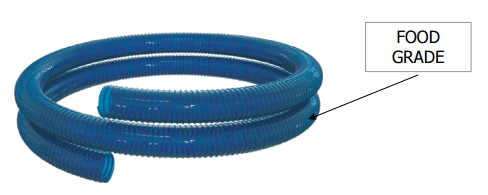
ABS SMART Premium Flex Hose used for verified resin selection station connections
1.5–6 inUp to 15 ft

Hose assembly & electronic connection signal

The Premium Flex Hose, camlock, and mounting bracket create the connection the operator moves by hand. Replacement SMART hoses include two camlocks and an embedded electrical wire that provides port-connection indication to the controls. A knife gate is optional.

Lengths
6, 8, 10, 12, or 15 ft replacements
Temperature
Standard <150°F or high-temperature <350°F configurations
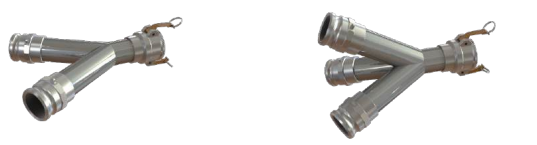
ABS SMART aluminum port expanders for additional resin destinations
2-port3-port4-port

Port expanders for future destinations

Aluminum port expanders allow one source to serve two, three, or four destinations while keeping connection verification. They can reduce the number of base ports needed, but they do not mean every branch can convey at the same time.

Use
Share one source across more destinations
Review
Sequence, pressure loss, access, and future routes

Specify each function clearly in the quote: The connection signal, static-electricity control, hose construction, temperature limits, optional light guidance, operator touchscreen (HMI) screens, alarms, response to a broken or disconnected signal wire, and the rule that blocks a wrong connection are related—but separate—design requirements.

Manual hose manifold versus verified resin selection

Why hose verification adds value beyond a manual selection station

A stainless station can organize the hoses. ABS SMART adds an electronic connection check: if the recognized port does not match the port expected by the recipe, the control system does not allow conveying to begin.

Conceptual comparison for project scoping
FeatureManual hose selection stationABS SMART verified selection station
Operator instructionPaper, labels, operator memory, or a separate touchscreen instruction.The recipe and optional lights can identify the requested connection.
Actual-connection checkVisual confirmation and operator procedure.Embedded electrical connection indication identifies the recognized port.
Permission to start conveyingMay rely on the operator starting the correct route.Current ABS literature says conveying does not start until the expected connection is recognized.
Shared-line expansionMay require more parallel shared lines as pump groups multiply.Can use one engineered set of shared material lines across multiple vacuum pumps.
Future destinationsNew hoses, ports, labels, and procedures must be added coherently.Base selection, reserved ports, and 2–4 port expanders can create a planned expansion path.
Procedures still requiredSource identification, line clearing, maintenance, user permissions, and written changeover procedures.The same controls remain necessary; SMART reduces a specific connection-based misrouting risk.

A simple manual station can still fit a small, stable set of allowed routes where a mistake has limited consequences. The case for connection verification becomes stronger as the number of routes, changeover frequency, cost of an error, pump sharing, expansion, and operator variability increase.

ABS operator touchscreen controls for verified plastic resin hose routing
Recipes, connection status, alarms, and plant controls

How the operator touchscreen guides the hose change and blocks a mismatch

The operator touchscreen—often called an HMI—should show the requested route, the port actually recognized, whether that connection is accepted, and what to do if it is rejected. The quoted controls scope should also define alarms, user permissions, overrides, vacuum pumps or pump groups, and what happens after a hose is moved.

Allowed route setupAssign the material sources and destinations permitted for each recipe or production order.
Connected-port statusShow the requested route and the port detected by the controls with text and symbols—not color alone.
Wrong-connection start blockDefine when conveying may start, what keeps it off, which alarm appears, and how an authorized user resets or overrides a fault.
Plant equipment integrationCoordinate SMART software with pump sequencing, receivers, dryers, blenders, extrusion controls, and plant-level systems as quoted.

ABS supports Allen-Bradley and Beckhoff controls. Each quote should state which programmable controller (PLC) and operator touchscreen (HMI) are included, what reports or data storage are required, whether barcode or remote support is included, how network access is controlled, who maintains recipe and equipment names, and who is responsible for each equipment interface.

Plan the equipment around the selection station

Outline your complete resin-handling system.

Use the resin-handling selector to identify the equipment that works with the ABS SMART selection station. Start with Move Material, then add storage, vacuum receivers, pumps, filtration, drying, blending, and controls as needed.

The selector covers the complete resin-handling system; it is not a SMART-only configurator. Final design still requires an allowed-route table, vacuum or pressure conveying calculations, a written controls sequence, and a layout review.

Loading the resin-handling selector…

If the selector does not load, open it on its own page.

One connection checkpoint inside the complete system

Connect the resin selection station to storage, conveying, drying, and blending.

The selection station checks which port is connected. The rest of the system still moves and prepares the resin: pumps create airflow, filters protect the air circuit, receivers collect material, dryers remove moisture, blenders meter ingredients, and controls coordinate each step.

01

Source

Railcar, hopper truck, silo, bin, gaylord, dryer hopper, reclaim, or another qualified resin source.

02

Pump & filtration

Vacuum or pressure equipment supplies the airflow while DCUs and filter receivers protect the system.

03

Verified hose selection

The operator connects the hose, and the controls compare the selected port with the port expected by the recipe.

04

Shared material line

Rigid and flexible piping carries resin through an engineered route at the required velocity.

05

Receiver or hopper

A receiver, dryer hopper, blender hopper, silo, or surge vessel accepts the selected material.

06

Process

Injection molding, blow molding, extrusion, film, pipe, profile, compounding, or recycling consumes it.

An allowed-route table connects the complete system. It lists every permitted source → selection-station port → pump group → shared line → destination so each route can be named, sized, sequenced, and tested.
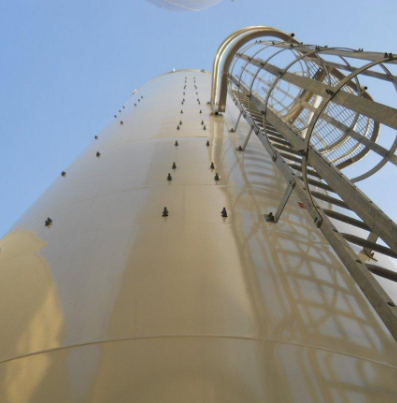
Bulk resin storage silo connected to a central material distribution system

Bulk storage & material sources

Name each silo, bin, and gaylord and list the destinations it is allowed to feed. Level sensors, lot records, barcode checks, and delivered-weight measurement are separate functions that can be integrated as needed.

Plan the complete central conveying system →
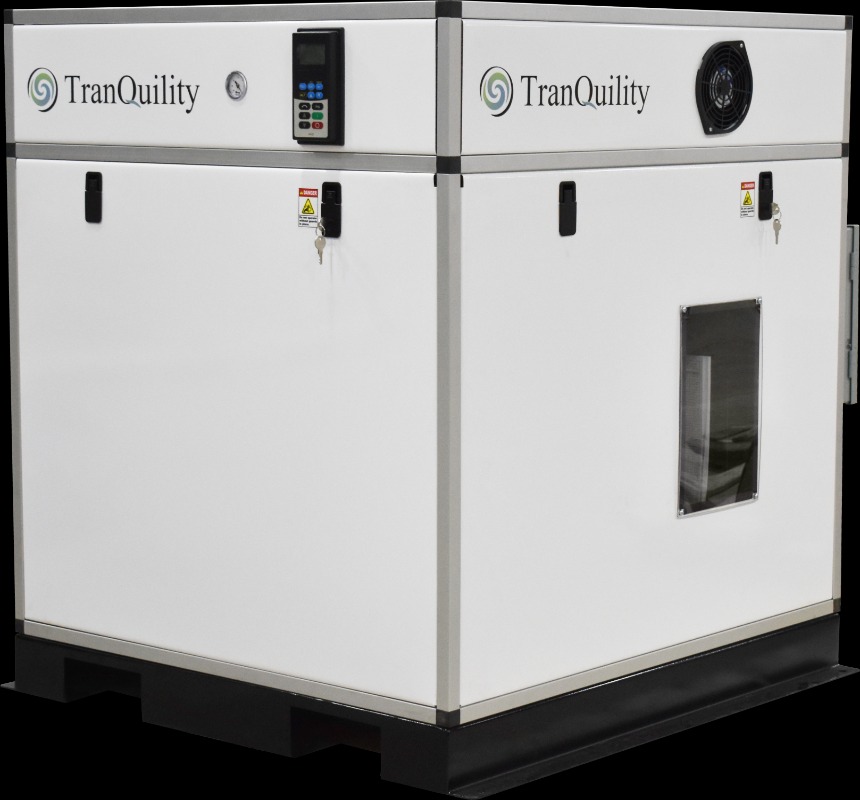
Advanced Blending Solutions Tranquility vacuum pump for a central resin conveying system

Pumps, airflow & filtration

Shared-line performance depends on which receivers need material, pipe length and bends, pump sequencing, filtration, backup capacity, and pickup velocity. The selection station does not replace vacuum or pressure conveying calculations.

Screen the vacuum pump duty →
ABS vacuum receiver used at a resin conveying destination

Receivers, loaders & destinations

Each destination still needs the correct receiver volume, outlet, level control, fill time, filtration, material compatibility, temperature rating, and discharge point.

Review central receivers and loading →
ABS desiccant resin drying system that can receive material through a verified central route

Drying, blending & production

Coordinate the selected resin route with drying time, protected dry-material transfer, blender component assignments, changeovers, line cleanout, and machine demand.

Coordinate drying and closed transfer →

For bulk receiving, SMART can check the selected route to a silo. A separate weigh hopper, scale, level sensor, barcode or lot system, or inventory platform may be required to measure the delivery and establish traceability. Connection verification is not legal-for-trade weighing and does not identify the resin itself.

Where frequent hose changes create risk

Applications that benefit from verified resin routing

A resin selection station can serve a small or large plant. The strongest business case appears where operators change routes frequently and one wrong connection could affect a costly resin volume, product layer, specification, or customer order.

01

Blown & cast film

Coordinate multiple resin and additive streams across multilayer structures, reclaim, blenders, and extruders.

02

Pipe, profile & tubing

Verify source changes involving color, compound, regrind, production line, and material grade.

03

Injection & blow molding

Organize a central material selection station for many machines, dryers, receivers, and pump groups.

04

Compounding & recycling

Control routes involving virgin resin, regrind, flakes, reclaim, additives, and changing feed recipes.

05

PET & dry-material systems

Coordinate verified source selection with high-temperature hose needs, drying, and moisture-controlled transfer.

06

Bulk unloading & storage

Verify a declared railcar or hopper-truck-to-silo route while separately scoping quantity and lot records.

Confirm the resin source

The station checks the connected port, so incoming-material identification and accurate labels still matter.

Clear resin left in the line

Line-cleanout and changeover procedures control material remaining outside the connection check.

Inspect hoses and signals

Hoses, camlocks, wiring, ports, valves, and sensors still need inspection and testing.

Control overrides and fault recovery

The written controls sequence should define user permissions, alarms, overrides, and recovery steps.

From a simple routing sketch to plant startup

Design the resin selection station as part of the complete conveying system.

01

Audit the current routes

Document sources, destinations, pumps, lines, hose IDs, controls, floor space, changeovers, incidents, near misses, and the operator’s real workflow.

02

List every allowed resin route

Name every permitted source-to-destination combination, pump group, line diameter, recipe dependency, restricted route, and future connection.

03

Select the station, hoses & controls

Choose the base, hose-entry layout, hoses, lights, knife gates, expanders, programmable controller (PLC), operator touchscreen (HMI), alarms, overrides, interfaces, and installation responsibilities.

04

Test correct connections, wrong connections & faults

Test matching and mismatched routes, broken connection circuits, power loss, overrides, route changes, fault recovery, labels, training, and maintenance procedures.

Advanced Blending Solutions team supporting resin handling system applications
Application review connects the allowed resin routes to the station layout, conveying requirements, controls, installation, startup, operator training, and future expansion.
What to send for a useful layout and budget

What we need to size and price your resin selection station

You do not need to choose the station model or port count first. Start with where each resin comes from, where it may go, the conveying requirements, existing controls, available space, operator workflow, and future expansion plans.

  • Sources: silos, bins, railcar/truck compartments, gaylords, dryers, reclaim, additives, and source IDs.
  • Destinations: receivers, dryers, blenders, machines, silos, lines, and required material rates.
  • Allowed routes: every permitted source → pump group → shared material line → destination combination.
  • Conveying: pump type and hp, pipe outside diameter (OD) and material, distances, vertical lift, bends, receivers that may request material at the same time, velocity, and filtration.
  • Materials: resin/form, bulk density, temperature, abrasion, static, moisture sensitivity, dust, and cross-contamination concern.
  • Physical layout: floor plan, elevation, photos, connection height, preferred entry direction, access, reach, and hose length.
  • Controls: Programmable controller (PLC) and operator touchscreen (HMI), recipes, pump groups, equipment names, user permissions, overrides, alarms, reports, network requirements, and who owns each equipment interface.
  • Options: light kit, knife gates, high-temperature hoses, expanders, reserved ports, barcode/lot functions, and status displays.
  • Risk history: wrong routes, near misses, partial containers, changeover time, cleanup, downtime, and material-value exposure.
  • Project scope: new/retrofit, existing assets to reuse, future phases, mechanical/electrical installation, commissioning, training, site, and schedule.

A labeled hand sketch is enough for the first discussion. Show where each resin starts, where it needs to go, the approximate distances, and which pumps and lines are involved. Photos help most when the hoses and equipment are labeled.

Buyer, controls, and engineering questions

Plastic resin selection station and ABS SMART FAQ

These answers explain what the equipment does, how ABS SMART checks a hose connection, and what still needs to be confirmed when planning a complete system.

What is a plastic resin selection station?
A plastic resin selection station gives an operator one organized place to connect a resin source—such as a silo, bin, dryer, or gaylord—to an allowed machine or storage destination. The ABS SMART version adds electronic port verification: the operator connects the hose manually, and the controls check the recognized port against the active recipe before conveying starts.
What does ABS SMART stand for?
SMART means Sequential Material Allocation & Redistribution Tower. In plain language, it is ABS’s manual resin hose-selection station with electronic connection verification. It can organize material lines, reduce duplicate common piping, and block a recognized port mismatch before conveying begins.
How does a resin selection station help prevent a wrong hose connection?
The active recipe or production job expects a specific port connection. After the operator connects the hose, the embedded electrical wire provides the connection indication used by the controls. If the recognized port matches the expected port, conveying can start. If it does not match, the conveying sequence stays off.
What do the optional port lights mean?
Optional lights can guide the operator to the connection requested by the recipe, while the operator touchscreen (HMI) can show whether the connection is requested, accepted, or rejected. There is no universal red, green, or blue convention: exact colors, screen messages, alarms, and the safe response to a fault are configured and confirmed for each project.
How does the SMART hose indicate a connection?
ABS documentation calls it SMART Premium Flex Hose and specifies an embedded electrical wire for indicating port connection. The controls use that signal to recognize the selected port. The quoted specification should confirm hose construction, connection-detection method, static-electricity control, temperature rating, and material compatibility.
Does SMART move the hose automatically?
No. The operator moves and connects the camlock hose manually. SMART electronically checks the selected port before allowing conveying. Automatic valves, robotic hose routing, or other automatic material-routing equipment would be a separate system.
What line sizes and connection counts are available?
Current published bases support hose and port sizes from 1.5 through 6 inches. SMRT supports up to 16 connections through 3 inches; SMRTH up to 8 through 3 inches; SMRTL up to 12 through 4 inches; SMRTLH up to 8 through 4 inches; and SMRTXL up to 7 through 6 inches. These are configuration limits, not conveying-rate guarantees.
Can one material source serve multiple destinations?
Yes. ABS publishes two-, three-, and four-port expanders that let one source serve additional destinations while keeping SMART verification. The route sequence, pressure loss, valve state, pump demand, and whether any destinations can operate at the same time still require application review.
Can a resin selection station be added to an existing conveying system?
Often, but it is not always a simple drop-in replacement. The existing stand, hoses, ports, line sizes, pumps, controls, wiring, available space, allowed routes, and equipment condition must be reviewed before deciding what can be reused.
What still needs to be controlled outside the hose connection check?
SMART does not identify the resin itself, correct a mislabeled source or inaccurate recipe, remove material left inside a line, measure delivered weight, or confirm that a camlock is fully sealed unless separate monitoring is provided. Source labeling, line cleanout, maintenance, user permissions, overrides, and quality procedures remain important.
What information is needed for a resin selection station layout and quote?
Start with a labeled sketch showing every resin source, pump group, shared line, and destination. Also provide allowed routes; line sizes, approximate distances, lift, and bends; material types and rates; existing controls; available floor space; desired options; future routes; and any history of wrong connections or near misses.
Help stop a wrong resin connection before material moves

Ready to plan a verified resin selection station?

Send a labeled sketch, equipment photos, resin sources, destinations, line sizes, pump groups, controls platform, and future expansion plans. Gauge Advisor will coordinate the ABS application review, station configuration, resin-handling integration, layout, and quotation.

Gauge Advisor is an authorized Advanced Blending Solutions sales & applications support partner. Public connection counts, dimensions, temperatures, and manufacturer claims are starting references; final performance, safety, controls, integration, compliance, and project scope require application engineering.

Interactive resin-handling selector

Build your resin-handling system profile

Choose the material-handling tasks your process needs, then answer only the questions that apply. The selector will organize a practical Advanced Blending Solutions starting system.

5 guided stepsAbout 1 minute per task
Gauge Advisor interactive tool

Resin Handling Equipment Selector