Plastic resin bulk receiving systems

Plastic Resin Railcar Unloading Systems and Bulk Storage

Move pelletized resin from railcars or pneumatic bulk trucks to the correct storage silo. Plan the unloading method, pumps or blowers, filtration, route controls and optional weight verification together with storage and the connection to plant conveying.

Advanced Blending Solutions Authorized Advanced Blending Solutions sales & applications support partner. Gauge Advisor helps processors scope ABS railcar unloading, hopper-truck interfaces, delivery verification, silos, controls, installation, commissioning, and downstream material handling.
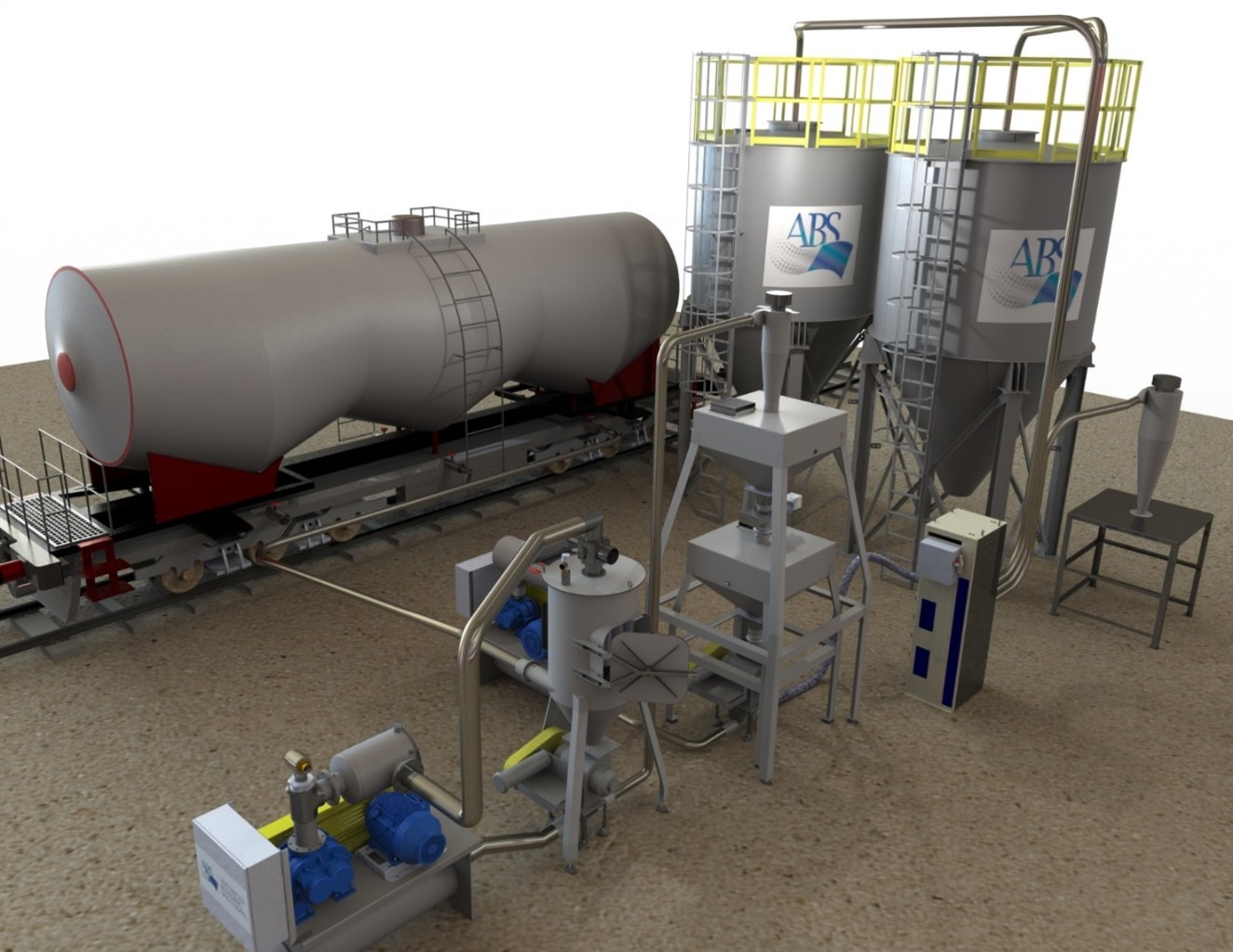
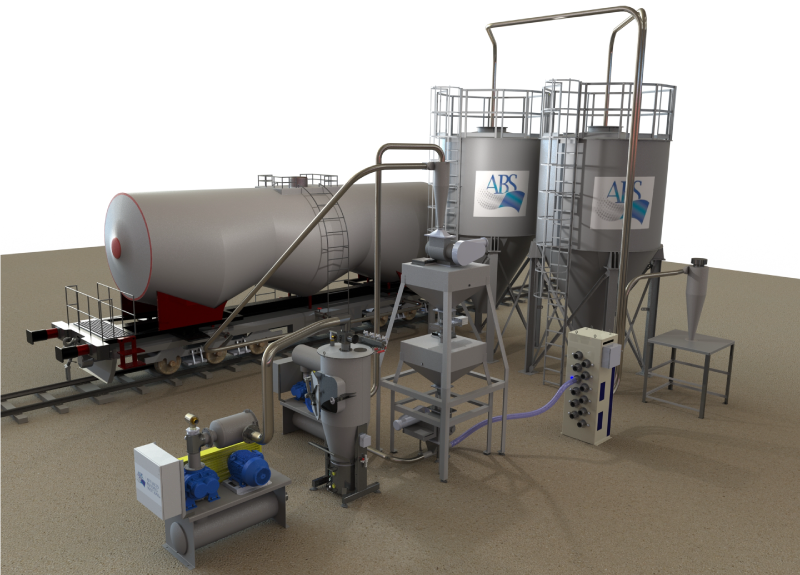
Vehicle to verified storage route Plastic resin railcar unloading equipment installed beside a rail siding
The useful scope follows the material from each vehicle compartment to the selected storage vessel. Final unloading rate, line size, pump, filtration, controls, and storage depend on the resin and actual site route.
Two railcar paths

Compare direct pull with vacuum-to-pressure pull/push before selecting equipment.

Truck fill interface

Coordinate the carrier-supplied blower, ground connection, silo vent, and route permissives.

Optional verification

Add application-specific process weighing and records when delivery reconciliation matters.

Storage handoff

Design silos, intermediate bins, levels, takeoffs, and plant conveying interfaces together.

Start with the receiving problem

What does your bulk-resin receiving system need to do?

Start with the delivery vehicle, resin, target unloading time and route to storage. Include any weighing requirement, existing equipment and operating problem you want to address. These details guide pump and storage selection.

New receiving architecture

Choose direct pull or pull/push to suit the unloading route

Direct pull moves resin under vacuum to a receiver at the silo. Pull/push draws it to a filter receiver or cyclone, meters it through a rotary airlock, and pressure conveys it to storage. The plant layout decides which path is useful.

  • Required unloading time and compartment sequence
  • Horizontal run, vertical lift, bends, and silo locations
  • Resin bulk density, temperature, fines, and degradation risk
  • Filtration, controls, maintenance access, and future silos

No universal railcar unloading rate is assumed. Performance is application-specific and must be calculated around the actual material and route.

ABS railcar unloading, measurement, routing, and silo system rendering
Pneumatic bulk truck receiving

Treat the truck blower and silo vent as part of one fill-air path

A pneumatic bulk truck commonly supplies its own blower and connects to a plant fill line. The receiving scope must still route the correct vehicle compartment to the intended silo without overfilling or restricting the displaced air.

  • Carrier hose, connection, pressure, and airflow information
  • Ground-level fill manifold or dedicated silo lines
  • Bin-vent or silo-vent filtration and safe access
  • High-level permissive, route indication, and unloading procedure

Confirm what the carrier provides. Do not assume the plant railcar vacuum system is the truck's air mover.

The material path and displaced-air path must both remain open and correctly routed during unloading.
Independent process visibility

Define what the number must prove before selecting the weighing arrangement

ABS has illustrated a loss-in-weight weigh-hopper system that records material as it unloads, meters it through a rotary airlock, and pressure conveys it through a selected route. That can support receiving and inventory records when the measurement scope is explicit.

  • Range, resolution, calibration, and acceptable uncertainty
  • Compartment sequence, residual heel, and line contents
  • Delivery, lot, timestamp, operator, and silo records
  • Process reconciliation versus certified custody transfer

Process weight verification is not automatically legal-for-trade. State any certified measurement or supplier-settlement requirement before quotation.

Advanced Blending Solutions controls display for material handling data
Audit before replacing

Separate airflow, filtration, routing, controls, and storage problems

A slow or dirty unload does not always require a completely new system. Compare good and bad cycles, inspect the complete line and filter pressure loss, and identify which existing assets are suitable for reuse.

  • Pump condition, relief setting, belt or blower performance
  • Filter loading, cleaning air, leakage, and vent restriction
  • Pickup velocity, line size, bends, hot resin, and angel hair
  • Silo inlet, level devices, route logic, and future capacity

A VFD, filter receiver, dust collection unit, controls update, or additional storage may solve a defined bottleneck without discarding useful equipment.

Advanced Blending Solutions pump variable-frequency-drive control
Follow the transfer from vehicle to storage

Six decisions tie the receiving system together

Each piece changes the conditions seen by the next. A useful design balances unloading time, resin protection, airflow, separation, destination control, storage capacity, and maintenance access as one operating sequence.

01

Identify delivery

Railcar or truck, compartments, resin, lot, bulk density, quantity, and connection.

02

Pick up material

Vehicle outlet, probe, hose, line, airflow, and compartment change sequence.

03

Separate and filter

Receiver or cyclone removes resin from conveying air while filtration manages dust and pressure loss.

04

Meter or verify

Rotary airlock feeds a pressure line; an optional weigh hopper can create a process delivery record.

05

Confirm destination

Route selection, SMART connection when included, level permissives, and operator indication.

06

Store resin and feed plant conveying

Silo or bin, vent, level measurement, takeoff, and connection to plant conveying.

Control narrative: define what must be true before unloading starts, what pauses or stops transfer, how compartments and destinations change, what the operator sees, and which events or quantities are recorded.
Railcar unloading architecture

Direct pull or pull/push?

Both can move resin from a railcar to storage. The difference is where the vacuum transfer ends, whether a pressure-convey stage follows, and how the chosen arrangement fits the distance, lift, silo layout, rate, separation, controls, and service access.

ABS direct-pull railcar unloading system diagram
Direct pull

Vacuum from the railcar to a receiver at the silo

The plant vacuum pump draws resin to a receiver mounted at or above storage. Review the complete vacuum route, receiver discharge, silo roof access, filter arrangement, line cleaning, and how multiple silos will be served.

View the ABS direct-pull overview ↗
ABS pull-push railcar unloading system diagram
Pull / push

Vacuum to separation, then pressure convey to storage

A filter receiver or cyclone separates resin from the vacuum side. A rotary airlock meters it into the pressure line for transfer to the selected silo. This divides the route into two pneumatic stages.

View the ABS pull/push overview ↗
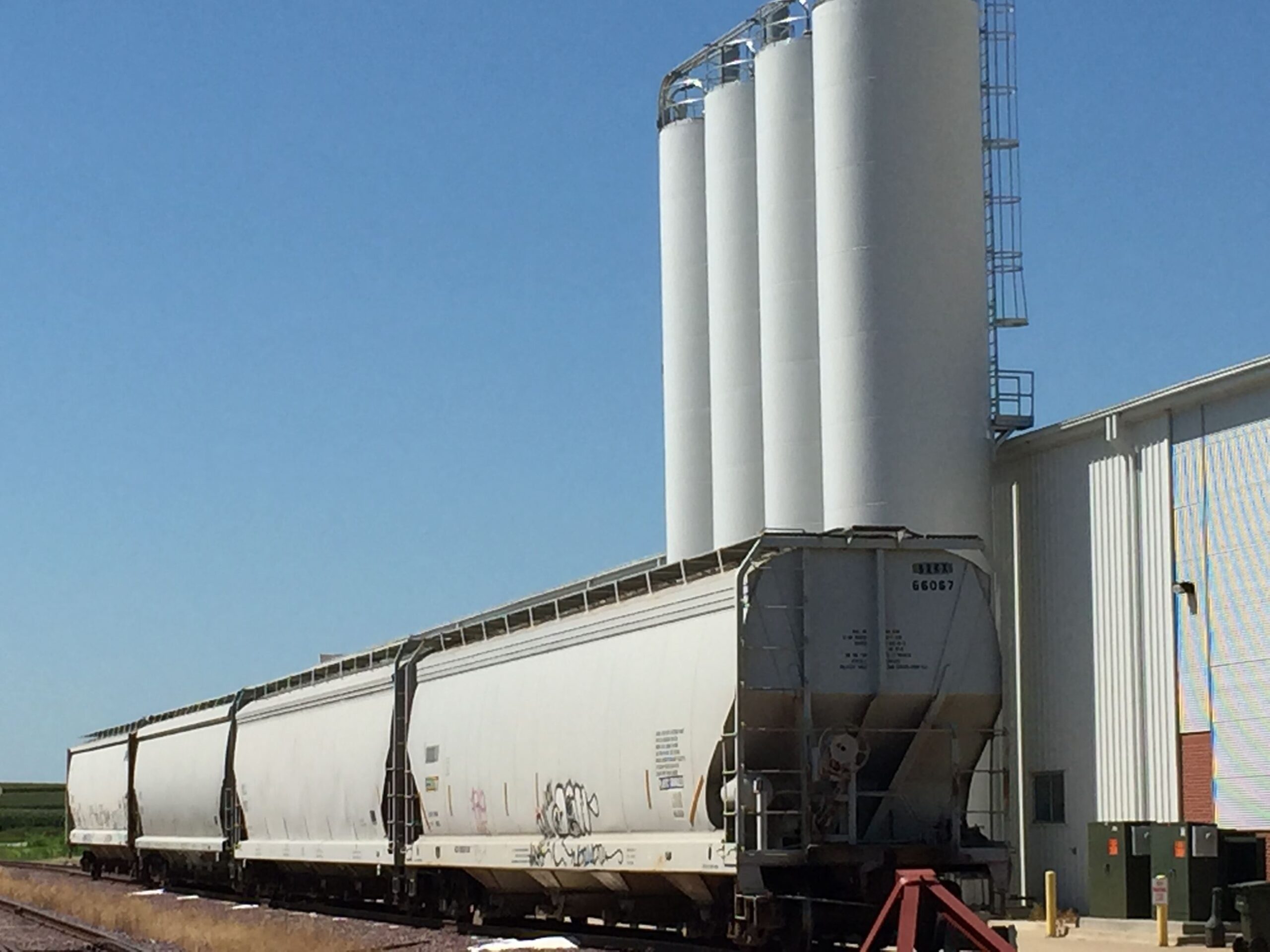
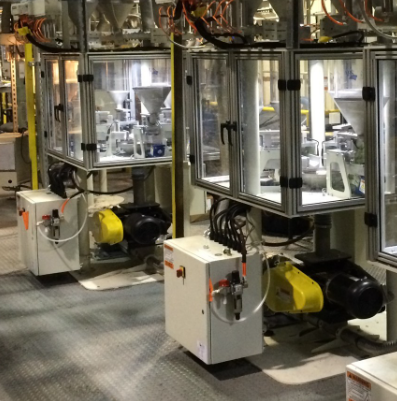
Installed plastic resin railcar unloading equipment and material lines
Site-specific decision

The real route determines the useful system

Provide rail position, silo coordinates and elevations, usable line path, bends, utilities, access, rate target, resin data, operating sequence, and expansion plan. Include the most demanding route so equipment sizing accounts for the full system.

DecisionDirect pullPull / pushPneumatic bulk truck fill
Material pathVacuum from railcar directly to a receiver at storage.Vacuum to receiver or cyclone; rotary airlock meters into a pressure line to storage.Carrier blower commonly pressure conveys through a plant fill line to the silo.
Core equipmentVacuum pump, receiver, filtration, line, silo inlet, controls.Vacuum stage, filter receiver or cyclone, rotary airlock, pressure stage, routing, controls.Connection and fill manifold or line, vent filtration, level devices, route indication and procedure.
Useful starting fitEvaluate when the vacuum route to the storage receiver is practical.Evaluate when separating the vacuum and pressure routes better fits distance, lift, rate, or multiple destinations.Evaluate around the truck's blower and the silo's allowable fill-air path.
Weight verificationMeasurement can be separately scoped. Define where material is weighed, what remains in the vehicle and lines, the required record, and whether certified custody transfer is required.
Do not assumeNo architecture has a universal unloading rate, distance, line size, measurement accuracy, or guaranteed material-quality result.
Optional inbound quantity verification

Measure the transfer for a defined business decision

When delivery quantity affects receiving, inventory, supplier conversations, or production planning, define the measurement objective first. Then locate the scale and records where they can answer that question without disrupting the pneumatic system.

ABS gravimetric railcar unloading and silo routing rendering
Application-specific gravimetric unloading concept shown with railcar, weigh hopper, pressure transfer, and silo routing.
Loss-in-weight receiving concept

Track resin through a weigh hopper before pressure transfer

An ABS presentation shows resin flowing through a gravimetric weigh hopper, being metered by a rotary airlock, and pressure conveyed through the selected connection to a silo. Real-time process data can support delivery and inventory records when the application is properly specified.

  • Define vehicle, compartment, resin, lot, time, operator, and destination fields
  • Account for residual heel, material held in the pickup line, hopper, and transfer line
  • Set calibration, test, reconciliation, exception, and record-retention procedures
  • Separate process verification from certified legal-for-trade or custody-transfer requirements
Measurement boundary

State what crosses the scale

Vehicle heel, compartment changes, line contents, airlock inventory, and the transfer endpoint determine what the recorded quantity represents.

Calibration

Make verification repeatable

Document test weights or calibration method, zero checks, allowable uncertainty, exception handling, and who owns routine verification.

Data record

Capture the context with the number

A useful record connects quantity to delivery, material, lot, compartment, destination, operator, timestamps, alarms, and accepted adjustments.

Commercial boundary

Confirm any requirement to use weight for billing

If legal-for-trade or custody-transfer measurement is required, say so before design and confirm the certified equipment and governing requirements.

Pneumatic transfer and material protection

Match the air mover, separation, filtration, and metering device

Unloading rate is the result of a complete pneumatic route. Pump horsepower, filter area, rotary-airlock opening, line diameter, velocity, bends, silo venting, and the material itself must work together through every operating phase.

Advanced Blending Solutions dust collection unit with service-access door
Delta PFilter cleaningWaste canister

Filter receivers, cyclones, and dust collection

Separate resin from conveying air while managing pressure loss, dust, and service access. ABS railcar dust collection can monitor differential pressure for alarms and cleaning control; the selected receiver or cyclone follows airflow and material behavior.

Review
Airflow, media, fines, cleaning air, access, and disposal
Guardrail
Receiver-side filtering can remove a pump-side cyclone only in the appropriate configuration
Advanced Blending Solutions rotary airlock pressure-convey package
Continuous meteringPressure transferMaterial duty

Rotary airlocks and pressure transfer

In a pull/push system, the airlock meters separated resin into the pressure line. ABS offers cast-iron or stainless-steel airlocks with published openings from 6 × 6 through 22 × 22 inches and an offset V-style inlet designed to reduce pellet shearing.

Options
Standard or high-temperature configurations; bearing air purge by scope
Size by
Material, metering rate, pressure differential, duty cycle, and service access
Advanced Blending Solutions high-efficiency vacuum and pressure pump packages with filtration
5–100 hp familiesVacuum or pressureOptional VFD

Pumps and pickup-velocity control

ABS publishes general vacuum and pressure pump packages from 5 through 100 hp. An optional VFD can adjust pickup velocity by route and material, helping reduce avoidable degradation and angel-hair formation while matching the real conveying demand.

Standard
Published packages include relief protection, silencers, and secondary canister filtration
Confirm
Duty point, motor, controls, enclosure, redundancy, noise, and utilities

Pickup conditions

Outlet geometry, probe depth, compartment changes, hose, entrainment, and vehicle heel influence stability.

Line route

Diameter, horizontal run, lift, bend radius, joints, roughness, and storage inlet shape influence pressure and impact.

Material behavior

Bulk density, pellet shape, temperature, fines, static, abrasion, fragility, and moisture sensitivity change the design.

Maintenance state

Filter loading, leaks, airlock clearances, blower condition, sensors, and cleaning air change actual performance.

Material-quality note: velocity control can reduce degradation risk, but it does not guarantee zero angel hair or fines. Review hot resin, pickup, line joints, bends, impacts, and route time. Read the Gauge Advisor angel-hair guide →

Bulk resin storage and inventory visibility

Size and configure storage for deliveries and downstream resin demand

A storage vessel is not just a capacity number. Its fill path, venting, level devices, access, material of construction, cone and takeoff geometry, structure, controls, usable volume, and downstream demand determine whether the complete receiving system works.

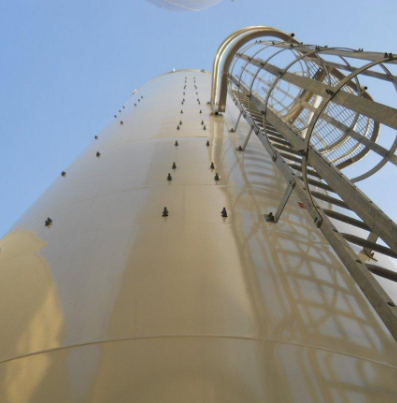
Advanced Blending Solutions bulk plastic resin storage silo
Welded, bolted, and mixing silos are configured around site access, usable volume, fill path, levels, and takeoffs.
Custom bulk storage

Welded, bolted, and mixing silos built around the site

ABS can build welded silos off-site for installation or erect bolted silos on-site in sections. Published options include stainless steel, epoxy-painted mild steel, aluminum, corrugated aluminum, material inlets, takeoff boxes, slide gates, rotary airlocks, level devices, catwalks, and secured access.

  • Confirm usable volume by resin bulk density—not a universal pound capacity
  • Coordinate fill-air venting, inlet geometry, high-level protection, and access
  • Define foundation, structure, rigging, site work, codes, and permitting by project
  • Map every bottom takeoff to the separate central plant conveying system
Advanced Blending Solutions intermediate bulk storage bin
Fixed intermediate storage

Bins from 15 to 700 ft³ published usable volume

ABS publishes mild-steel or 304 stainless-steel bins with 45° or 60° transitions, sight glasses, level-sensor provisions, receiver risers, and optional takeoff boxes or probes. Final flow geometry follows the material.

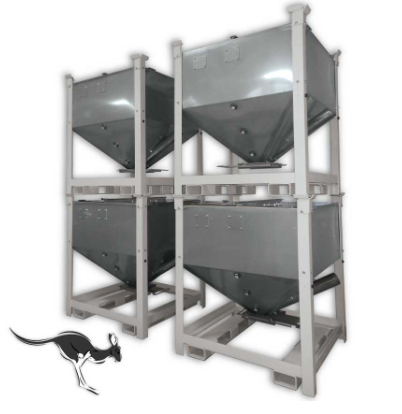
Advanced Blending Solutions MobiHopper mobile resin storage vessels
Flexible intermediate storage

MobiHoppers for temporary or movable inventory

Published MobiHopper volumes are 30, 40, 50, and 60 ft³ with 45° or 60° cones. They can be stacked up to three high and configured with wheels, lids, slide gates, sight glasses, level ports, and resin-wand pockets.

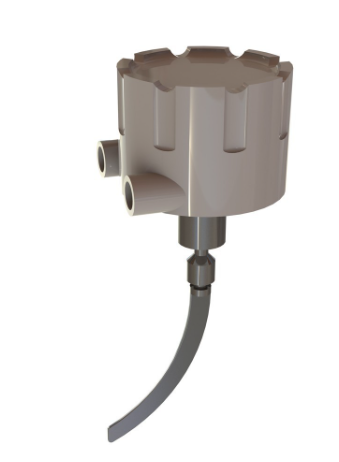
Advanced Blending Solutions point-level sensors for resin silos and bins
Level and overfill strategy

Select the sensor for the resin, vessel, and decision

Point and continuous options can include rotary paddle, proximity, tuning fork, vibratory rod, plumb-bob, or non-contact laser. Converting measured height to mass requires vessel geometry and bulk density; it is not direct weighing.

Storage starting points
Storage typeUseful whenPublished configuration examplesStill confirm
Welded siloAn assembled vessel can be shipped, rigged, and installed at the site.Custom material, inlet, takeoff, level, access, and conveying interfaces.Transport, crane, foundation, structure, venting, code, and usable volume.
Bolted siloOn-site sectional erection better fits shipping, access, or size constraints.Custom bolted or mixing configuration with project-specific interfaces.Erection area, schedule, sealing, structure, foundation, access, and future work.
Intermediate binThe plant needs fixed surge or material storage below full-silo scale.Published 15–700 ft³ usable volumes; 45° or 60° transitions.Bulk density, flow, receiver mounting, takeoff, levels, supports, and access.
MobiHopperTemporary, movable, stackable, or source-flexible storage is useful.Published 30–60 ft³ volumes; stackable up to three high; wheels optional.Material weight, floor loading, mobility, stacking procedure, stability, and discharge.

Silo and bin capacities by weight are material-dependent. Use published vessel volume as a starting point, then confirm the actual resin bulk density, usable fill level, reserve, delivery quantity, and discharge behavior. Structural, foundation, pressure-relief, wind, seismic, access, and permitting requirements are project-specific.

Destination verification and unload controls

Make the intended storage route visible before resin moves

A wrong-silo fill or overfill can turn an entire inventory position into discounted, contaminated, or unusable material. Controls reduce that risk by checking configured routes and field conditions before transfer and making exceptions visible.

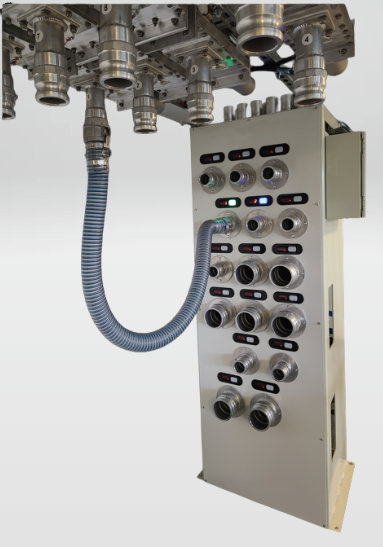
Advanced Blending Solutions SMART verified resin routing station
Detail crop focuses on the operator's verified hose connection, port indication, and route-selection hardware.
Configured route verification

Connect the delivery record, allowed route, silo level, and operator action

When SMART is included, its connection signal can be compared with the active source-to-silo route before conveying. The HMI can show the intended destination and combine that check with the rest of the unloading permissives and alarm sequence.

SourceVehicle, compartment, resin, or lot record
SiloConfigured permitted destination and level condition
  • Source and destination selection with clearly defined allowed routes
  • SMART connection verification, lights, barcode, or lot functions when quoted
  • High-level permissive, overfill response, and alternate-destination rules
  • Pump, VFD, filter differential pressure, airlock, and cleaning alarms by scope
  • Delivery total, operator, timestamps, alarms, trends, historian, and reports when required

Risk-reduction boundary: the system verifies configured signals and route data; it does not chemically identify the resin. Correct setup, maintained sensors, material labeling, procedures, line clearance, training, and controlled overrides remain essential.

Interactive resin-handling selector

Build a preliminary receiving and storage profile

Answer a short set of application questions to organize the material source, conveying duty, storage, process destination, and next engineering step before requesting a quote.

Project details: Use the selector below to describe your project. Start with material, rate and destination.

Loading the resin-handling equipment selector…
If the selector does not appear, open the full equipment selector.
The receiving system ends at storage—not at the process

Connect bulk receiving to downstream resin handling

The receiving system unloads and stores resin. Downstream equipment then conveys, dries, routes and blends it for production.

Central plastic resin conveying

Move resin from silo or bin takeoffs through pumps, filters, manifolds, receivers, dryers, blenders, and machines.

Plan silo-to-machine conveying →

Verified resin selection stations

Reduce wrong manual hose connections with configured source-to-destination verification and programmable operator guidance.

Review connection verification →

Desiccant resin drying systems

Coordinate central or machine-side drying hoppers, loading, airflow, filtration, controls, and dry-material distribution.

Plan resin drying →

Continuous gravimetric blending

Connect reliable material delivery to continuous SIMPLICITY or compact SL blending and extrusion throughput control.

Compare continuous blenders →
Applications support and system delivery

Plan the unloading equipment, installation and quotation

Gauge Advisor coordinates the application data and quotation process. ABS can support project-specific layouts, equipment, controls, piping and installation scope, commissioning, training, troubleshooting, and material testing when required.

01

Document deliveries and targets

List vehicles, compartments, resins, lots, quantities, unloading-time targets, schedule, operating procedure, and measurement goals.

02

Map the physical route

Mark rail or truck position, pickup, horizontal runs, lift, bends, structure, utilities, silos, access, vents, and future destinations.

03

Engineer equipment and controls

Select architecture, pump duty, separation, filtration, airlock, velocity, measurement, routing, storage, levels, HMI, and data scope.

04

Define delivery responsibility

Clarify drawings, equipment, structure, foundation, mechanical and electrical work, integration, testing, training, spares, acceptance, and support.

Gauge Advisor with the Advanced Blending Solutions applications team
Gauge Advisor and ABS coordinate the receiving application, material path, storage, controls, project scope, quotation, commissioning, and ongoing support.
What to send for useful sizing and budget pricing

Build the quote around the delivery, route, storage, and control decisions

You do not need to choose a pump horsepower, line size, airlock, or silo model first. Send the operating facts and layout so the complete duty can be reviewed.

  • Railcar and hopper-truck types, compartment count, outlet, hose, and connection details
  • Every resin form, bulk density, temperature, fines, static, abrasion, and degradation concern
  • Minimum, normal, and target unloading rate or required vehicle turnaround time
  • Rail or truck position, pickup point, horizontal distance, vertical lift, bends, and line size
  • Direct-pull, pull/push, or existing arrangement if already selected
  • Existing pump, blower, receiver, cyclone, filter, airlock, lines, controls, and condition
  • Silo or bin count, usable capacity, dimensions, inlets, vents, takeoffs, levels, and access
  • Vehicle-to-silo route matrix, alternate routes, and required connection verification
  • Weight range, measurement purpose, calibration, records, and legal-for-trade requirement
  • Lot, barcode, operator, delivery total, alarm, trend, historian, and reporting needs
  • PLC and HMI standard, network, remote-access rules, plant interfaces, and data ownership
  • Power, compressed air, environmental conditions, noise, redundancy, and maintenance limits
  • Structure, foundation, roof access, rigging, site work, mechanical and electrical scope
  • Photos, site plan, floor plan, elevations, P&ID, utility drawings, and existing equipment list
  • Project location, schedule, installation window, commissioning, training, spares, and future expansion
Buyer and engineering questions

Plastic resin railcar unloading and bulk storage FAQ

These answers establish the starting architecture. Final selection still requires the material data, route, unloading sequence, storage design, controls, safety review, installation scope, and project-specific ABS engineering.

What equipment is included in a plastic resin railcar unloading system?
A complete scope can include railcar pickup connections, vacuum or pressure pumps, a direct-pull receiver or pull/push filter receiver, cyclone, rotary airlock, dust collection, VFD velocity control, material lines, route selection, silo fill connections, level devices, controls, optional weight verification, and mechanical and electrical installation. The final equipment follows the resin, unloading rate, route, silo arrangement, and project responsibilities.
What is the difference between direct-pull and pull/push railcar unloading?
Direct pull uses a vacuum pump to draw resin from the railcar directly to a vacuum receiver at or above the silo. Pull/push first draws resin under vacuum to a filter receiver or cyclone, then a rotary airlock meters it into a pressure line for delivery to one or more silos. Distance, lift, unloading rate, destination layout, filtration, space, controls, and maintenance access determine the better architecture.
How does bulk truck unloading differ from railcar unloading?
A pneumatic bulk truck commonly arrives with its own blower and connects to a ground-level fill line, while a railcar system typically includes the plant-side air mover and pickup arrangement. The truck interface still needs the correct silo route, venting or filtration, level and overfill logic, line and connection details, and a defined unloading procedure. Confirm the carrier equipment and connection standard before design.
How is the required unloading rate determined?
Start with the required vehicle turnaround time and usable material quantity, then check resin bulk density and behavior, active compartment sequence, horizontal distance, vertical lift, bends, line size, air mover, separation and filtration losses, silo inlet conditions, and operating margin. A catalog horsepower or another plant's unloading rate is not enough to size the system.
Can incoming resin be weighed while it is transferred to a silo?
Yes, an application-specific ABS arrangement can track flow by loss in weight through a gravimetric weigh hopper, meter resin through a rotary airlock, and record delivery data while pressure conveying to the selected silo. The quote must define range, calibration, accuracy, residual material, compartment handling, records, and whether certified legal-for-trade measurement is required. Process verification is not automatically custody-transfer weighing.
How do I size a bulk resin storage silo?
Use the maximum delivery quantity, safety reserve, normal consumption, reorder strategy, number of materials, resin bulk density, usable versus geometric volume, fill and discharge behavior, available footprint and height, structure, access, venting, level devices, and future expansion. Weight capacity changes with resin bulk density, so silo volume and the intended materials must be reviewed together.
Should I use a welded or bolted resin silo?
Welded silos are fabricated off-site and installed as assembled vessels, while bolted silos are erected on-site in sections. Shipping access, crane and rigging limits, building openings, footprint, height, schedule, material of construction, foundation and structural scope, and future expansion usually drive the choice. ABS also offers mixing-silo configurations for applications that need them.
How can controls reduce wrong-silo fills and overfills?
The control scope can compare the selected source and destination with the configured allowed route, verify a SMART connection when included, check silo level permissives, monitor filter and pump conditions, and record the unloading sequence. These features reduce risk only when route data, sensors, interlocks, procedures, and overrides are correctly configured and maintained; they do not identify resin chemistry by themselves.
How do filtration and velocity control reduce dust, fines, and angel hair?
Proper separation and vent filtration keep conveying air moving while collecting compatible dust and fines. Differential-pressure monitoring can indicate filter loading and control cleaning where equipped. VFD velocity control can tailor pickup speed to the material and route, reducing avoidable impact and friction. It cannot guarantee zero dust, degradation, or angel hair, so the pickup, line, bends, temperature, and operating sequence still require review.
Can a new unloading system connect to existing silos or central conveying?
Often yes. Begin with an audit of silo inlets, vents, level devices, takeoffs, foundations, access, existing pumps and lines, controls, utilities, condition, and available capacity. The receiving page ends at storage; the separate central conveying design should then verify how resin moves from each silo or bin to dryers, blenders, and processing machines.
What information is needed to quote a railcar unloading and bulk-storage system?
Send the railcar and bulk-truck delivery details, compartment and connection information, resins and bulk densities, minimum and target unloading rates, route distances and lift, line sizes and bends, silo quantity and capacity, available space, level and overfill goals, weight-verification and record requirements, existing equipment and utilities, controls standard, photos, drawings, installation limits, schedule, and future expansion plan.
Vehicle-to-storage application support

Ready to map the railcar or bulk-truck receiving route?

Send the delivery types, resins, unloading-time target, route dimensions, storage requirements, existing equipment, measurement goal, control standard, layout, and installation scope. Gauge Advisor will coordinate the ABS application review, equipment selection and quotation, including the required installation and support services.

Gauge Advisor is an authorized Advanced Blending Solutions sales & applications support partner. Published equipment sizes and manufacturer claims are starting references; final performance, safety, compliance, controls, measurement, storage, structure, installation, and project scope require application engineering.

Interactive resin-handling selector

Build your resin-handling system profile

Choose the material-handling tasks your process needs, then answer only the questions that apply. The selector will organize a practical Advanced Blending Solutions starting system.

5 guided stepsAbout 1 minute per task
Gauge Advisor interactive tool

Resin Handling Equipment Selector