
Wafer coatings · Electronics · Application evaluation
Semiconductor Wafer Coating Thickness Measurement
Start with the layer you need to control. Gauge Advisor helps engineering teams evaluate AIM photothermal measurement for a defined coating, substrate, thickness range and inspection goal.
Decide whether you need repeatable readings at selected locations or a view of thickness distribution. Then test that requirement on representative samples.

Define the inspection question
What do you need to learn about the coating?
Selected locations
Check the positions specified by the inspection plan and compare them across samples or process trials.
Location-to-location consistency
Look for variation between defined regions, using a repeatable presentation and measurement sequence.
Thickness distribution
Evaluate whether a calibrated image over a defined area provides more useful information than individual readings.
The required detail matters as much as the thickness range. Specify the smallest feature or variation you need to resolve, the permitted measurement time and the reference used for acceptance.
Choose the inspection output
Point readings and area images answer different questions.
| Inspection approach | AIM starting point | What to establish |
|---|---|---|
| A value at a defined location | CoatPro point measurement. | Measurable coating response, usable spot size, repeatability and presentation. |
| A repeatable route through several locations | CoatPro with controlled positioning or a programmed sequence. | Location access, positioning accuracy, acquisition time and the complete cycle. |
| Distribution within a visible area | CoatPro XD camera measurement. | Qualified field of view, spatial detail and a calibration appropriate to the coating. |
Swipe to see all columns.
Keep coverage and resolution separate.
A larger view does not necessarily resolve a smaller feature. Define the inspected area and the detail required within it before choosing the sensor or handling arrangement.
Full-wafer coverage, die-scale detail and nanometer-range performance each need specific confirmation for the proposed setup.
Explore AIM point and area measurement systems →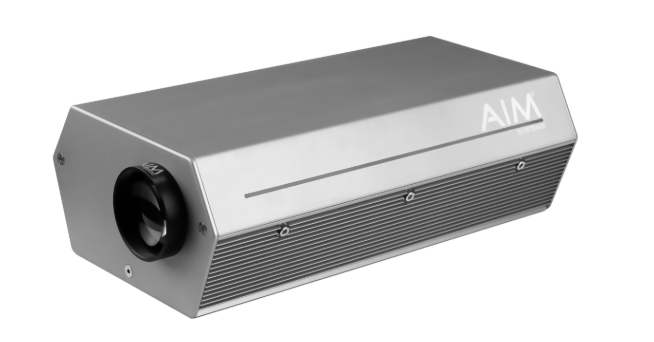
Review the complete construction
The coating and substrate influence the signal together.
Photothermal measurement uses controlled light and the resulting thermal response to determine coating thickness through calibration. The coating’s absorption, its thermal relationship with the substrate and the surrounding layers all matter.
For a multilayer wafer, identify the exact output: one named layer, total coating build or several independent values. A thickness reading does not automatically separate every layer in the stack.
Specify the process state as well. A freshly applied coating and the same coating after a thermal process may require different reference conditions.
Understand photothermal measurement and calibration →Bring the layer stack into the review.
- Coating chemistry, substrate and all intervening layers
- Nominal thickness, range and tolerance
- Patterning, surface finish and optical access
- Required locations, area and spatial detail
- Reference measurements and inspection conditions
From samples to an inspection plan
Establish what the measurement can resolve.
Define the acceptance target
Agree on the coating result, locations and tolerance before comparing instruments or inspection formats.
Test representative samples
Compare the response with accepted references across the intended thickness range and relevant process conditions.
Review the production workflow
Confirm repeatability, measurement time, handling, data output and the practical limits of the selected setup.
Build on application testing.
AIM offers sample evaluation to assess measurability, achievable precision and measurement time. Its electronics application examples include OSP coatings on PCBs with CoatPro.
A wafer application needs its own review of the film stack and inspection target. Share the actual coating rather than relying on a broad “thin film” category.
See AIM application examples and sample evaluation →
Plan the next step
Equipment, measurement principles and handling.
Compare equipment architectures and the data each approach provides.
Understand the signal, calibration and material considerations.
Review controlled positioning and programmed inspection routes.
Explore inspection goals for protective and functional layers.
Common questions
Wafer coating measurement FAQ.
Can AIM measure my wafer coating?
Suitability depends on the coating and substrate, thickness range, required uncertainty and inspection conditions. A representative sample evaluation establishes whether the proposed method meets that requirement.
Can it measure photoresist or nanometer-scale films?
Those requirements need specific review. Send the coating chemistry, complete stack, expected thickness, tolerance and accepted reference method. General point or area measurement capability is not a performance guarantee for a particular wafer film.
Can it distinguish individual layers?
Identify each layer and the exact result required. Independent layer values need confirmation on the complete material stack; do not assume that a total coating response provides them.
Can it map an entire wafer?
That depends on the qualified field of view, required spatial detail and coating response. The inspection plan must account for the complete wafer area and any additional views or handling steps.
Can results be sent to a production system?
CoatPro supports network communication, Modbus TCP and data export; CoatPro XD also supports Modbus TCP. Define sample identification, location records and the required plant interface as part of the integration.
What should I send for a first review?
A layer-stack description, coating range and tolerance, wafer size, required locations or area, reference method and available cycle time are a useful start. Include representative samples when available.
Technical resources: CoatPro · CoatPro XD.
Application review
Define the measurement around your wafer coating.
Send the layer stack and the inspection decision you need to make. I’ll help organize the application review with AIM and identify the samples needed to assess the measurement.
Helpful details to send
- Coating chemistry, wafer substrate and layer sequence
- Expected thickness range and tolerance
- Wafer dimensions and required inspection locations
- Accepted reference method and representative samples
- Process state, available cycle time and data requirements
A drawing, part photo or sample description is a useful starting point.