
Updated May 11, 2026
In the world of web coatings, tight control over coating parameters isn’t optional. It’s a requirement. Whether you’re applying adhesives, manufacturing prepregs, coating battery electrodes, or running roll-to-roll converting lines, real-time web coating measurements are key to producing quality product.
Still, many operations rely on periodic lab samples or offline measurements, assuming that they’re “close enough” to spec. But in high-speed, high-cost coating environments, even small variations can result in significant waste, downtime, or off-spec product. So when is the right time to install an in-line measurement system?
If you’re looking to improve process consistency, reduce material usage, or support tighter tolerances, the answer may be: right now. Learn more about available technologies on our advanced coating measurement solutions page.
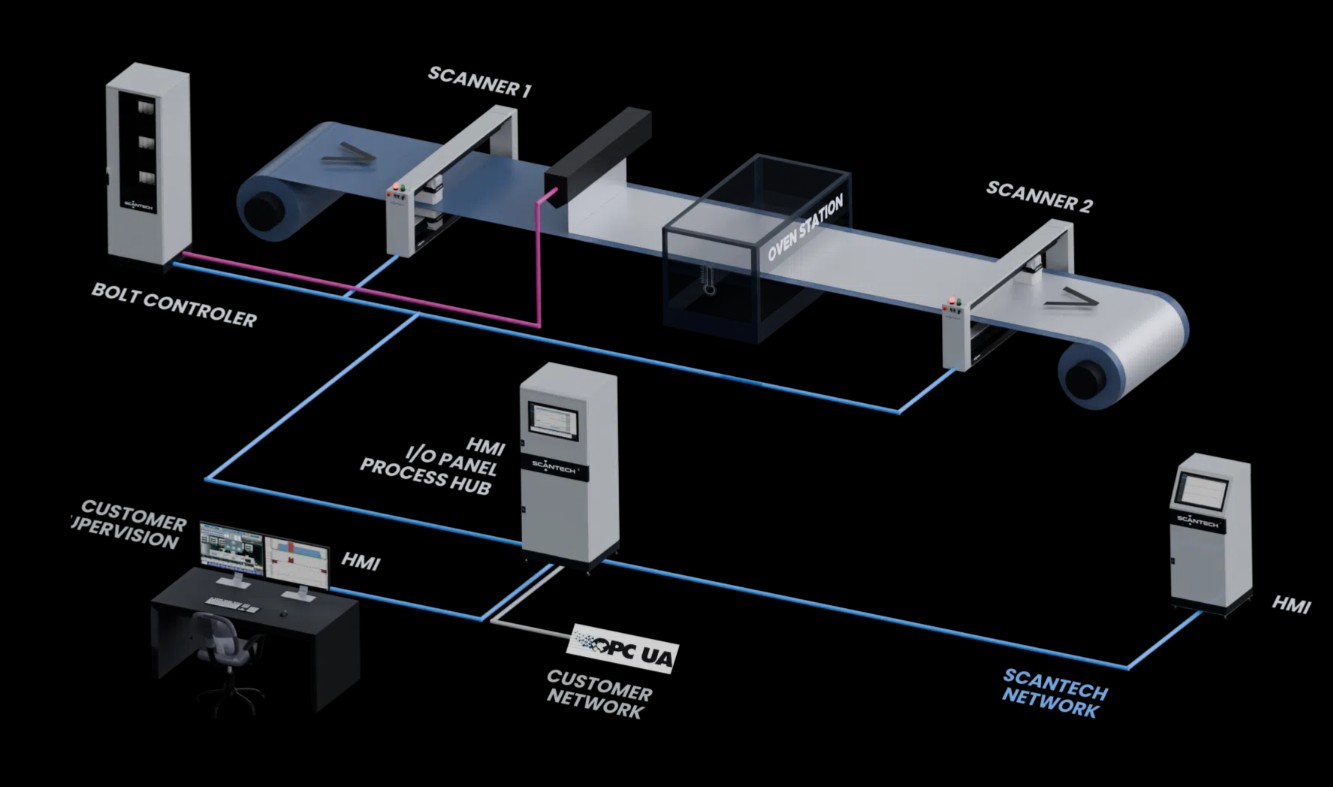
A coating line with substrate & coating measurement scanners. Closed-loop control can be applied to automatically adjust for optimal thickness, weight, and density without operator intervention. Courtesy: Scantech
🔍 What Should You Measure?
Real-time web coating measurement systems can give you:
- Thickness: True coating thickness or total product thickness
- Basis Weight (g/m²): Critical in prepreg, release liners, adhesive coatings, and battery applications
- Density: Combining basis weight and thickness to detect inconsistencies in coating composition (e.g., air pockets or slurry quality). See our coating units calculator to learn more.
- Additive Distribution: Profiling high-value elements such as calcium carbonate, titanium oxide, palladium, nickel, etc present in the coating
- Defects: Visual defects such as holes, streaks, gels, carbons, bugs, and other contamination
These systems typically use a combination of sensor technologies depending on the coating material and substrate. X-ray has proven to be one of the most universal across applications. It is also non-radioactive and provides higher accuracy compared to other technologies. Want to learn more about the pros and cons of each individual sensor technology in more depth? Read more in our article on web gauging technologies for extrusion and coating lines.

Thickness, basis weight, and density are achievable measurements using x-ray technology. Courtesy: Scantech
Which Industries Benefit Most?
Web gauging systems are already standard in several high-performance industries:
- Battery Coaters: Electrode coating and calendering for Li-ion anode/cathode manufacturing
- Battery Separator Film Extruders: Ceramic and PVDF
- Adhesive Coaters & Laminators: Ensuring consistent adhesive laydown for pressure-sensitive labels and tapes
- Prepreg and Impregnation Lines: Controlling resin content in composite reinforcement materials
- Release Liner & Label Stock Converters: Silicone and film coatings
If your product relies on consistency in coating weight, thickness, or density, real-time measurement is worth considering.
📈 ROI: Why Measurement Systems Pay for Themselves
Adding an in-line measurement system is a capital investment, but the payback is often faster than expected.
💰 Material Cost Savings
Real-time measurement lets you apply coatings much closer to the target, without the typical “safety buffer” many plants use to avoid undercoating. Even trimming back by just 1 g/m² can result in massive material savings. Engineers often convert between coating thickness, basis weight, and density during process setup. Our Coating Unit Converter Tool simplifies these calculations.
Let’s break that down:
- A 40-inch (1-meter)-wide webcoating line running at 300 feet (91 meters) per minute produces:
- ~13,000 square feet per hour
- ~1,200 square meters per hour
So, reducing coat weight by 1 g/m² saves:
- 2.65 lbs/hour (~1.2 kg/hour)
- 21 lbs/shift (8 hours)
- 5,000+ lbs/year (based on 250 production days)
At a coating material cost of USD $10–$100/lb (not uncommon for battery slurries, adhesives, or specialty resins), that’s a potential savings of $50,000 to $500,000 per year. Just by tightening control by 1 g/m²! You can estimate potential material savings using our Coating Measurement ROI Calculator.
📊 CpK and PpK Gains
Without feedback, many coaters run between CpK 1.0–1.33, requiring them to over-apply to avoid defects.
With closed-loop control:
- CpK often improves to 1.67+, reducing variability and scrap
- PpK increases too, especially for long, continuous runs
This not only saves material. It also supports higher customer confidence, better compliance, and fewer quality holds. Engineers evaluating coating line performance often use statistical capability metrics such as Cpk and Ppk. You can estimate these values using our CPK / PPK Process Capability Calculator.

Thickness, basis weight, and density are achievable measurements using x-ray technology. Courtesy: Scantech
🛠️ Reduced Manual Labor
Automated web coating measurement systems reduce:
- Manual measurement time
- Operator dependency
- Labor headcount
- Off-spec rolls and lab rework
Many coaters see ROI in under 6 months.
📋 Added Value: Traceability & Audit Readiness
Modern gauging systems record every scan, roll, and spec deviation, making them ideal for regulated industries like food packaging, aerospace, medical, and energy storage. When customers or auditors ask for data, you’ll already have it.
🚦When Should You Install One?
You don’t need to wait for a major failure or customer complaint. Here are strong signs it’s time to upgrade:
- You’re using expensive coating materials and suspect over-application
- You’re seeing variability between rolls or lots
- Lab samples are too slow to catch in-process defects
- You want to improve CpK, reduce scrap, or boost quality scores
- You’re scaling up production and need tighter control
🏁 Final Thoughts
For modern coating operations, real-time measurement isn’t just about staying within tolerance, it’s about optimizing the entire process. Whether you’re producing prepregs, adhesives, or battery electrodes, systems that measure thickness, basis weight, density, additives, and defects can deliver clear ROI in both cost and quality.
Engineers get better data. Operators get faster feedback. Managers get fewer complaints. Margins will improve dramatically.
If you’re considering an upgrade, the question isn’t whether a measurement system will pay off. The question is: how much are you leaving on the table without one?
🔦 Supplier Spotlight: Scantech
When it comes to precision measurement in web coating applications, Scantech stands out as a leading provider of advanced gauging systems. With over 30 years of innovation and more than 7,000 systems installed globally, Scantech’s measurement and control systems are designed to deliver the best return on investment (ROI) .
Key Features of Scantech Systems:
- Advanced Sensor Technologies: Scantech offers a range of sensor technologies, including x-ray, laser triangulation, confocal, and others. They ensure high-precision, non-contact measurements suitable for various materials.
- Same Spot Measurement: Scantech’s software is designed for complex coating applications where multiple scanners need to be synchronized to measure the same-spot on the web.
- Patch & Lane Recognition: Scantech’s measurement systems automatically detect coating edges on patch & lane coating applications. They can even detect alignment on top and bottom coatings.
- Defect Detection: By using camera systems, Scantech provides visual defect detection. Defect mapping is tied into the roll profile measurement data, making for seamless quality analysis.
- Data Integration: Scantech not only supports common data transfer protocols such as OPC-UA, but also generates automatic roll reports with traceability features such as QR-Code tracking.
- Predictive Maintenance: Scantech measurement systems track changes in machine operation for easy maintenance and diagnostics.
For more information on Scantech’s offerings and how they can enhance your web coating processes, visit their website: Scantech
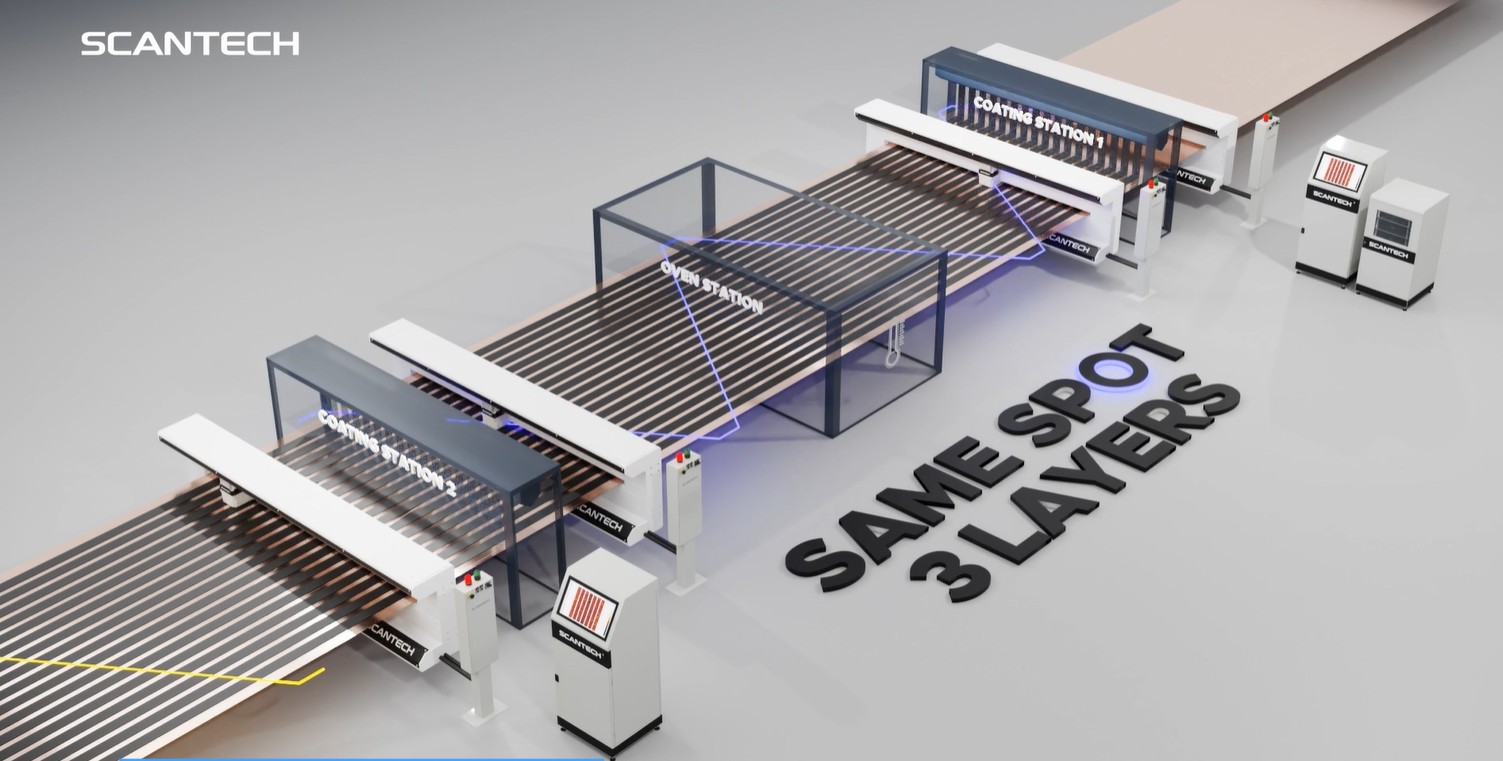
Three Scantech measurement scanners on a battery anode coating line.
📞 Take the Next Step
Whether you’re planning to invest in a gauging system or just want to “talk shop”, reach out to start a conversation. After all, what is a lack of gauge control on your coating line really costing you?
Gauge Advisor is the authorized sales partner for Scantech measurement systems supporting manufacturers with equipment selection, process optimization, and system integration.
If you’re evaluating roll-to-roll coating measurement technologies for your line, request application guidance using the form below.

 By: Matthew Baker
Founder, Gauge Advisor LLC