
Updated June 9, 2026
Whether you’re manufacturing medical tubing, catheter shafts, guidewire jackets, industrial tubing, or extruded plastic pipe, accurate dimensional measurement is essential for maintaining product quality and process stability.
Diameter and wall thickness are among the most critical characteristics of any tubing product. Small variations can affect burst pressure, flow rates, flexibility, assembly fit, and overall product performance. In highly regulated industries such as medical device manufacturing, dimensional variation can quickly become a compliance issue as well.
Fortunately, there are several methods available for measuring tubing dimensions, each with its own advantages and limitations.
This guide reviews the most common measurement techniques used both on the production floor and in quality control laboratories, along with common sources of error and practical recommendations for selecting the right approach.
If you’re evaluating measurement and inspection technologies for medical tubing, catheters, guidewires, cannulas, or other precision medical components, explore our medical device measurement and inspection solutions.

Laser micrometer measuring tubing diameter and ovality. Roller guides help support and align the product, making the system ideal for long tubing lengths and continuous extrusion applications requiring accurate, repeatable measurements.
Why Diameter and Wall Thickness Matter
Tubing dimensions influence both product performance and manufacturability.
For example:
- Medical catheters rely on precise inner and outer diameters for device compatibility and fluid flow.
- Multi-layer tubing requires consistent wall thickness to maintain mechanical properties.
- Extruded plastic tubing must meet customer specifications for fit and assembly.
- High-pressure tubing applications often depend on wall thickness for burst performance.
- Guidewire coatings and cannulas require tight dimensional tolerances to ensure proper function.
Even relatively small dimensional changes can lead to downstream issues such as poor assembly fit, inconsistent flow characteristics, excessive material usage, or product rejection.
Key Dimensions Commonly Measured
Although “diameter” and “wall thickness” are often discussed together, manufacturers typically monitor several dimensional characteristics simultaneously.
Outer Diameter (OD)
Outer diameter is typically the most frequently measured tubing dimension. OD directly impacts mating components, assembly fit, and overall product appearance.
Inner Diameter (ID)
Inner diameter influences flow rates, device compatibility, and functional performance.
Wall Thickness
Wall thickness affects strength, burst pressure, flexibility, and product consistency.
Ovality
Tubing is rarely perfectly round. Ovality describes the difference between the maximum and minimum diameters around the circumference.
Concentricity
Concentricity describes how centered the inner diameter is relative to the outer diameter. Poor concentricity often leads to uneven wall thickness and reduced product performance.
Traditional Measurement Methods
Calipers
Digital calipers remain one of the most common measurement tools used in manufacturing environments.
Advantages:
- Low cost
- Easy to use
- Portable
- Suitable for basic OD measurements
Limitations:
- Operator dependent
- Limited repeatability on soft tubing
- Not suitable for accurate wall thickness measurement
- Can deform flexible products during measurement
For many tubing applications, calipers are best used as a quick verification tool rather than a primary inspection method.
Micrometers
Micrometers generally provide greater accuracy than calipers and are frequently used for tubing OD inspection.
Advantages:
- Higher accuracy
- Better repeatability
- Suitable for small tubing products
Limitations:
- Contact measurement can deform soft materials
- Slower measurement process
- Not practical for inline inspection
While micrometers remain common in quality labs, they can become challenging when measuring soft medical tubing or very small diameters.
Optical Comparators and Vision Systems
Vision-based systems are often used for dimensional verification, especially in laboratory environments.
Advantages:
- Non-contact measurement
- High magnification
- Useful for complex profiles
Limitations:
- Slower setup
- Sensitive to lighting and positioning
- Generally offline measurements

Digital calipers are commonly used for quick tubing diameter checks, but measurements can vary between operators. On soft or flexible tubing, excessive measuring force may compress the product and produce inaccurate diameter readings.
Laser Micrometers for Diameter Measurement
Laser micrometers have become one of the most widely used technologies for tubing diameter measurement.
Unlike contact methods, laser systems measure tubing dimensions without touching the product.
A laser beam is projected across the tubing while a receiver measures the resulting shadow. The system calculates diameter with extremely high resolution and repeatability.
Advantages include:
- Non-contact measurement
- High accuracy
- No product deformation
- Suitable for inline and offline applications
- Continuous measurement during extrusion
Single-axis laser micrometers measure diameter in one plane.
Dual-axis systems measure two diameters simultaneously, helping identify ovality.
Triple-axis systems provide even greater confidence by capturing measurements from three directions and reducing sensitivity to part orientation.
For many extrusion applications, laser micrometers serve as the primary process control measurement device.
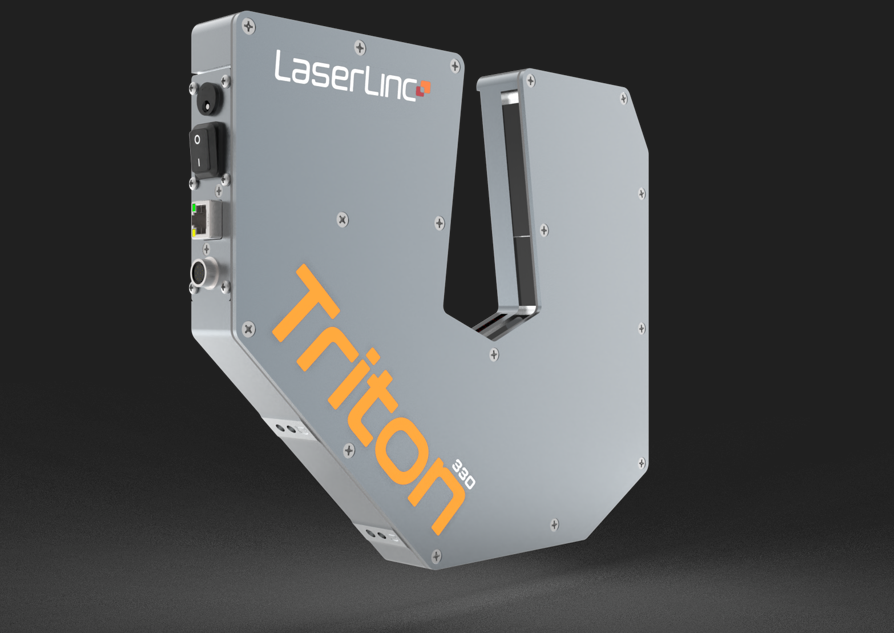
LaserLinc triple-axis laser micrometer. Three measurement axes simultaneously capture tubing diameter and ovality data, providing greater measurement confidence and improved detection of out-of-round conditions compared to single-axis systems.
Measuring Wall Thickness with Ultrasonic Technology
While laser systems excel at measuring outer diameter, wall thickness presents a different challenge.
Ultrasonic measurement systems use high-frequency sound waves that pass through the tubing wall and reflect back to the sensor.
The system calculates wall thickness by measuring the travel time of the ultrasonic signal.
Advantages include:
- Non-destructive measurement
- Real-time wall thickness data
- Simultaneous OD, ID, and wall measurements
- Inline process monitoring
- Suitable for transparent, translucent, and opaque tubing
Modern ultrasonic systems can also calculate:
- Minimum wall thickness
- Maximum wall thickness
- Concentricity
- Eccentricity
For medical tubing manufacturers, ultrasonic systems are often the preferred method for monitoring wall thickness during extrusion.

Ultrasonic measurement system inspecting tubing inline during extrusion. The tube passes through a water-filled chamber where high-frequency sound waves are used to continuously measure OD, ID, wall thickness, and concentricity without damaging the product.
Automated Tubing Inspection Systems
Many manufacturers eventually outgrow manual inspection methods.
As production volumes increase and tolerances tighten, automated inspection systems can significantly improve consistency and throughput.
Automated systems may combine:
- Laser diameter measurement
- Vision inspection
- Surface defect detection
- Automated handling
- Statistical process control
These systems are particularly common in medical device manufacturing where large quantities of tubing, guidewires, and catheter components require piece-part inspection.
Automated inspection reduces operator variability while providing comprehensive dimensional records for quality documentation.

LaserLinc Metron scanning laser micrometer for full-length catheter, tubing, and guidewire inspection. The system measures OD and ovality along the product length, while similar automated inspection systems can also be configured to measure ID, wall thickness, and concentricity depending on the application requirements.
Common Measurement Mistakes
Measuring soft tubing with excessive force. One of the most common mistakes is compressing the tubing during measurement. Even small amounts of contact force can distort soft materials and produce inaccurate results.
Measuring Only One Diameter
Tubing is often slightly oval. A single measurement taken in one orientation may not represent the true maximum or minimum diameter.
Ignoring Concentricity
Two tubes may have identical outer diameters while having very different wall thickness distributions. Concentricity should be evaluated whenever wall thickness is critical.
Inadequate Sampling
Spot checks provide only a limited view of the manufacturing process. Inline measurement systems allow manufacturers to monitor dimensional changes continuously rather than relying on periodic inspections.
Poor Ultrasonic Alignment
For ultrasonic wall thickness measurement, transducer alignment is critical. Improper alignment can reduce signal quality and negatively impact measurement accuracy.
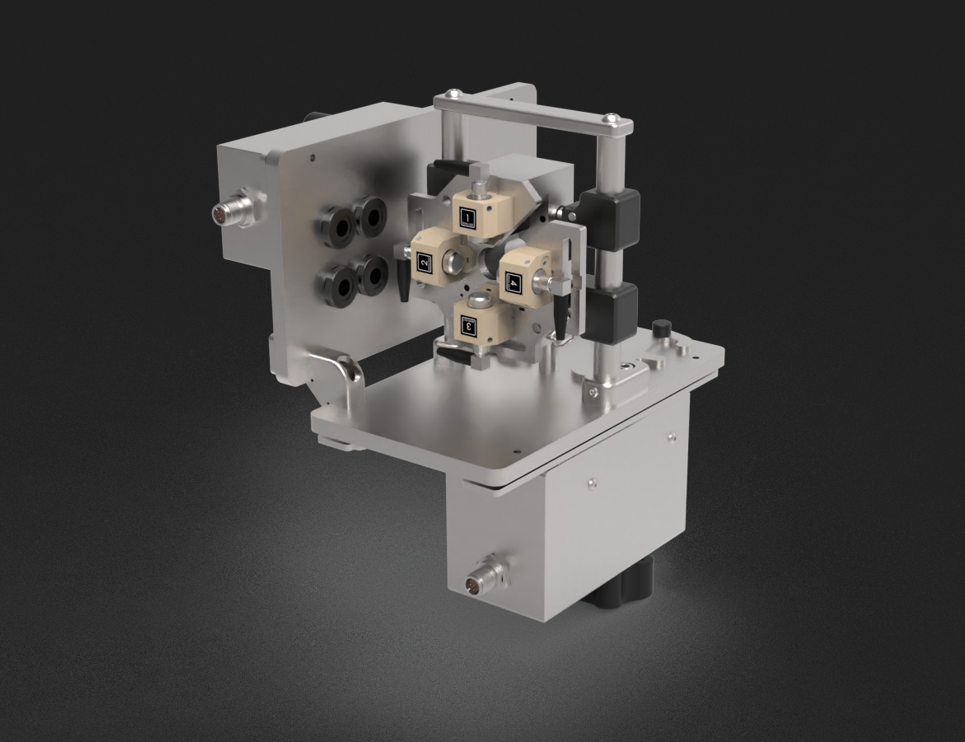
The LaserLinc AutoPilot uses motorized positioning to automatically align ultrasonic transducers (tan components) to the tubing centerline. This approach improves measurement reliability, reduces operator intervention, and eliminates the need for manual transducer alignment common with traditional clamshell fixtures.
Inline vs Offline Measurement
Both approaches play important roles in a quality program.
Offline Measurement
Offline systems are commonly used for:
- First article inspections
- Validation studies
- Incoming quality verification
- Final product release
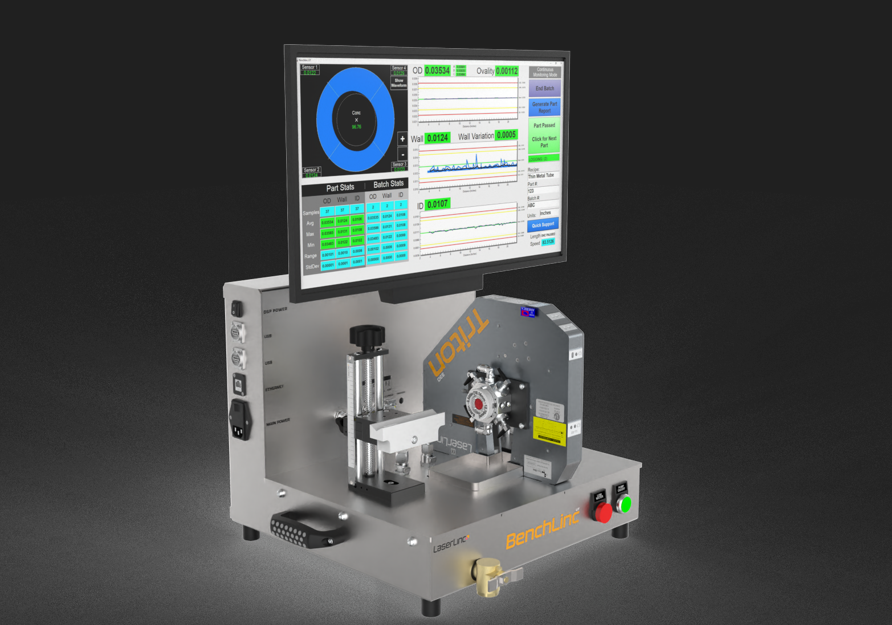
The LaserLinc BenchLinc UT combines ultrasonic and laser measurement technologies to provide highly accurate offline inspection of tubing OD, ID, wall thickness, concentricity, and ovality. It is frequently used in medical tubing and catheter manufacturing for validation studies, quality control, and production troubleshooting.
Inline Measurement
Inline systems provide:
- Real-time feedback
- Faster process adjustments
- Reduced scrap
- Improved process capability
- Continuous monitoring
Many manufacturers use both methods together to maintain a robust quality control strategy.

Example of a closed-loop extrusion measurement system. Ultrasonic wall thickness gauges, laser micrometers, and surface defect detection systems continuously monitor product dimensions and quality during production. Measurement data is communicated back to the extrusion line, allowing automatic process adjustments to maintain diameter, wall thickness, concentricity, and overall product consistency.
Selecting the Right Measurement Method
The best measurement approach depends on several factors:
- Tubing material
- Diameter range
- Wall thickness requirements
- Production speed
- Regulatory requirements
- Desired level of automation
For basic dimensional checks, calipers and micrometers may be sufficient.
For high-precision tubing applications, laser and ultrasonic technologies provide significantly greater accuracy, repeatability, and process visibility.
Final Thoughts
Accurate tubing measurement is about more than simply verifying dimensions. It provides insight into process stability, product consistency, and overall manufacturing performance.
Whether you’re producing medical tubing, catheter components, guidewires, industrial tubing, or extruded pipe, selecting the appropriate measurement technology can reduce scrap, improve quality, and help maintain tighter control of the manufacturing process.
As dimensional tolerances continue to tighten across the industry, manufacturers are increasingly moving beyond traditional manual measurement methods and adopting automated laser and ultrasonic systems capable of providing continuous, real-time measurement data.
Need Help Selecting a Tubing Measurement System?
The best measurement approach depends on your tubing material, diameter range, wall thickness requirements, production speed, and quality objectives. Whether you’re evaluating laser micrometers for diameter measurement, ultrasonic systems for wall thickness monitoring, or automated inspection solutions for quality control, selecting the right technology can have a significant impact on process capability and product consistency.
Gauge Advisor provides application guidance and measurement solutions for tubing extrusion, catheter manufacturing, guidewire production, and other precision tubing applications throughout the Western United States & Canada. If you’d like assistance evaluating a specific application, request support using the form below.

 By: Matthew Baker
Founder, Gauge Advisor LLC