
Updated
New industrial laser micrometers typically start around $10,000 for single axis, $15,000 for dual axis, and $20,000 for triple axis. Where you land depends on the gauge, how you hold the part, and whether you need a live reading at the bench or data and alarms on a running line.
Get a LaserLinc quote for your part
Tell me what you’re measuring and how you check it today. I’ll recommend a setup, price the pieces you’ll need, and explain which options are worth paying for. If seeing the setup in person would help, I can come onsite at no charge to evaluate your bench or line.
You’ll work directly with me, Matthew Baker, an authorized LaserLinc sales and applications representative. LaserLinc pays me through the equipment sale, so you pay no extra fee or surcharge for working with me.
Laser micrometer price by axis count
The industrial laser micrometer market is competitive. Across established brands, you’ll generally see similar prices for comparable equipment. These general U.S. industry estimates give you a starting point whichever supplier you talk to. When you compare quotes, check the measuring range, number of axes, and what’s included.
| Configuration | Typical industry starting price (USD) | When it fits |
|---|---|---|
| Single axis | $10,000+ | You need one OD or width reading and a single view answers the question. |
| Dual axis | $15,000+ | You need two perpendicular readings, such as width and height or two views of a wire or tube. |
| Triple axis | $20,000+ | You’re measuring a round part such as a catheter or cable and want better coverage for average OD and estimated ovality. |
Fixtures, software, and integration can raise the total. Ask each supplier to spell out the included equipment and options.
When does a laser micrometer make sense?
A handheld micrometer earns its place at the bench. The next step is a laser micrometer when you need to check OD without squeezing the part, track the diameter along its length, or watch a moving line continuously. For those jobs, non-contact measurement is a practical requirement.
- Medical tubing and catheters. If closing a handheld gauge changes the shape of a soft tube, use a laser and a fixture that supports the part without distorting it. See catheter and guidewire setups →
- Wire and cable. If you find OD drift during a manual check, the line may have been running off size since the last one. An inline laser gauge lets you watch the diameter while you’re making the product. See wire and cable setups →
What I look at before I quote
A bench check and an inline station can use the same laser head and still be very different quotes. Here’s what changes the price.
- How you hold or guide the part. A V-block might be all you need for a straight, rigid part. A long, flexible catheter or moving wire can call for guides, a different mount, or an encoder to locate a reading along the length.
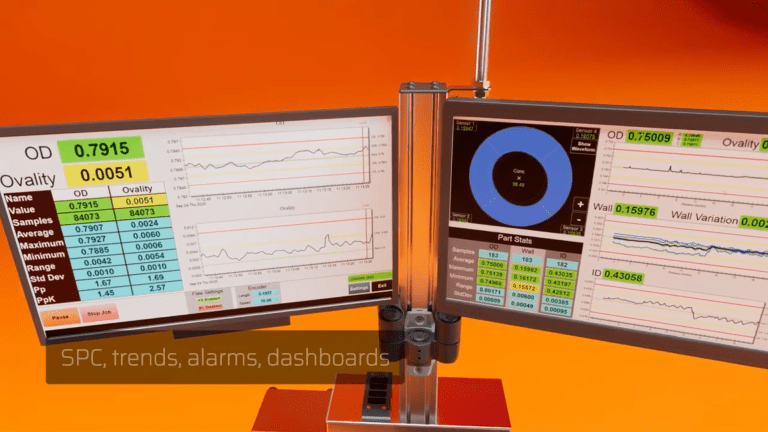
- What happens to the reading. For spot checks or sending readings to your existing controls, compare SmartLinc display and integration options. If you need inspection recipes, saved results, or reports, I can quote Total Vu.
- What your team needs to get running. If you need calibration pins, installation, or operator training, I can include those as separate line items so you can see what you’re paying for. See how to choose calibration pins →

Which LaserLinc setup fits the job?
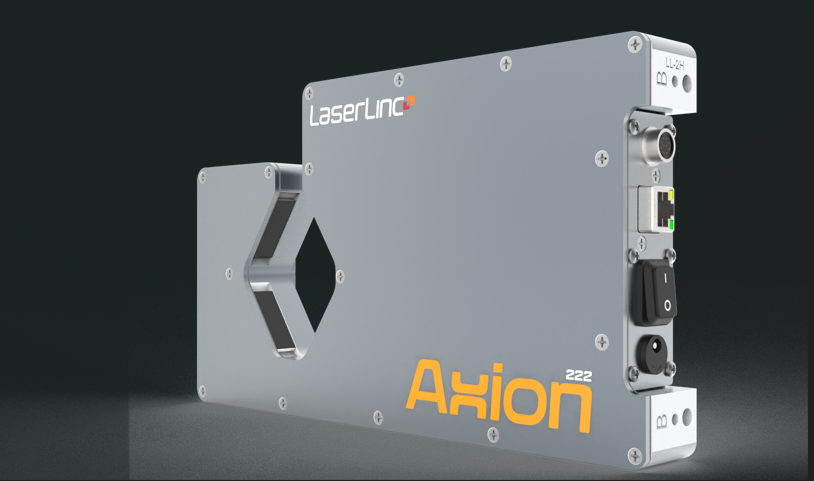
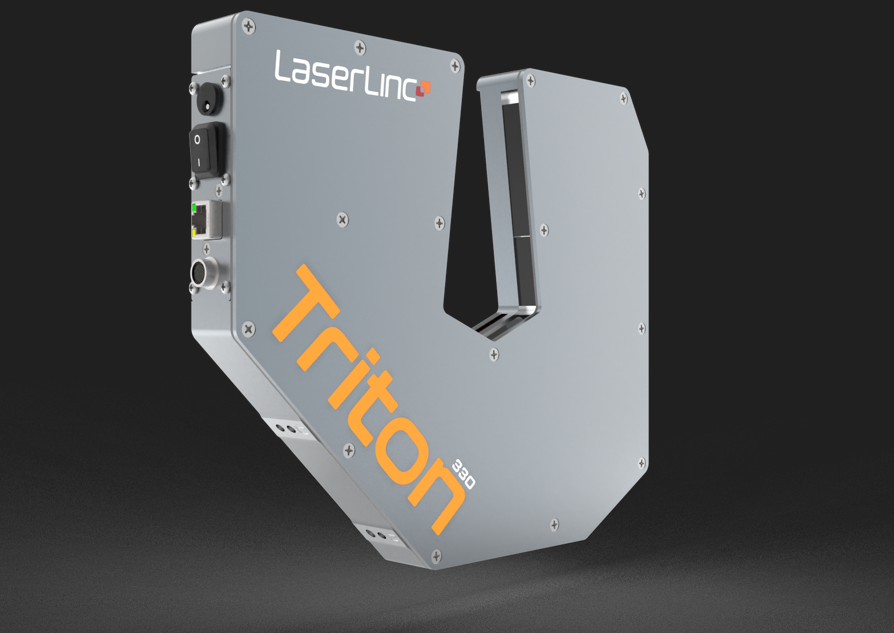
- Bench spot checks or continuous OD on the line. I can quote an Axion or Triton laser micrometer with a display or connection to your controls and the right support for the part.
- Repeatable inspection of finished parts at the bench. If operators need to load parts the same way each time, I’ll look at a BenchLinc setup for the dimensions you need.
- Full-length OD profiles on catheters or guidewires. If you need to check a taper, a transition, or multiple locations from a drawing, I can quote LaserLinc Metron to automate the scan and tie each reading to its position along the part.
I quote complete inspection stations like Metron around the part length, how it’s held, and what you need to measure. If you also need tubing wall thickness, tell me up front so we can look at ultrasonic options alongside laser OD.
Why buy LaserLinc through Gauge Advisor?
You’ll work with people who understand what it takes to get a reliable measurement on your actual parts. I sell and set up LaserLinc systems, and I work with LaserLinc’s applications team when we need to test a difficult part or work out a custom setup.
If you’re checking a soft catheter, we’ll look at how to support it without changing its shape. If you’re measuring cable inline, we’ll look at where to mount the gauge, how the cable moves, and what the operator needs to see when OD drifts. Those details determine which equipment I recommend and what I put in the quote.
If there’s a question about how your part will measure, I can arrange a demo or sample test before you buy. If a simpler setup will do the job, I’ll tell you.
- Four-year warranty. LaserLinc lists four years of parts-and-labor coverage from delivery for scanning laser micrometers and accessories, subject to the warranty terms.
- No-charge technical support. Original purchasers can reach LaserLinc by phone or email Monday through Friday, 8 a.m. to 5 p.m. Eastern. Remote assistance is available for eligible processors and software.
LaserLinc warranty and service policy →
Show me what you need to measure
Send me a drawing, a photo of your setup, or a quick description of the part and what you need to check. I’ll tell you where I’d start, what we can test, and put together a LaserLinc quote around your process.
Laser micrometer pricing FAQs
Can you quote a basic benchtop setup?
Yes. If you’re checking a few locations and writing the numbers down, a gauge, fixture, and local display can be a good starting point. Tell me how the operator loads the part and what needs to be measured.
Do I need three axes?
One axis gives you one view. Two give you perpendicular views. I’d look at three when round tubing or cable can turn in the gauge and you care about average OD and estimated ovality. Compare one, two, and three axes →
Can I get pricing if I’m still working out the details?
Yes. Tell me the part and what you need to measure. If you know the size range, tolerance, or line speed, include those. We can work through the rest together.
Can we test parts before I buy?
Yes. I can coordinate a demo or sample test. If the way you load a part or run the line is important to the decision, we can discuss a no-charge onsite evaluation.
Equipment and support references
View sources
- Single- and dual-axis configurations. LaserLinc Axion
- Triple-axis outside dimensions and ovality. LaserLinc Triton
- Warranty coverage and technical support. LaserLinc warranty and service and LaserLinc contact and hours